
 Last updated: October 21, 2026
 7 min read
A viral infection is caused by a virus that enters living cells to reproduce, while a bacterial infection is caused by bacteria that can multiply independently. Both can produce similar symptoms, but their treatments differ: antibiotics may treat certain bacterial infections, but they do not work against viruses.
Overlapping symptoms may require an examination or test before treatment.
What Is A Viral Infection?
A viral infection is an illness caused by a virus, a tiny infectious particle that must enter a living cell to reproduce. Viral replication and the immune response produce symptoms.
Common types of viral infections include:
- Common cold
- Influenza
- COVID-19
- Viral gastroenteritis, often caused by norovirus or rotavirus
Viral infection symptoms include fever, fatigue, aches, cough, congestion, digestive symptoms or a rash. Some viral diseases are short-lived, while others become chronic.
What Is A Bacterial Infection?
A bacterial infection is an illness caused by harmful bacteria multiplying in the body or releasing substances that damage tissue. Bacteria are single-celled organisms. Most are harmless or helpful, but some cause disease when they enter the wrong part of the body.
Common types of bacterial infections include:
- Strep throat
- Urinary tract infections
- Bacterial pneumonia
- Cellulitis and other skin infections
Bacterial infection symptoms include fever, fatigue, pain, redness, swelling, urinary symptoms or breathing symptoms. These do not prove a bacterial infection because viruses can look similar.
Viral Infection vs Bacterial Infection: What Are The Key Differences?
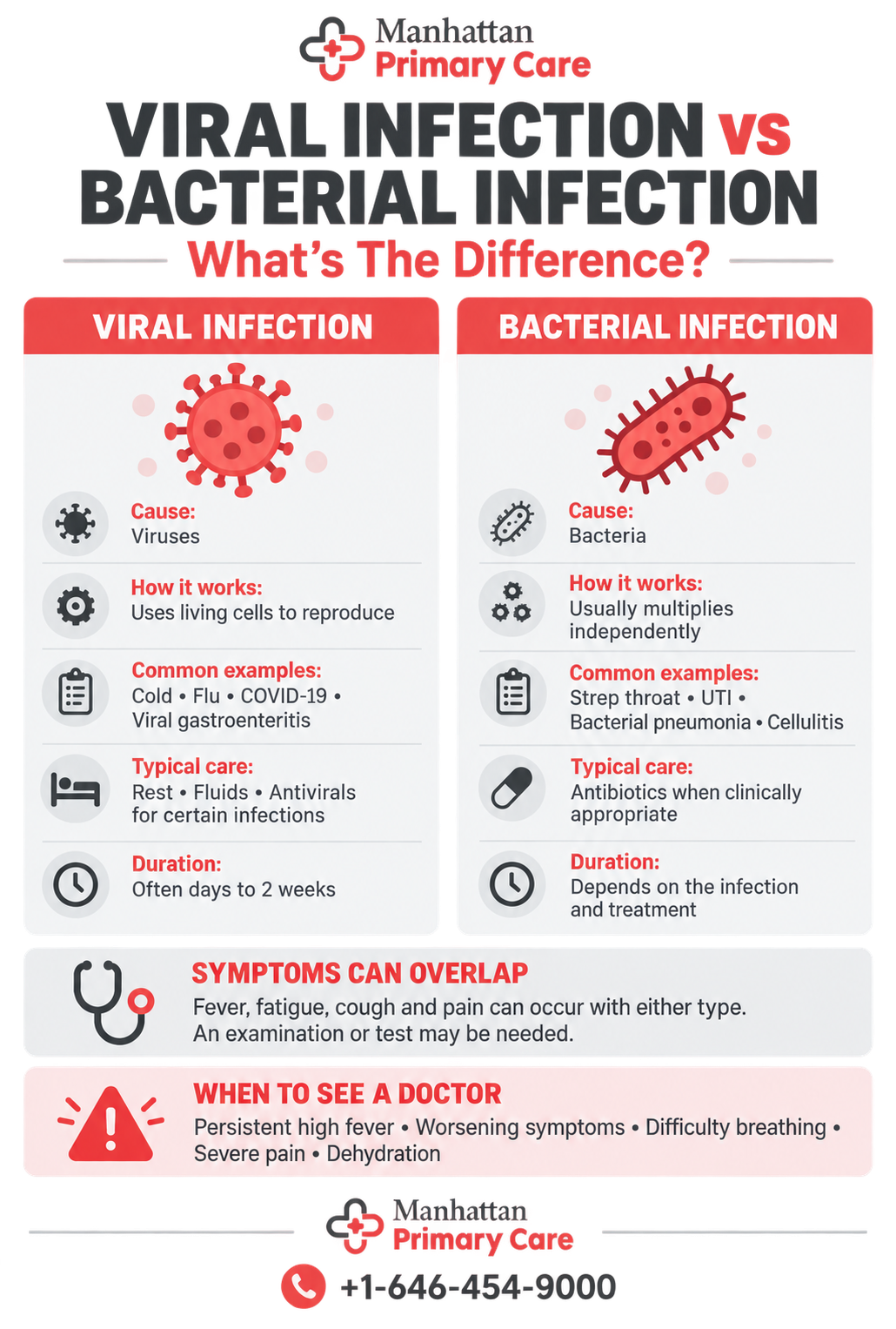
The main viral vs bacterial infection difference is how the organisms reproduce and respond to treatment. Viruses use host cells, while bacteria usually reproduce independently. Antibiotics target features viruses do not have.
| Feature | Viral Infection | Bacterial Infection |
| Cause | Virus | Bacterium |
| Reproduction | Uses living cells to reproduce | Usually multiplies independently |
| Common examples | Cold, flu, COVID-19, viral gastroenteritis | Strep throat, UTI, bacterial pneumonia, cellulitis |
| Possible symptoms | Fever, fatigue, cough, congestion, aches, diarrhea | Fever, fatigue, pain, redness, swelling, urinary or respiratory symptoms |
| Diagnosis | History, examination, antigen or molecular testing when needed | History, examination, rapid test, culture, urine or blood testing when needed |
| Treatment | Supportive care and specific antivirals for certain viruses | Supportive care and antibiotics when clinically appropriate |
| Typical duration | Often days to two weeks, but some become chronic | Varies by the infection, severity and treatment |
Neither type is always more serious. The organism determines risk.
How Can You Tell If An Infection Is Viral or Bacterial?
You usually cannot confirm whether an infection is viral or bacterial from symptoms alone. Both can cause fever, fatigue, cough, sore throat, digestive symptoms and worsening illness.
A doctor may consider:
- The symptom pattern, duration and exposures
- Physical examination findings
- Nasal or throat swabs for influenza, COVID-19 or strep
- Urine, blood, stool, sputum or wound tests when appropriate
- Imaging for a suspected internal complication
At Manhattan Primary Care, acute illness treatment connects your symptoms with the appropriate examination. When needed, diagnostic laboratory testing helps guide treatment and reduce unnecessary antibiotic use.
What Causes Viral And Bacterial Infections To Spread?
Viral and bacterial infections spread in different ways. Transmission may occur through droplets, contact, food or water, sex, blood, insect or tick bites or broken skin.
Are viral infections contagious? Many are, but the route and contagious period vary. Are bacterial infections contagious? Some are, including strep throat, while foodborne and tickborne infections generally do not spread directly between people.
Handwashing, food safety, covering coughs, wound care, safer sex, staying home when ill and vaccination lower the risk of infection. Annual flu shots in NYC can reduce the risk and severity of influenza.
How Are Viral And Bacterial Infections Treated?
Viral infections are usually managed with supportive care or specific antiviral medicines, while bacterial infections may require antibiotics when clinically appropriate.
What Is The Treatment For A Viral Infection?
Viral infection treatment often focuses on relieving symptoms while the immune system clears the infection.
For a mild illness, treatment may include:
- Rest
- Fluids
- Appropriate over-the-counter medicine for fever or discomfort
- Staying home when contagious
How to treat a viral infection depends on the virus and the patient’s risk. Antiviral medicines are available for certain infections, including influenza and COVID-19 and often work best when started early.
What Is The Treatment For A Bacterial Infection?
Bacterial infection treatment may include antibiotics when the expected benefit outweighs the risks. The correct medicine depends on the infection, severity, allergies and sometimes culture results. Some bacterial infections improve without antibiotics.
Take antibiotics exactly as prescribed. Do not share antibiotics or use leftover medication. Unnecessary antibiotics can cause side effects and contribute to antibiotic resistance. Antibiotics do not treat cold or flu viruses.
How Long Do Viral And Bacterial Infections Last?
Recovery time depends on the specific infection, its severity and the patient’s overall health.
How long does a viral infection last? Many uncomplicated respiratory viral infections improve within several days and resolve within about two weeks. However, some viral infections last longer, remain dormant or become chronic.
How long does a bacterial infection last? A mild infection may improve within days after effective treatment, while pneumonia or deep infections can take longer. Age, immune function, severity and treatment timing affect recovery.
An untreated bacterial infection may resolve, persist, spread or cause complications such as sepsis. Seek medical advice if symptoms do not improve as expected.
When Should You See A Doctor For An Infection?
See a doctor when symptoms are severe, worsening, persistent or difficult to identify.
Arrange a medical evaluation for:
- A persistent or high fever
- Symptoms that worsen after initially improving
- Severe or increasing pain
- Repeated vomiting or signs of dehydration
- A painful, red, warm or rapidly spreading skin area
- Urinary pain, urgency, fever or back pain
- Symptoms lasting longer than expected
- Any infection concern during pregnancy or with a weakened immune system
Seek emergency care for difficulty breathing, chest pain, confusion, fainting, blue or gray lips, severe dehydration, neck stiffness with fever or rapid deterioration.
Manhattan Primary Care offers same-day appointments and walk-in availability for sudden illnesses. A telehealth visit may help with an initial assessment or follow-up, although diagnostic tests and physical examinations require in-person care.
Conclusion
Viral and bacterial infections can look alike but require different care. Do not judge the cause by fever, mucus color or duration alone. If your symptoms are severe, worsening or not improving, a medical evaluation can determine the appropriate next step.
Frequently Asked Questions
Can you have a viral and bacterial infection at the same time?
Yes. A person can have a viral and bacterial infection simultaneously. A viral illness may also create conditions that allow a secondary bacterial infection to develop.
Does cold weather directly cause an infection?
No. Cold weather does not directly cause an infection. Infections develop after exposure to a virus or harmful bacteria, although spending more time indoors may increase contact with infected people.
Can stress increase your risk of infection?
Yes. Persistent stress can affect sleep, inflammation and immune function, potentially making it harder for the body to defend itself. Stress alone, however, does not create a viral or bacterial infection.
Can you exercise while recovering from an infection?
Light activity may be appropriate when symptoms are mild, but rest is safer with fever, significant fatigue, breathing problems or body aches. Resume exercise gradually after your energy and symptoms improve.
Why do some infections keep coming back?
Infections may return because of reinfection, incomplete treatment, antibiotic resistance or an underlying health issue. Repeated infections may require further evaluation to identify contributing conditions or risk factors.
Sources
- Web MD – Bacterial vs. Viral Infections: The Differences Explained
- Mayo Clinic – Bacterial vs. viral infections: How do they differ?
- Health Direct – What is the difference between bacterial and viral infections?
- Pristyn Care – How to Differentiate Viral vs Bacterial Infections
- Henry Ford Health – What’s The Difference Between Viral And Bacterial Infections?
Disclaimer
This blog is for informational & educational purposes only and does not intend to substitute any professional medical advice or consultation. For any health-related concerns, please consult with your physician or call 911.
 492 6th Avenue New York, NY 10011
 +1-646-454-9000
 Hours of Operation


