
 Last updated: September 23, 2026
 8 min read
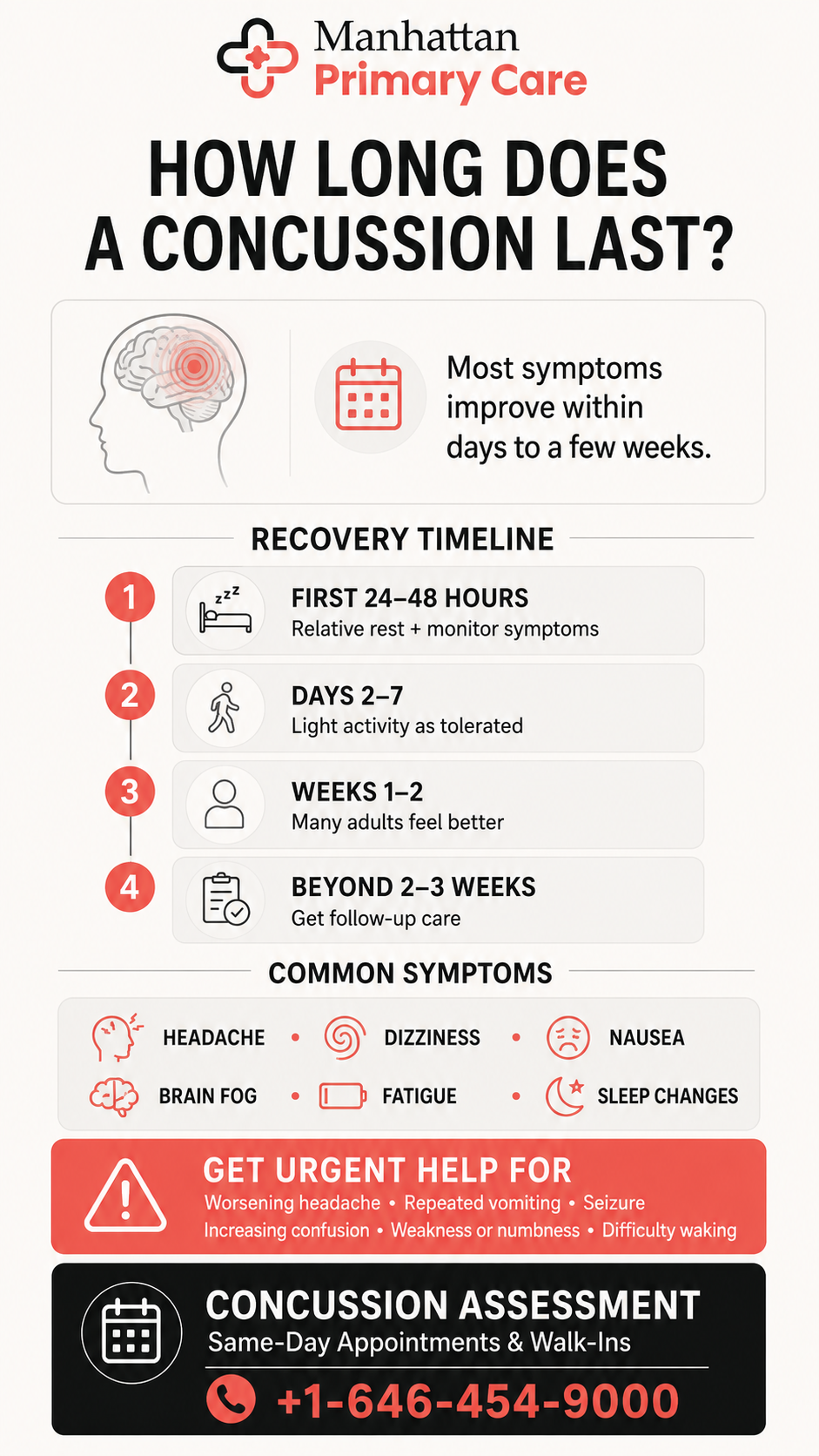
How long does a concussion last? Most concussion symptoms improve within a few days to a few weeks. However, headaches, dizziness, fatigue or concentration problems can sometimes continue for months. Recovery depends on the injury, age, overall health, previous concussions and how carefully symptoms are managed.
What Is A Concussion?
A concussion is a type of mild traumatic brain injury. It occurs when a bump, blow or jolt causes the brain to move rapidly inside the skull. A forceful hit to the body can also cause a concussion, even without direct impact to the head.
Concussions can temporarily affect:
- Thinking and memory
- Balance and coordination
- Mood and behavior
- Sleep
- Vision
- Energy levels
Most concussions do not cause loss of consciousness. Being awake and alert immediately after an injury does not rule one out.
How Long Does A Concussion Last?
The average concussion recovery time differs for every person. Many adults feel better within approximately two weeks, while children, teenagers, older adults and people with certain health conditions may need longer.
Mild Concussion Recovery
A mild concussion recovery time may range from several days to a few weeks. Symptoms should gradually become less frequent and less intense. Recovery from a mild concussion usually includes short-term relative rest followed by a gradual return to daily activities.
Terms such as “minor concussion” or “slight concussion” can be misleading. Even mild symptoms should be monitored carefully.
Moderate Concussion Recovery
People sometimes use “moderate concussion” to describe disruptive or longer-lasting symptoms. However, concussion is medically considered a mild traumatic brain injury. A true moderate brain injury may involve prolonged confusion, loss of consciousness, abnormal imaging or hospitalization.
Moderate brain injury recovery time may extend for several weeks or longer and requires close medical supervision.
Severe Concussion Recovery
“Severe concussion” is also an informal term. Prolonged unconsciousness, worsening neurological symptoms or structural brain damage may indicate a moderate or severe brain injury rather than an uncomplicated concussion.
Severe brain injury recovery time can take months and may require rehabilitation.
What About Grade 1, Grade 2 And Grade 3 Concussions?
Older systems classified concussions as Grade 1, Grade 2 or Grade 3, usually according to symptom duration and loss of consciousness. These grades are no longer considered reliable predictors of healing.
There is no standard Grade 1 concussion recovery time, Grade 2 concussion recovery time or Grade 3 concussion recovery time. Healthcare providers now evaluate symptoms, neurological findings, daily functioning, risk factors and recovery progress individually.
When Do Concussion Symptoms Start?
How long after hitting your head can concussion symptoms start? Some symptoms appear immediately, while others become noticeable hours or days later.
Headache, nausea and dizziness may develop early. Fatigue, mood changes, sleep difficulties, memory problems or trouble concentrating may appear later. Continue watching for symptoms after a head injury, even if you initially feel fine.
What Are Common Symptoms After A Concussion?
Symptoms after a concussion can affect several areas of daily life.
Physical symptoms
- Headache or pressure in the head
- Dizziness or balance problems
- Nausea or vomiting
- Blurred vision
- Sensitivity to light or noise
- Fatigue or low energy
Thinking and memory symptoms
- Brain fog after concussion
- Difficulty concentrating
- Feeling mentally slowed down
- Memory problems
- Trouble completing familiar tasks
Emotional and sleep symptoms
- Irritability
- Anxiety or sadness
- Sleeping more or less than usual
- Difficulty falling asleep
- Feeling unusually emotional
Concussion symptoms may fluctuate during recovery. Screens, physical exertion, noise, stress or mentally demanding work can temporarily make them more noticeable.
What Are The 6 Stages Of Concussion Recovery?
The commonly discussed 6 stages of concussion recovery describe a gradual return to activity, particularly for athletes. They are not six fixed biological stages of healing.
- Regular activities: Resume basic home, school or work tasks as tolerated.
- Light aerobic activity: Try walking or gentle stationary cycling.
- Moderate activity: Add moderate jogging, cycling or light resistance exercises.
- Heavy non-contact activity: Progress to demanding exercise without collision risk.
- Controlled contact practice: Return only after receiving medical clearance.
- Full return: Resume normal activity or competition without recurring symptoms.
Each stage should be completed gradually. If symptoms return, stop, reduce the activity and contact a healthcare provider. The concussion recovery timeline should always be personalized.
Athletes should receive medical clearance before returning to contact sports. A sports physical exam can help assess overall readiness and identify concerns that may make returning to activity unsafe.
What Can Delay Concussion Healing Time?
Several factors can slow concussion recovery, including severe initial symptoms, previous concussions, poor sleep, high stress and returning to normal activities too quickly.
Concussion recovery may take longer because of:
- More intense initial symptoms
- Previous concussions
- A history of migraines
- Anxiety, depression, ADHD or sleep problems
- Very young or older age
- Poor sleep, dehydration or high stress
- Returning to demanding activities too quickly
- Another head injury during recovery
- Ignoring or concealing symptoms
Recovery is not always a straight line. Having a difficult day after feeling better does not necessarily mean healing has stopped.
How To Treat A Concussion?
There is no single medicine that cures a concussion. Treatment supports recovery, manages symptoms and reduces the risk of another injury.
Helpful steps include:
- Use relative physical and mental rest for the first 24 to 48 hours.
- Avoid sports, driving, heavy exercise and activities that risk another head injury.
- Begin light daily activity after one or two days if symptoms do not significantly worsen.
- Maintain regular sleep, hydration and balanced meals.
- Limit screens, bright lights or loud environments when they trigger symptoms.
- Return gradually to work, school, exercise and other responsibilities.
- Follow your healthcare provider’s treatment and follow-up instructions.
For concussion headache treatment, ask a healthcare provider which pain reliever is safe. The right medication may depend on when the injury occurred, your medical history and whether bleeding needs to be ruled out.
When Should You Seek Medical Care?
A possible concussion should be evaluated by a healthcare professional.
Call 911 or go to an emergency department immediately for:
- A severe or worsening headache
- Repeated vomiting
- Seizures
- Increasing confusion or unusual behavior
- Slurred speech
- Weakness, numbness or poor coordination
- One pupil becoming larger than the other
- Increasing drowsiness or difficulty waking
- Loss of consciousness with concerning symptoms
Arrange follow-up care if symptoms worsen, interfere with daily activities or do not improve within two to three weeks.
Concussion Myths And Facts
Myth: If you feel fine after hitting your head, you do not have a concussion.
Fact: Symptoms can appear or become noticeable hours or days after the injury.
Myth: Complete rest in a dark room for several weeks is the best treatment.
Fact: Brief relative rest may help, but a gradual return to activity is usually recommended under medical guidance.
Myth: Normal brain imaging rules out a concussion.
Fact: A concussion often does not appear on standard imaging. Scans may be used to look for bleeding, fractures or another structural injury.
Concussion Assessment At Manhattan Primary Care
If you develop headache, dizziness, nausea, brain fog, fatigue or concentration problems after a head injury, Manhattan Primary Care can evaluate your symptoms and help determine the appropriate next step.
Our providers can monitor your recovery, recommend activity adjustments, manage symptoms and decide whether additional testing or specialist care is necessary.
Same-day appointments and walk-ins are available through our acute illness services for non-life-threatening concerns. Call +1-646-454-9000 to schedule a consultation.
Our primary care services include symptom assessment, recovery monitoring, treatment guidance and referrals for additional testing or specialist care when necessary.
Conclusion
So, how long does a concussion last? Many people recover within a couple of weeks, but concussion symptoms can sometimes continue longer. Monitoring symptoms, following a gradual recovery plan and getting medical care when needed can support safer healing and prevent avoidable setbacks.
Frequently Asked Questions
Is it safe to sleep after a concussion?
Yes. Sleep supports recovery unless a healthcare provider advises otherwise.
Should someone stay with you after a concussion?
Yes, ideally for the first 24 hours to monitor for worsening symptoms.
Can you fly after a concussion?
Possibly, but flying may worsen symptoms. Ask your healthcare provider first.
Can a concussion cause ringing in the ears?
Yes. Persistent ringing or hearing changes should be medically evaluated.
Is it safe to shower after a concussion?
Usually, but take precautions if you feel dizzy or unsteady.
Sources
- Houston Methodist – How Long Does a Concussion Last?
- Alliance Orthopedics – How Long Does a Concussion Last?
- Neighbors Emergency Center – How Long Does a Mild Concussion Last?
- Brain Injury Association of America – How long will it take me to recover from a concussion?
- Health Line – How Long Do Concussions Last?
- Complete Neurological Care – How Long Does It Take to Recover from a Concussion?
Disclaimer
This blog is for informational & educational purposes only and does not intend to substitute any professional medical advice or consultation. For any health-related concerns, please consult with your physician or call 911.
 492 6th Avenue New York, NY 10011
 +1-646-454-9000
 Hours of Operation


