
 Last updated: October 14, 2026
 8 min read
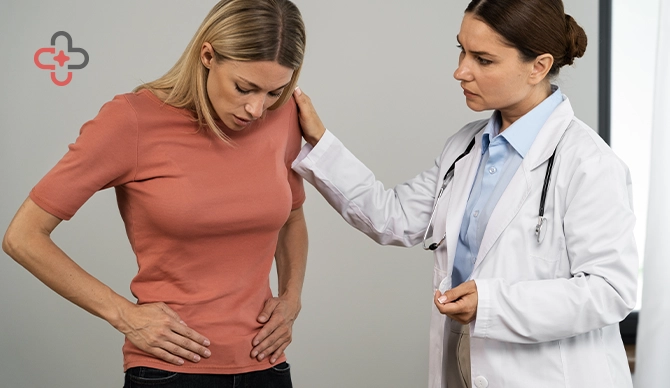
Pelvic pain can develop from the reproductive organs, urinary system, digestive tract, pelvic muscles, joints or nerves. Common causes include menstrual cramps, infections, ovarian cysts, endometriosis, constipation and muscle strain. Persistent, severe or unexplained pelvic pain requires medical evaluation to identify its source.
What Is Pelvic Pain?
Pelvic pain is discomfort below the belly button and between the hips. This area contains the uterus, ovaries, fallopian tubes, bladder, bowel, pelvic-floor muscles, blood vessels and nerves. A problem affecting any of these structures can cause pain in the pelvic area.
Pelvic pain can be acute, beginning suddenly and lasting a short time or chronic. Chronic pelvic pain lasts 6 months or longer. In some cases, more than one condition contributes to constant pelvic pain.
What Does Pelvic Pain Feel Like?
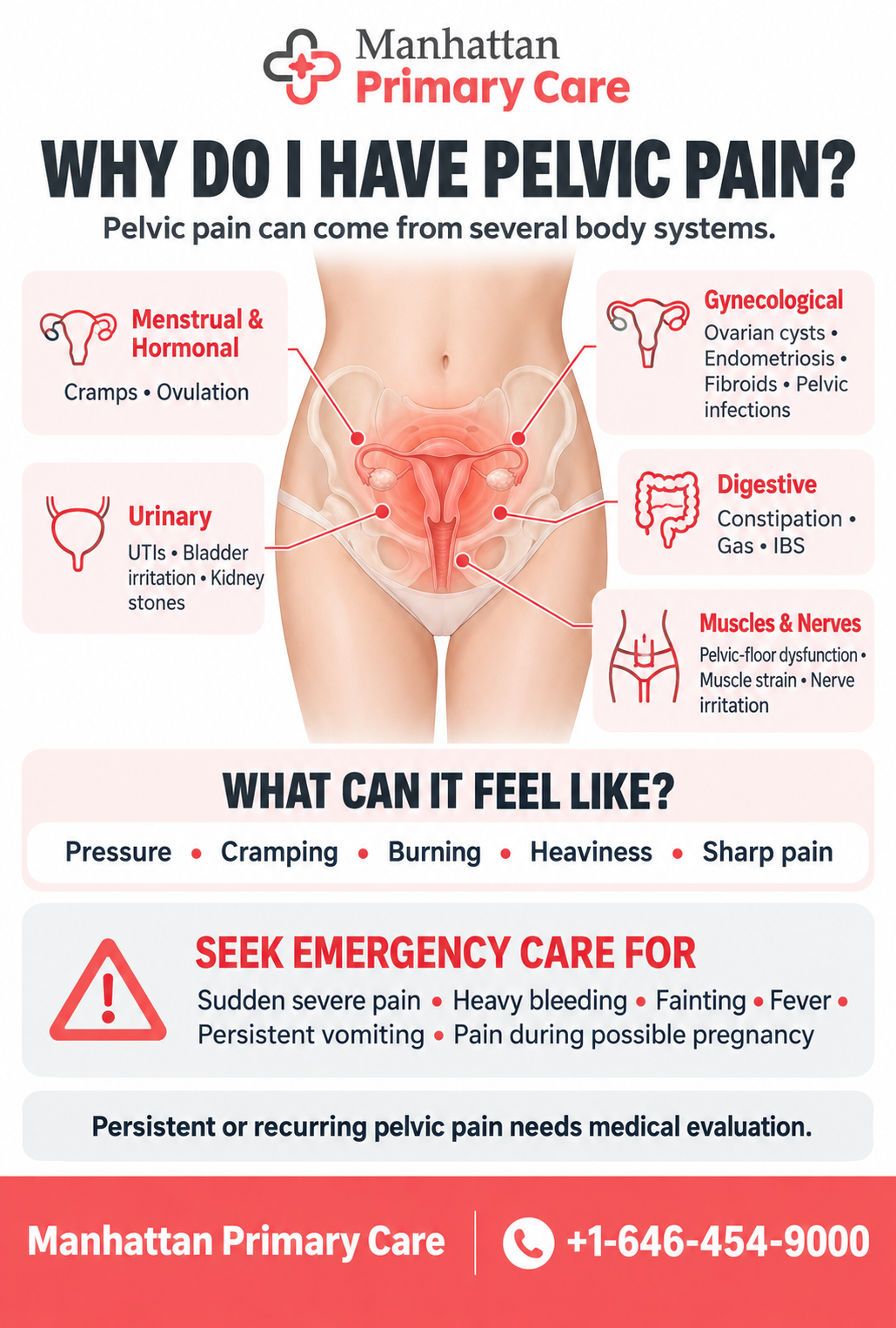
Pelvic pain can feel sharp, dull, burning, cramping, heavy or pressure-like. Its location, timing, triggers and related symptoms provide important clues about its source.
Pelvic pain symptoms include:
- Dull aching or pelvic discomfort
- Pelvic pressure or heaviness
- Menstrual-type pelvic cramping
- Sharp or stabbing pelvic pain
- A burning sensation in the pelvic area
- Pain that spreads to the lower back, groin or thighs
- Pelvic pain when walking, exercising or having sex
- Pain associated with urination or bowel movements
Pelvic pressure and pain are symptoms, not diagnoses. Pelvic bone pain can also originate from the hips, joints, ligaments or muscles surrounding the pelvis.
What Are The Most Common Causes Of Pelvic Pain?
Common pelvic pain causes include menstrual cramps, ovulation, ovarian cysts, endometriosis, fibroids, pelvic infections, urinary problems, digestive disorders and pelvic-floor dysfunction. The pattern of pain and accompanying symptoms help determine which category is most likely.
Menstrual and Hormonal Causes
Period cramps occur when the uterus contracts to shed its lining. Mild cramping for 1 or 2 days is common, but pain that interrupts work, sleep or normal activities needs evaluation.
Ovulation pain can cause a brief, one-sided ache or sharp pain around the middle of the menstrual cycle. Hormonal changes can also affect the bowel, pelvic muscles and perception of pain.
Gynecological Causes
Gynecological conditions such as ovarian cysts, endometriosis, fibroids, infections and pregnancy-related complications can cause pelvic pain.
Several reproductive conditions can cause lower pelvic pain:
- Ovarian cysts: Fluid-filled sacs can produce pressure, one-sided pain or a sudden sharp sensation if a cyst ruptures or twists.
- Endometriosis: Tissue similar to the uterine lining grows outside the uterus, causing painful periods, chronic pelvic pain, pain during sex or difficulty becoming pregnant.
- Uterine fibroids: Noncancerous uterine growths can cause pelvic pressure, heavy periods, frequent urination or lower abdominal fullness.
- Pelvic inflammatory disease: An infection of the reproductive organs can cause lower abdominal pain, unusual discharge, fever, bleeding between periods or pain during sex.
- Pregnancy-related conditions: Miscarriage and ectopic pregnancy can cause pain and bleeding and require prompt medical attention.
Because ovarian cysts, endometriosis, fibroids and menstrual disorders can produce similar symptoms, an evaluation is needed to identify the source. Our women’s health services include personalized assessment of pelvic pain, menstrual concerns and other gynecological symptoms.
Urinary Causes
A urinary tract infection can produce pelvic pressure, burning during urination, frequent urination and a persistent urge to empty the bladder.
Kidney stones can cause intense pain that spreads toward the lower abdomen or groin. Painful bladder syndrome can cause recurring bladder pressure or pain even when testing does not show a routine infection.
Digestive Causes
Constipation, trapped gas and irritable bowel syndrome can produce pain in the pelvic area because part of the bowel lies within the pelvis.
Digestive pain often occurs with:
- Bloating or excess gas
- Constipation or diarrhea
- Pain that changes after a bowel movement
- Pelvic pain after eating
- Changes in stool frequency or appearance
Severe pelvic pain after eating, especially with repeated vomiting, fever, abdominal swelling or blood in the stool, requires medical evaluation.
Muscle, Joint and Nerve-Related Causes
Tight, weak, injured or uncoordinated pelvic-floor muscles can cause aching, pressure, painful sex, urinary symptoms and pain during movement.
Pelvic pain when walking can also result from muscle strain, hip problems, pelvic joint dysfunction, pregnancy-related pelvic changes or nerve irritation. Pain that consistently worsens with movement deserves an examination before beginning exercises because the correct treatment depends on the involved structure.
Why Does My Uterus Hurt?
Pain that feels like uterus pain can come from menstrual contractions, fibroids, endometriosis, adenomyosis, infection, pregnancy-related conditions or nearby organs. The location of the sensation alone cannot confirm that the uterus is responsible.
A sharp pain in the uterus or stabbing pain in the uterus can actually originate from an ovary, bladder, bowel, pelvic muscle or appendix. Timing provides useful context. For example, pain during a period differs clinically from sudden one-sided pain accompanied by nausea or faintness.
Which Pelvic Pain Symptoms Need Medical Attention?
Some pelvic pain symptoms may signal an urgent condition, while persistent or recurring discomfort should be evaluated by a healthcare professional.
Arrange a medical evaluation when pelvic discomfort:
- Is new, unexplained,or repeatedly returns
- Becomes more frequent or intense
- Interferes with walking, sleep, work or sex
- Occurs with abnormal vaginal bleeding or discharge
- Causes painful or frequent urination
- Develops with constipation, diarrhea or rectal bleeding
- Continues outside the menstrual period
- Does not improve with basic comfort measures
Persistent pelvic heaviness can also occur with pelvic-floor problems, fibroids, bladder conditions or pelvic organ prolapse. An examination is needed to distinguish among these causes.
When Is Pelvic Pain Dangerous?
Sudden, severe pelvic pain can represent an emergency, particularly during pregnancy or when it occurs with heavy bleeding, fever, vomiting, dizziness or fainting.
Seek emergency medical care for:
- Sudden, extreme pelvic pain
- Rapidly worsening or intense pelvic pain
- Heavy vaginal bleeding
- Pain during a confirmed or possible pregnancy
- Fainting, confusion or severe weakness
- Fever with severe pain
- Persistent nausea or vomiting
- A rigid or extremely tender abdomen
- Inability to urinate
- Severe groin or scrotal pain or swelling
Sudden severe pain can occur with conditions such as ectopic pregnancy, ovarian torsion, a ruptured ovarian cyst, appendicitis or a serious infection. These symptoms require emergency care rather than a routine office appointment.
How Is Pelvic Pain Diagnosed?
Pelvic pain is diagnosed by combining the symptom pattern, medical history, physical examination and targeted testing. No single test identifies every possible cause.
Your clinician can ask about:
- The exact location and intensity of the pain
- When the pain started and how long it lasts
- Menstrual timing and abnormal bleeding
- Possible pregnancy
- Urinary, bowel and sexual symptoms
- Previous infections, surgeries and health conditions
- Activities, foods or movements that trigger pain
Testing can include a urinalysis, pregnancy test, blood tests or infection screening. These diagnostic lab testing services help identify urinary infections, pregnancy-related factors and signs of inflammation or infection. Ultrasound can detect ovarian cysts, fibroids and other structural changes. CT or MRI imaging is used when the initial findings indicate a need for further evaluation.
How Is Pelvic Pain Treated?
Pelvic pain treatment targets the underlying cause rather than the sensation alone. Treatment can include pain medication, antibiotics, hormonal therapy, dietary changes, pelvic-floor physical therapy or surgery.
Common approaches include:
- Heat and appropriate pain-relief medication for uncomplicated menstrual cramps
- Antibiotics for confirmed bacterial infections
- Hormonal treatment for selected menstrual or gynecological conditions
- Hydration, fiber, dietary adjustments or medication for digestive causes
- Pelvic-floor physical therapy for muscle dysfunction
- Specialist procedures or surgery for certain cysts, fibroids, endometriosis or urgent conditions
Manhattan Primary Care can assess your symptom pattern, perform appropriate initial testing, begin treatment and coordinate imaging or specialist care when required. Schedule an evaluation if your pelvic pain keeps returning, disrupts daily activities or occurs with urinary, digestive, menstrual or sexual symptoms.
Conclusion
Pelvic pain can come from the reproductive organs, urinary system, digestive tract, muscles, joints or nerves. Because different conditions can produce similar symptoms, persistent or recurring pain needs proper evaluation. Our primary care services can identify the likely source, arrange appropriate testing, begin treatment and coordinate specialist care when necessary.
Frequently Asked Questions
Can pelvic pain affect fertility?
Some conditions associated with pelvic pain, including endometriosis and pelvic infections, can affect fertility. Pelvic pain alone does not confirm a fertility problem.
Can stress make pelvic pain worse?
Yes. Stress can increase muscle tension and pain sensitivity, intensifying existing pelvic discomfort. This does not mean the pain is imaginary or purely psychological.
Can previous abdominal surgery cause pelvic pain?
Yes. Scar tissue, nerve irritation or changes around a surgical site can cause pelvic pain after abdominal or pelvic surgery.
Can pelvic pain occur after menopause?
Yes. Urinary, digestive, muscular and gynecological conditions can cause pelvic pain after menopause. New pain or postmenopausal bleeding requires medical evaluation.
What details should I track before my appointment?
Record the pain’s location, severity, duration, timing and triggers. Also note bleeding, discharge, fever, urinary changes, bowel symptoms and medications taken.
Can constipation cause pelvic pain?
Yes. Retained stool can stretch the bowel and increase pressure in the lower abdomen and pelvis. The pain often improves after a bowel movement.
Can gas cause pelvic pain?
Yes. Trapped gas in the lower intestine can cause pelvic pressure, bloating, cramping or sharp pain that changes location and improves after passing gas.
Sources
- Hinge Health – Pelvic pain when walking: causes, treatments, and exercises
- Verywell Health – Pelvic Pain in Women and Men
- Health Line – What Could Be Causing Pain in Your Pelvis?
- Medical News Today – What causes pelvic pain?
- Jean Hailes – Pelvic pain: know the different causes and when to seek help
Disclaimer
This blog is for informational & educational purposes only and does not intend to substitute any professional medical advice or consultation. For any health-related concerns, please consult with your physician or call 911.
 492 6th Avenue New York, NY 10011
 +1-646-454-9000
 Hours of Operation


