

 Last updated: August 26, 2026
 9 min read
Sore throat and diarrhea together are most commonly caused by viral infections that affect the respiratory and digestive systems. Influenza, COVID-19, adenovirus and viral gastroenteritis are possible causes. Bacterial infections, including strep throat, may also cause digestive symptoms. Other symptoms, their timing and medical testing help identify the cause.
Key points:
- Viral infections cause most cases of sore throat and diarrhea occurring together.
- Strep throat primarily affects the throat, but children may also experience stomach pain, nausea or vomiting.
- Vomiting, acid reflux, postnasal drainage or dehydration can irritate the throat during a stomach illness.
- Antibiotics treat certain bacterial infections, not viral illnesses.
- Blood in the stool, breathing difficulty, severe dehydration or persistent symptoms require medical attention.
Why Do Sore Throat And Diarrhea Happen Together?
A sore throat develops when the tissues in the throat become inflamed or irritated. Diarrhea occurs when the digestive system produces frequent, loose or watery stools. Although these symptoms affect different parts of the body, one infection can cause both.
Common explanations for sore throat and diarrhea symptoms include:
- A virus affects both the respiratory and digestive systems.
- The immune response to an infection produces symptoms throughout the body.
- Vomiting or acid reflux irritates the throat during a stomach illness.
- Diarrhea causes dehydration, leaving the mouth and throat dry.
- Two unrelated health problems occur at the same time.
Accompanying symptoms provide useful clues. A sore throat, cough and diarrhea may indicate a respiratory virus, while diarrhea with severe stomach cramps may point toward gastroenteritis or foodborne illness.
What Viral Infections Cause Sore Throat And Diarrhea?
Viruses are the most common cause of a sore throat with diarrhea. The exact symptom pattern depends on the type of virus.
Viral Gastroenteritis
Viral gastroenteritis is a common stomach infection that can also cause throat irritation through vomiting and dehydration.
Viral gastroenteritis, commonly called a stomach virus, primarily causes:
- Watery diarrhea
- Stomach cramps
- Nausea or vomiting
- Reduced appetite
- Occasional fever
A sore throat is not always a direct symptom of viral gastroenteritis. Repeated vomiting, acid reflux, mouth breathing or dehydration can irritate the throat.
Norovirus symptoms commonly improve within one to three days. Other forms of viral gastroenteritis may last several days.
Influenza
Influenza can cause sudden fever, cough, body aches, fatigue and sore throat. Some people also develop vomiting and diarrhea. These digestive symptoms occur more frequently in children than in adults.
COVID-19
COVID-19 can cause both respiratory and digestive symptoms, including sore throat and diarrhea.
COVID-19 may cause:
Fever does not occur in every case. Symptoms alone cannot reliably distinguish COVID-19 from influenza or another respiratory infection.
Adenovirus And Other Respiratory Viruses
Adenoviruses can cause cold-like symptoms, sore throat, bronchitis and acute gastroenteritis. This makes adenovirus one of the clearest explanations for simultaneous throat and stomach symptoms.
Other respiratory viruses may produce a dry cough and diarrhea or a sore throat, cough and diarrhea. Digestive symptoms are generally less common with ordinary respiratory infections.
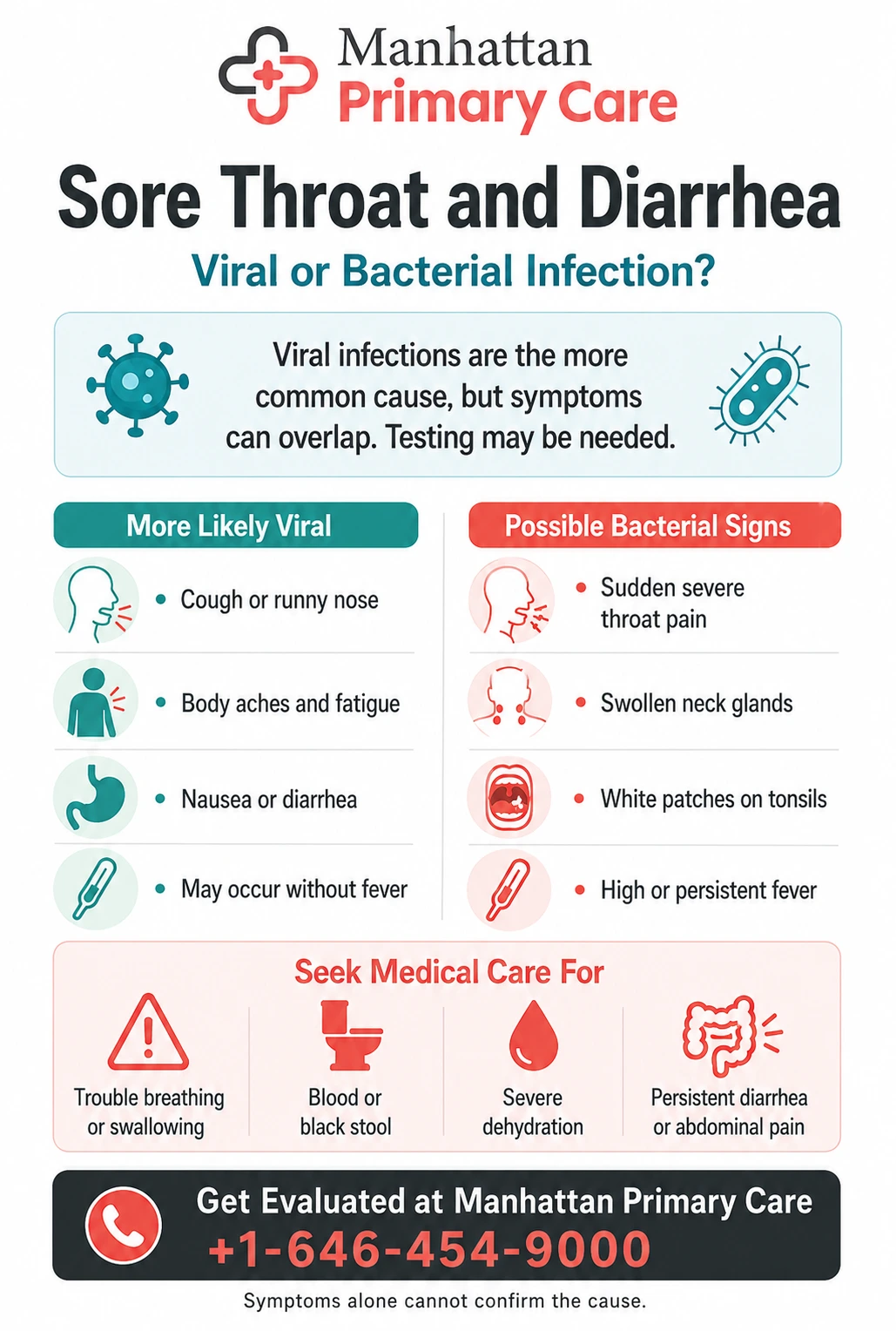
How Do Viral And Bacterial Symptoms Compare?
| Feature | More Common With Viral Infection | More Suggestive of Bacterial Infection |
| Cough or runny nose | Common | Less typical with strep throat |
| Diarrhea | Possible | May occur with a foodborne infection |
| Sudden severe throat pain | Possible | Common with strep throat |
| White tonsil patches | Possible | Common with strep, but testing is required |
| Body aches and fatigue | Common | Possible |
| Bloody diarrhea | Uncommon | May indicate an invasive intestinal infection |
| Antibiotic treatment | Not effective | Used for specific diagnosed infections |
These patterns provide clues, but they do not confirm the cause. A healthcare provider may need to examine the throat and order appropriate testing.
What Causes Sore Throat And Diarrhea?
Several other conditions, including tonsillitis, sinus infections, foodborne illness and medication side effects, can also lead to these symptoms occurring together.
Tonsillitis
Tonsillitis means inflammation of the tonsils. Viruses cause most cases, but bacteria such as group A strep can also be responsible.
Tonsillitis and diarrhea may appear together when a virus affects multiple body systems or when medication causes digestive side effects.
Sinus Infection
A sinus infection can produce postnasal drainage that irritates the throat. However, sinus infection and diarrhea are not a classic symptom combination.
Diarrhea may result from a simultaneous viral illness, dietary changes or antibiotics used to treat a bacterial sinus infection.
Medication Effects
Antibiotics frequently cause loose stools by changing the balance of bacteria in the intestines. Some other medicines and supplements can also cause diarrhea or irritate the throat.
Contact a healthcare provider if diarrhea becomes severe, persistent or bloody or develops during or shortly after antibiotic treatment.
Foodborne Illness
Foodborne infections primarily cause diarrhea, vomiting, fever and stomach cramps. A sore throat may develop because of vomiting, acid reflux, dehydration or a separate respiratory illness.
What Is The Treatment For Sore Throat And Diarrhea?
The appropriate sore throat and diarrhea treatment depends on the underlying cause.
Treatment For A Viral Infection
Most viral infections improve with rest, fluids and supportive care.
Typically resolve with supportive care:
- Drink water, broth or an oral rehydration solution.
- Take small, frequent sips if nausea makes drinking difficult.
- Rest while your body recovers.
- Use warm liquids or saltwater gargles for throat discomfort.
- Resume soft, easy-to-digest foods as tolerated.
- Ask a healthcare professional about appropriate pain or fever medicine.
Adults should avoid anti-diarrheal medicines when diarrhea is bloody or accompanied by a fever unless a healthcare provider recommends them.
Treatment For A Bacterial Infection
A healthcare provider may perform a rapid strep test, throat culture or stool test based on the symptoms. Confirmed strep throat requires prescription antibiotics.
Antibiotics do not treat colds, influenza, COVID-19 or viral gastroenteritis. Unnecessary antibiotic use can cause side effects, including diarrhea and contribute to antibiotic resistance.
How Long Does Recovery Take?
Recovery time varies based on the underlying cause and how severe the symptoms are.
Recovery time depends on the cause:
- Norovirus commonly improves within one to three days.
- Other viral stomach infections may last several days.
- Cold symptoms often improve gradually within seven to ten days.
- Influenza commonly causes several days of significant symptoms, although fatigue may continue longer.
- Confirmed strep throat often begins improving within one or two days after starting appropriate antibiotics.
A sore throat and diarrhea but no fever can still result from a viral infection. Fever is only one clinical clue. Its absence does not confirm or exclude strep throat, influenza, COVID-19 or gastroenteritis.
When Should You See A Doctor?
Schedule a medical evaluation when your symptoms worsen, last longer than expected or prevent normal eating and drinking.
Seek prompt medical care for:
- Persistent or frequent diarrhea
- High or continuing fever
- Blood or black coloration in the stool
- Severe abdominal pain
- Repeated vomiting
- Severe throat pain or difficulty swallowing
- Symptoms that begin after antibiotic treatment
- Increased risk due to pregnancy, older age, immune suppression or a chronic condition
Warning signs of dehydration include:
- Very dry mouth
- Intense thirst
- Dark or infrequent urine
- Dizziness or weakness
- Sunken eyes
- Unusual sleepiness or confusion
Call 911 or seek emergency care for difficulty breathing, inability to swallow saliva, fainting, confusion or other rapidly worsening symptoms.
Sore Throat And Diarrhea Treatment At Manhattan Primary Care
Through its primary care services, Manhattan primary care evaluates sore throat, diarrhea and other acute illness symptoms at its Manhattan and Forest Hills locations.
A healthcare provider reviews your symptoms, examines your throat, assesses your hydration and determines whether a rapid strep test, throat culture, viral test, stool test or another evaluation is appropriate.
Manhattan primary care offers same-day appointments, walk-ins and telehealth consultations for eligible health concerns. An accurate diagnosis helps you receive the appropriate treatment and avoid unnecessary antibiotics.
Conclusion
Sore throat and diarrhea together are usually caused by a virus, but strep throat, tonsillitis, medication effects, foodborne illness and overlapping infections remain possible. Monitor your accompanying symptoms, maintain hydration and avoid taking antibiotics without a diagnosis. A medical evaluation can identify the cause and guide the right treatment.
Frequently Asked Questions
Can strep throat cause diarrhea?
Yes, strep throat can sometimes include stomach pain, nausea, or vomiting—especially in children but diarrhea is uncommon. Testing is needed to confirm strep versus a viral infection.
Can a cold cause diarrhea and sore throat?
A cold commonly causes a sore throat, cough, congestion and runny nose, but diarrhea is uncommon. Another respiratory virus, viral gastroenteritis, a medication effect or two simultaneous conditions may provide a better explanation.
Can sore throat and diarrhea be contagious?
Yes. When an infection causes both symptoms, it may spread through respiratory droplets, contaminated hands, food or shared surfaces. The transmission route depends on the specific virus or bacterium.
Should I stay home with a sore throat and diarrhea?
Yes. Stay home while diarrhea is active and avoid preparing food for others. You should also limit close contact when you have coughing, fever or other signs of a contagious respiratory infection.
What foods can I eat with a sore throat and diarrhea?
Choose soft, bland foods such as rice, oatmeal, bananas, soup and toast. Avoid spicy, greasy or highly acidic foods because they can irritate the throat and digestive system.
Can stress cause sore throat and diarrhea?
Stress can trigger diarrhea and worsen acid reflux, which may irritate the throat. However, stress does not directly cause an infection. New or persistent symptoms still require proper evaluation.
Can sore throat and diarrhea occur during pregnancy?
Yes. Pregnant patients can develop the same respiratory and digestive infections as other adults. Contact a healthcare provider if diarrhea continues, fluid intake becomes difficult or signs of dehydration appear.
Sources
- Health Line – What Can Cause Concurrent Sore Throat and Diarrhea?
- Texas Emergency Care – When Sore Throat and Diarrhea Occur Together: What It Means for Your Health
- Manhattan Medical Arts – Unraveling The Link: Diarrhea And Sore Throat Causes, Prevention & Treatment
- American Family Care – Is Diarrhea a Symptom of Strep Throat?
- Medical News Today – Can diarrhea and a cold occur at the same time?
Disclaimer
This blog is for informational & educational purposes only and does not intend to substitute any professional medical advice or consultation. For any health-related concerns, please consult with your physician or call 911.
 492 6th Avenue New York, NY 10011
 +1-646-454-9000
 Hours of Operation


