

 Last updated: October 7, 2026
 8 min read
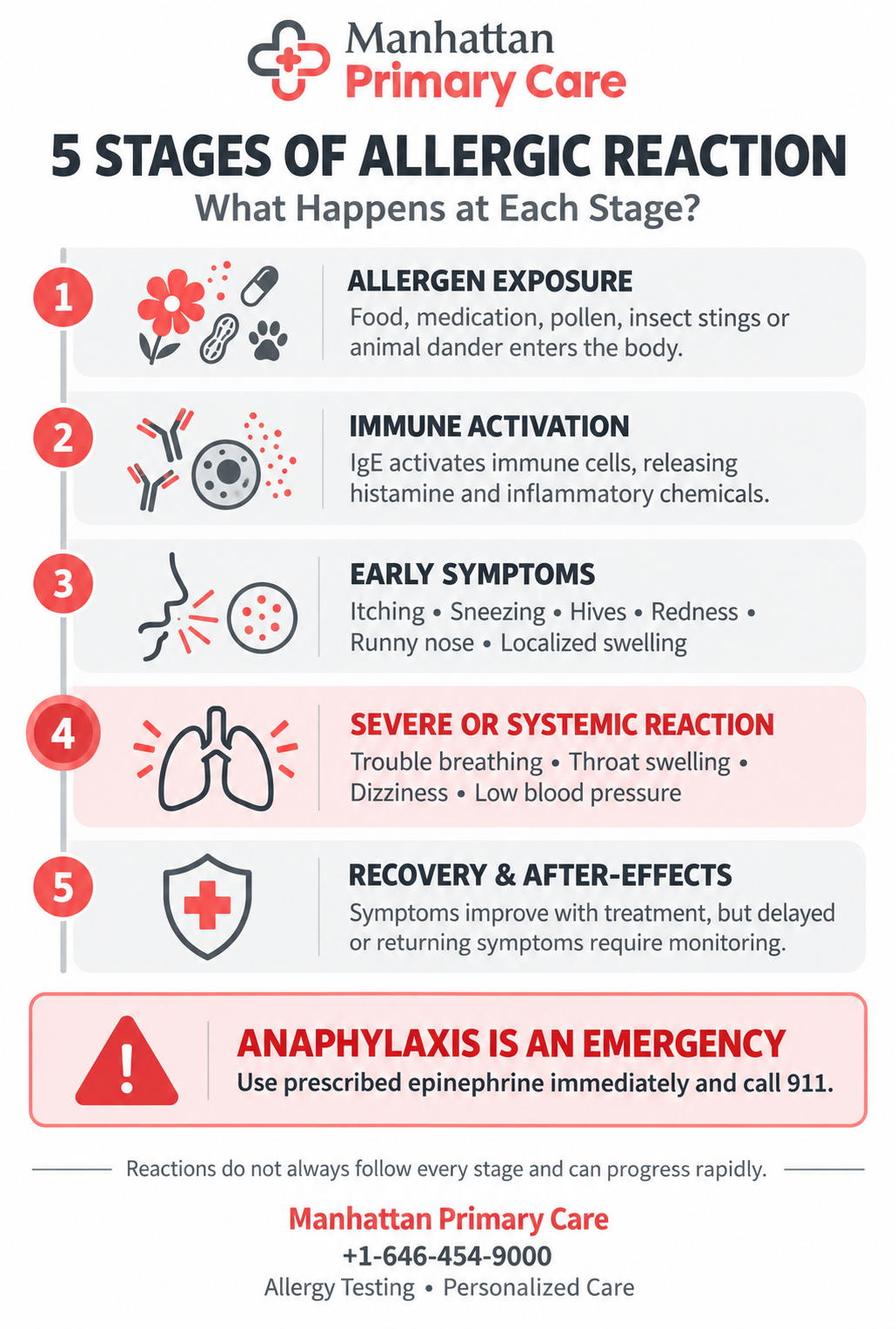
The 5 stages of allergic reaction can be described as allergen exposure, immune activation, early symptoms, a possible severe or systemic response and recovery or continued monitoring. However, reactions do not always follow this exact sequence. Some remain mild, some develop hours later and others progress rapidly to anaphylaxis.
What Happens During An Allergic Reaction?
An allergic reaction occurs when the immune system treats a normally harmless substance, called an allergen, as a threat. Depending on the type of allergy, the body may produce immunoglobulin E or IgE, antibodies that recognize that specific allergen.
After another exposure, the allergen can activate IgE-coated immune cells called mast cells and basophils. These cells release histamine and other inflammatory chemicals.
This allergic response may cause:
- Itching or redness
- Sneezing or a runny nose
- Watery eyes
- Hives or a rash
- Swelling
- Coughing or wheezing
- Abdominal pain, vomiting or diarrhea
- Breathing or circulation problems in severe cases
Not every allergy is IgE-mediated. Contact dermatitis, certain medication reactions and some food-related conditions involve different immune pathways and may take longer to appear.
What Are The 5 Stages Of An Allergic Reaction?
The 5 stages of allergic reaction provide a simple way to understand how exposure can lead to symptoms and recovery. They are not an official severity scale and a person does not need to experience every stage.
Stage 1: Allergen Exposure
The first stage of the allergic reaction begins when the body encounters a potential trigger.
Common allergens include:
- Foods such as peanuts, milk, eggs or shellfish
- Medications
- Insect stings
- Pollen
- Dust mites
- Mold
- Animal dander
- Latex
During an initial exposure, the person may not experience symptoms. The immune system may instead begin recognizing the substance and become sensitized to it.
Sensitization can also happen through earlier exposure that a person does not remember. This helps explain why someone can appear to develop an allergy after previously encountering a substance without a noticeable reaction.
Stage 2: Immune Activation
In many immediate allergies, the immune system produces allergen-specific IgE antibodies. These antibodies attach to mast cells and basophils, preparing them to respond during a future exposure.
When the allergen is encountered again, it binds to the IgE antibodies and activates these immune cells. Histamine and other inflammatory chemicals are then released.
This process can remain limited to one area, such as the nose or skin. It can also contribute to a systemic allergic reaction involving several areas of the body. The extent of the response depends on the allergen, exposure route, individual immune system and other health factors.
Stage 3: Early Symptoms Appear
Immediate symptoms often begin within minutes, although some may take several hours. The location and intensity of the symptoms determine the apparent levels of allergic reactions.
Common mild or localized symptoms include:
- Sneezing
- Runny or congested nose
- Itchy or watery eyes
- Mild itching
- Limited hives
- Skin redness
- Mild localized swelling
Some people also develop nausea, stomach cramps, coughing or wheezing. Symptoms involving more than one body system deserve close attention because they can indicate a broader reaction.
The different levels of allergy severity cannot always be predicted from the first symptom. A reaction that begins with mild itching or hives may remain mild, but it can also worsen quickly.
Stage 4: Severe or Systemic Reaction
A severe allergic response occurs when symptoms affect the airway, breathing, circulation or several body systems. Anaphylaxis is the most dangerous form of systemic allergic reaction, but it should not be viewed as an inevitable fourth or fifth stage. It may develop rapidly after exposure.
Warning signs include:
- Swelling of the tongue or throat
- Trouble breathing, wheezing or noisy breathing
- Difficulty swallowing or a hoarse voice
- Dizziness, confusion or fainting
- A weak or rapid pulse
- A sudden drop in blood pressure
- Widespread hives with breathing or digestive symptoms
- Repetitive vomiting or severe abdominal cramps after likely allergen exposure
- Collapse or loss of consciousness
Anaphylaxis can occur without hives or another visible skin reaction. It requires immediate treatment with epinephrine and emergency medical care.
If anaphylaxis is suspected, use a prescribed epinephrine auto-injector immediately and call 911. Do not wait for every symptom to appear and do not use an antihistamine as a substitute for epinephrine.
Stage 5: Recovery and After-Effects
Symptoms may improve after the allergen is removed or appropriate treatment is provided. Mild reactions may settle relatively quickly, while severe reactions require medical observation and follow-up.
Occasionally, symptoms of anaphylaxis improve and then return without another exposure. This is called a biphasic reaction. It is one reason a person should still receive emergency evaluation after using epinephrine, even if they begin to feel better.
Recovery should also include identifying the likely trigger, reviewing medications and creating a plan for future exposure. People who have experienced anaphylaxis may need an emergency action plan and prescribed epinephrine.
Why Do Delayed Allergic Reactions Happen?
A delayed allergic reaction develops hours or sometimes days after exposure. Unlike a typical immediate IgE-mediated reaction, a delayed allergic reaction may involve other immune cells and inflammatory pathways.
Examples include:
- Contact dermatitis after exposure to nickel, adhesives, fragrances or poison ivy
- Certain delayed medication rashes
- Alpha-gal allergy, which can cause symptoms several hours after eating meat from mammals
- Some non-IgE-mediated food reactions
Delayed reactions commonly cause rashes, itching, redness or digestive symptoms. However, timing alone cannot determine whether a reaction is mild. New breathing difficulty, throat swelling, fainting or rapidly worsening symptoms always require emergency attention.
What Are The Levels Of Allergic Reactions?
Allergic reactions can range from mild and localized symptoms to severe, life-threatening anaphylaxis.
Allergic reactions are generally classified by severity:
- Mild: Localized itching, sneezing, watery eyes, a small rash or limited hives
- Moderate: Widespread hives, facial swelling, persistent vomiting, coughing or wheezing
- Severe: Airway swelling, breathing difficulty, low blood pressure, fainting, collapse or symptoms affecting multiple body systems
These levels of allergy severity can change quickly. The absence of a rash does not rule out a serious reaction.
How Are Allergic Reactions Treated?
Treatment depends on the trigger and severity. Mild reactions may improve with allergen avoidance and antihistamines. Breathing problems, throat swelling, dizziness or fainting require immediate epinephrine and emergency care. A healthcare professional can identify triggers, recommend treatment and help prevent future reactions.
Appropriate approach varies based on the allergen, symptoms and reaction severity:
- Avoid the suspected allergen: Stop exposure when this can be done safely.
- Antihistamines: These may relieve mild itching, hives or nasal symptoms but do not treat anaphylaxis.
- Corticosteroids: A clinician may recommend them for specific inflammatory conditions, but they do not act quickly enough to replace epinephrine during an emergency.
- Epinephrine: This is the first-line treatment for anaphylaxis.
- Emergency monitoring: Severe reactions require emergency evaluation because symptoms may persist or return.
- Allergy evaluation: Medical history and appropriate testing can help identify triggers and guide prevention.
Recurring hives, unexplained rashes, seasonal symptoms or suspected food and environmental triggers deserve a medical evaluation. Manhattan Primary Care can review the timing of your symptoms, possible exposures, health history and medications before recommending appropriate allergy testing and a personalized management plan.
Conclusion
The 5 stages of allergic reaction help explain how exposure can activate the immune system, produce symptoms and lead to recovery. However, every reaction is different and does not necessarily follow five predictable steps. If allergy symptoms keep returning, Manhattan Primary Care can help identify possible triggers and develop a practical treatment and prevention plan.
Frequently Asked Questions
Can allergies develop suddenly in adulthood?
Yes. Adults can develop new allergies to foods, medications, insects or environmental substances even after tolerating them for years.
Are allergic reactions contagious?
No. Allergic reactions result from an individual immune response and cannot spread through coughing, touching, sharing food or close contact.
Can stress make allergy symptoms worse?
Yes. Stress does not create an allergy, but it can intensify inflammation, itching, hives and the perceived discomfort of existing symptoms.
Does a positive allergy test confirm an allergy?
No. A positive test shows sensitization, but diagnosis also requires a matching history of symptoms after exposure to that specific allergen.
Can allergies disappear over time?
Some allergies resolve with age, particularly certain childhood food allergies. Others, including allergies to peanuts, tree nuts, seafood and insect venom, often persist.
Sources
- Stat Specialty Hospital – The 5 Stages of Allergic Reaction
- Doral – What Happens Inside Your Body During an Allergic Reaction: 5 Stages Explained
- Manhattan Medical Arts – 5 Stages of an Allergic Reaction: What You Need to Know
- ICCOTX – 5 Stages of Allergic Reaction: Symptoms and Signs
- Doctronic – How quickly can allergic reactions progress through all five stages?
- Medicine Net – What Are the 4 Types of Allergic Reactions? Symptoms
Disclaimer
This blog is for informational & educational purposes only and does not intend to substitute any professional medical advice or consultation. For any health-related concerns, please consult with your physician or call 911.
 492 6th Avenue New York, NY 10011
 +1-646-454-9000
 Hours of Operation


