

 Last updated: November 4, 2026
 7 min read
A belly button may smell because it can trap sweat, bacteria, dead skin cells, body oils, and debris, especially when moisture collects inside the skin fold. A mild odor may improve with proper cleaning, but a strong or persistent belly button odor with symptoms like discharge, redness, swelling, or pain may indicate an infection or another skin condition that requires medical attention.
Why Does My Belly Button Smell?
Your belly button is a small skin fold that can collect substances that are easy to miss during regular bathing. When sweat, oils, dead skin cells, lint, and bacteria build up, they can create an unpleasant smell.
The skin naturally contains bacteria that are usually harmless. However, when moisture and debris become trapped, bacteria or fungi can grow more easily and contribute to odor.
If you are wondering why your belly button stinks even after washing, the cause may not always be poor hygiene. Persistent odor can sometimes happen because of fungal growth, bacterial infection, skin irritation, or another underlying issue.
What Causes Belly Button Odor?
Common causes of belly button odor range from simple buildup of sweat and debris to skin infections that may require medical treatment.
Dirt and Debris Buildup
Trapped debris inside the belly button is one of the most common reasons for unpleasant odor, especially when sweat, oils, and dead skin cells collect over time.
One of the most common reasons a belly button smells is the buildup of:
- Dead skin cells
- Body oils
- Sweat
- Clothing fibers or lint
- Dirt and debris
A deeper belly button can collect more material because the area is harder to clean completely. The buildup may sometimes appear as black stuff in the belly button, which is often a mixture of lint, oils, and dead skin cells.
Regular gentle cleaning can usually remove this type of buildup and reduce odor.
Sweat and Moisture Buildup
A sweaty belly button can create a warm, moist environment where bacteria and fungi can multiply.
Moisture can become trapped because of:
- Exercise and physical activity
- Hot weather
- Tight clothing
- Skin folds around the abdomen
When the area stays damp, it can lead to a stronger belly button smell and increase the chance of irritation.
Fungal Infection
A fungal infection can cause a smelly belly button, especially when yeast grows in a warm and moist environment.
Fungal growth may cause symptoms such as:
- Redness or rash
- Itching
- Burning sensation
- Skin irritation
- White discharge
- Musty odor
Keeping the belly button clean and dry can help reduce fungal growth. If symptoms continue, medical treatment may be needed.
Bacterial Infection
A bacterial infection is another possible reason your belly button stinks. Bacteria can enter through irritated skin, scratches, piercings, or areas where moisture and debris collect.
A bacterial infection may cause:
- Strong or worsening odor
- Yellow, green, or white discharge
- Redness around the belly button
- Swelling
- Tenderness
- Pain or warmth in the area
If these symptoms appear, a healthcare provider can evaluate the area and determine the appropriate treatment.
Belly Button Irritation or Skin Conditions
Sometimes belly button odor is caused by skin irritation rather than an infection.
Friction, sweat, allergies to products, or skin conditions such as dermatitis can affect the skin around the belly button. Irritated skin may trap more moisture and bacteria, making odor more noticeable.
Cysts or Other Less Common Causes
In some cases, a persistent smelly belly button may be related to a cyst or another less common condition.
An infected cyst may cause:
- Foul-smelling drainage
- Swelling
- Pain
- Tenderness
These conditions are less common but may require medical evaluation if symptoms do not improve with proper cleaning.
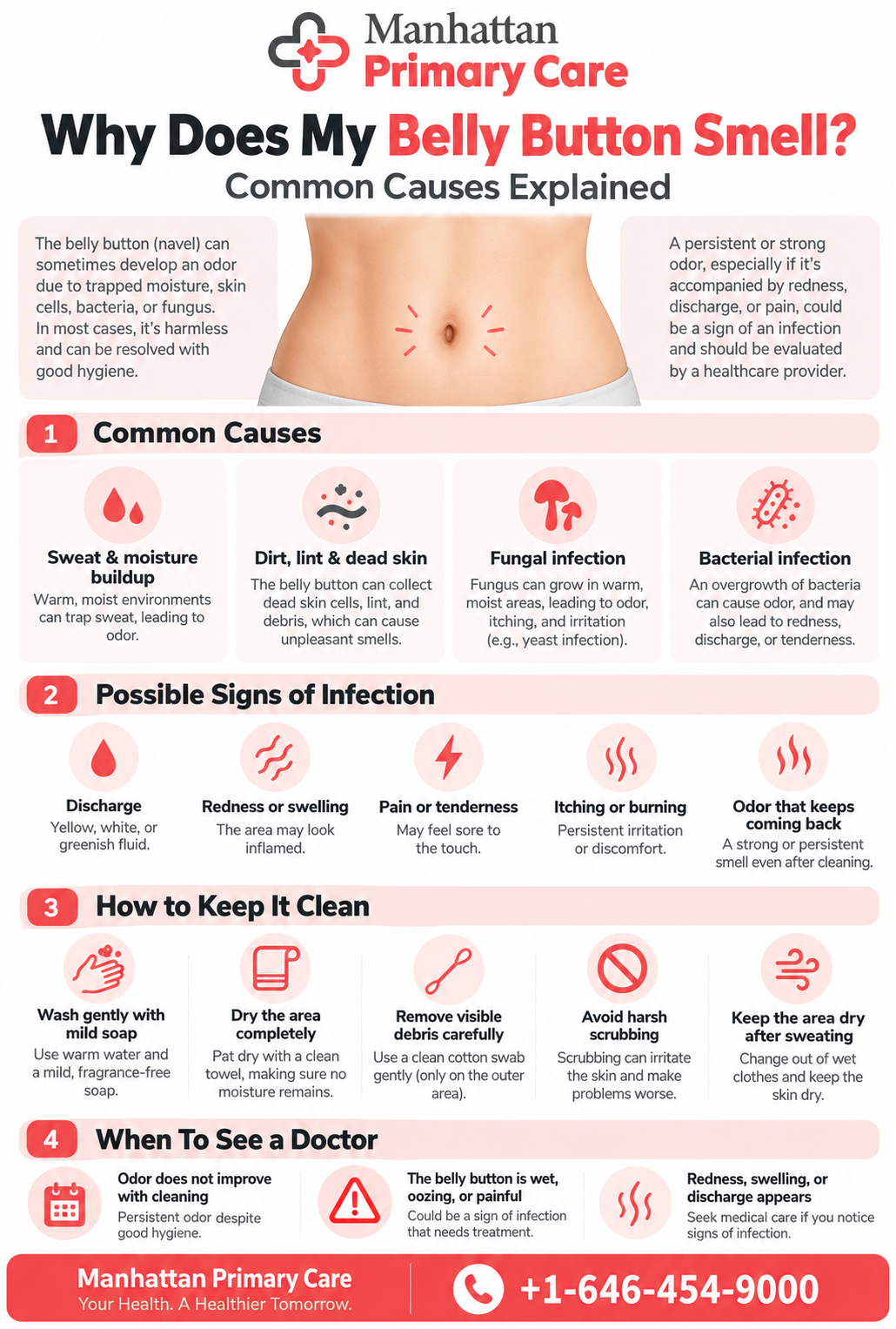
Is It Normal For Your Belly Button To Smell?
A mild occasional odor can happen because the belly button naturally collects sweat, bacteria, oils, and skin debris. However, a persistent unpleasant smell that continues after cleaning should not be ignored.
If your belly button smells along with discharge, irritation, pain, or changes in the surrounding skin, it may be a sign of an infection or another condition that needs evaluation.
Signs Your Belly Button Odor May Be Due To An Infection
A belly button wet and smelly appearance may be more concerning when it occurs with other symptoms.
Signs that may indicate an infection include:
- Yellow, green, or cloudy discharge
- Redness around the belly button
- Swelling or tenderness
- Itching or burning
- Increasing pain
- Bleeding or crusting
- Odor that returns soon after cleaning
A primary care provider can examine the area, identify the cause, and recommend treatment based on whether the problem is related to bacteria, fungus, irritation, or another condition.
If these symptoms appear suddenly or become worse quickly, they may require evaluation for an acute infection or other short-term health concern. Manhattan Primary Care provides acute illness care to help diagnose and treat conditions that need timely medical attention.
How To Clean A Smelly Belly Button?
Knowing how to make belly button from smelling starts with gentle and regular cleaning.
Follow these steps:
- Wash the belly button with warm water and mild soap.
- Gently remove visible debris or lint.
- Rinse away any soap residue.
- Dry the area completely after bathing.
- Avoid applying heavy products that trap moisture inside the belly button.
If you want to know how to stop belly button smell, keeping the area dry is just as important as cleaning it. Avoid aggressive scrubbing because it can irritate the skin and make symptoms worse. Manhattan Primary Care offers preventive care services focused on routine health evaluations and early identification of potential concerns.
Factors That Increase Belly Button Odor Risk
Some people are more likely to develop a smelly belly button because moisture and debris can collect more easily.
Common risk factors include:
- Excess sweating
- A deeper belly button shape
- Tight clothing
- Limited airflow around skin folds
- Difficulty cleaning the area regularly
- Extra abdominal skin folds
An overweight, smelly belly button is often related to moisture trapped between skin folds rather than weight itself. Keeping the area clean and dry can help reduce odor.
Certain long-term health conditions, such as diabetes, can also increase the risk of some skin infections because they may affect how the body responds to infections and heals. Proper chronic disease management can help monitor these conditions and support overall health.
Conclusion
A belly button smell is commonly caused by trapped sweat, bacteria, dead skin cells, oils, or debris. Regular cleaning and keeping the area dry can help prevent many causes of odor.
If the smell persists or occurs with symptoms like discharge, redness, swelling, or pain, it may require medical evaluation. Manhattan Primary Care can help determine the cause and provide appropriate care for ongoing health concerns.
Frequently Asked Questions
Can belly button odor come back after treatment?
Yes. Odor can return if moisture, bacteria, or debris builds up again. Recurring odor may need medical evaluation to identify the underlying cause.
Why does my belly button smell worse during hot weather?
Hot weather increases sweating and moisture, which can allow bacteria and fungi to grow more easily inside the belly button.
Can a belly button piercing cause odor?
Yes. A piercing can trap bacteria or become irritated, leading to odor, redness, swelling, or discharge.
Why does my belly button smell different from the rest of my skin?
The belly button is a closed skin fold where sweat, oils, and bacteria can collect, making odors more noticeable.
Can belly button odor be a sign of a skin allergy?
Yes. Irritation from certain products or materials can cause skin changes that may contribute to odor and discomfort.
Sources
- Health Line – What Causes Belly Button Odor?
- Medical News Today – How to stop your belly button smelling
- Health – ‘Why Does My Belly Button Smell?’: 5 Potential Causes
- Manhattan Medical Arts – Why does my Belly Button smell?
- My Obesity Team – Why Does My Belly Button Smell? Causes and Solutions
Disclaimer
This blog is for informational & educational purposes only and does not intend to substitute for any professional medical advice or consultation. For any health-related concerns, please consult with your physician or call 911.
 492 6th Avenue New York, NY 10011
 +1-646-454-9000
 Hours of Operation


