
 Last updated: July 23, 2026
 16 min read
Finding an ovarian cyst on an ultrasound can feel worrying, especially when the report includes unfamiliar terms such as complex, septated or hemorrhagic.
The reassuring news is that most ovarian cysts are benign, cause few or no symptoms and disappear without treatment. However, some cysts require monitoring or treatment based on their size, appearance, growth and symptoms.
What Size Of Ovarian Cyst Is Dangerous?
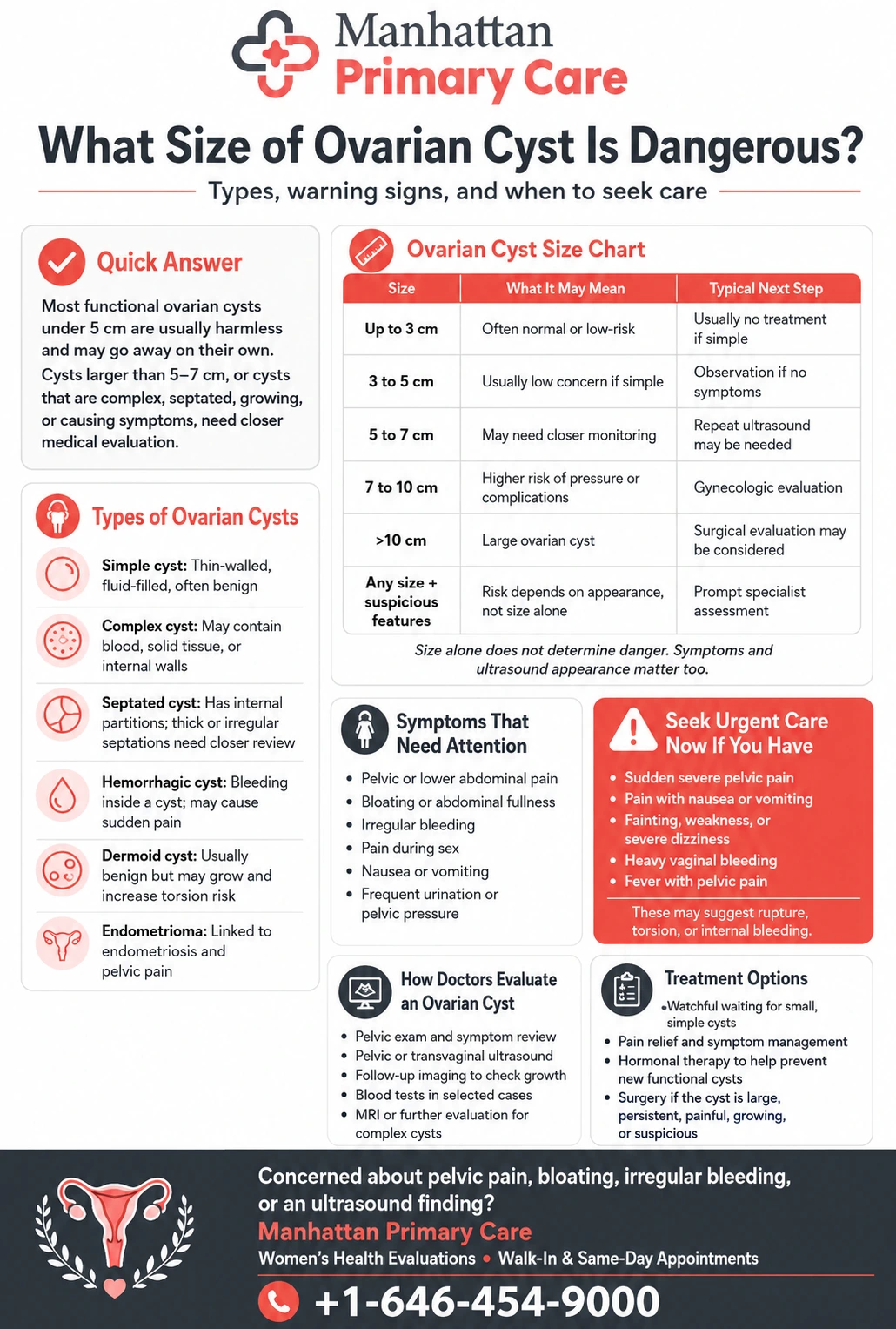
Most functional ovarian cysts under 5 cm are usually harmless and may resolve on their own. Cysts larger than 5 to 7 cm or cysts that are complex, septated, growing or causing symptoms, may need closer evaluation because the risk of rupture, torsion or other complications can increase. Seek urgent medical care for sudden severe pelvic pain, vomiting, fainting, weakness or heavy bleeding.
Understanding Ovarian Cysts
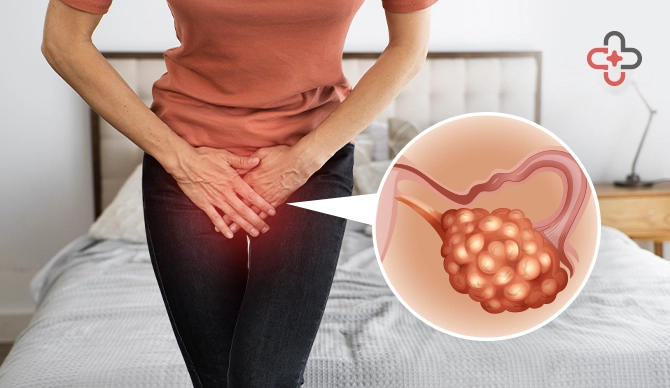
An ovarian cyst is a fluid-filled or partially solid sac that develops inside or on the surface of an ovary. Ovarian cysts are common, particularly before menopause. Many are found incidentally during a pelvic examination or ultrasound performed for another reason.
Ovarian cysts are usually divided into two main categories:
- Functional cysts
- Nonfunctional or pathological cysts
Functional Ovarian Cysts
Functional cysts form as part of the normal menstrual cycle. They are the most common type of ovarian cyst and often disappear within a few weeks or months.
Follicular Cyst
A follicular cyst forms when a follicle does not release an egg and continues filling with fluid. These cysts are usually small, benign, and painless.
Corpus Luteum Cyst
After an egg is released, the follicle becomes a structure called the corpus luteum. If fluid collects inside it, a corpus luteum cyst may form. These cysts often resolve naturally, although they can sometimes bleed or rupture.
Nonfunctional Or Pathological Ovarian Cysts
Nonfunctional cysts develop for reasons unrelated to normal ovulation.
They may include:
- Dermoid cysts
- Endometriomas
- Cystadenomas
- Hemorrhagic cysts
- Benign ovarian tumors
- Malignant ovarian masses
The word “pathological” does not automatically mean cancerous. Many pathological cysts are benign, but they may persist, grow or require treatment.
What Causes Ovarian Cysts?
Ovulation is the most common cause of ovarian cysts.
Other possible causes and risk factors include:
- Hormonal changes
- Endometriosis
- Pregnancy
- Previous ovarian cysts
- Fertility medications
- Pelvic infections
- Abnormal cell growth
- Benign ovarian tumors
- Ovarian cancer
What Is A Normal Ovarian Cyst Size?
There is no single normal ovarian cyst size that applies to everyone.
The significance of a cyst depends on:
- Age
- Menstrual status
- Menopause status
- Pregnancy
- Symptoms
- Ultrasound appearance
- Growth over time
- Medical and family history
In someone who has not reached menopause, a simple fluid-filled structure up to approximately 3 cm may represent a normal follicle related to ovulation. A simple cyst between 3 and 5 cm is also often considered low-risk when it has thin walls, contains only fluid and causes no symptoms.
Ovarian Cyst Size Chart
The following ovarian cyst size chart provides a general guide. It does not replace a personalized medical evaluation.
| Ovarian cyst size | General risk level | Typical next step |
| Up to 3 cm | Often normal or low-risk | Usually no treatment if simple and asymptomatic |
| More than 3 to 5 cm | Usually low concern if simple | Observation or follow-up based on symptoms |
| More than 5 to 7 cm | May require closer monitoring | Repeat ultrasound may be recommended |
| More than 7 to 10 cm | Greater risk of pressure or complications | Gynecologic evaluation and further imaging may be needed |
| More than 10 cm | Considered a large ovarian cyst | Surgical evaluation may be considered |
| Any size with suspicious features | Risk depends on appearance, not size alone | Prompt specialist evaluation may be required |
These measurements are general guidelines.
A 7 cm simple cyst may be less concerning than a 3 cm cyst containing irregular solid tissue, thick walls, nodules or abnormal blood flow.
What Do Ovarian Cyst Measurements Mean?
Ultrasound reports usually record ovarian cyst measurements in three dimensions.
For example:
4.8 × 3.9 × 3.5 cm
The largest number usually represents the cyst’s maximum diameter. However, doctors review the complete shape, volume and internal structure instead of relying on only one measurement.
A slight difference between two ultrasound results does not always mean the cyst is growing. Changes in positioning, equipment and measurement angle can affect the reported size.
Complex Ovarian Cyst Size Chart
A complex ovarian cyst cannot be evaluated based on size alone.
Complex cysts may contain:
- Blood
- Solid tissue
- Internal walls
- Multiple chambers
- Nodules
- Thickened areas
- Irregular borders
- Blood flow inside solid portions
| Complex ovarian cyst finding | Possible significance |
| Small cyst with thin internal wall | May still be benign |
| Hemorrhagic appearance | Often related to bleeding inside a functional cyst |
| Multiple thin septations | May require follow-up imaging |
| Thick or irregular septations | Needs closer evaluation |
| Solid nodules or projections | May require specialist assessment |
| Abnormal blood flow in solid tissue | May raise concern |
| Rapid growth | Requires further evaluation |
| New complex cyst after menopause | Usually needs closer assessment |
A complex ovarian cyst is not automatically cancerous. Many benign cysts, including hemorrhagic cysts, dermoid cysts and endometriomas, can appear complex on ultrasound.
Types Of Ovarian Cysts And Their Risks
Understanding the different types of ovarian cysts can help clarify their potential risks and how they are managed.
1. Simple Ovarian Cyst
A simple ovarian cyst has a thin, smooth wall and contains clear fluid. Most small simple cysts are benign. In premenopausal women, many are related to normal ovulation and disappear naturally.
2. Complex Ovarian Cyst
A complex ovarian cyst contains blood, solid material, internal walls or a combination of these features. The term “complex” describes how the cyst looks on imaging. It does not confirm cancer.
The level of concern depends on:
- Wall thickness
- Solid components
- Internal blood flow
- Growth
- Symptoms
- Age
- Menopause status
3. Septated Ovarian Cyst
A septated ovarian cyst contains one or more internal walls called septations. A single thin and smooth septation may still be associated with a benign cyst.
A septated cyst may require closer evaluation when it contains:
- Thick septations
- Irregular septations
- Multiple chambers
- Solid nodules
- Internal blood flow
- Rapid growth
The appearance of the septations is often more important than the cyst’s size alone.
4. Hemorrhagic Ovarian Cyst
A hemorrhagic cyst develops when bleeding occurs inside a cyst, often within a corpus luteum cyst.
Possible symptoms include:
- Pelvic pain
- Abdominal pressure
- Bloating
- Pain during activity
- Sudden pain if the cyst ruptures
Many hemorrhagic cysts resolve naturally. Larger or painful cysts may require repeat imaging or treatment.
5. Dermoid Cyst
A dermoid cyst develops from reproductive cells and may contain tissue such as fat, hair, skin or teeth. Dermoid cysts are usually benign, but they do not normally disappear on their own.
As they grow, they may increase the risk of:
- Ovarian torsion
- Rupture
- Pelvic pressure
- Damage to ovarian tissue
6. Endometrioma
An endometrioma is an ovarian cyst associated with endometriosis. It contains old blood and is sometimes called a chocolate cyst.
Endometriomas may cause:
- Chronic pelvic pain
- Painful periods
- Pain during sex
- Fertility problems
- Persistent or recurring cysts
Treatment depends on the cyst’s size, symptoms, fertility goals and effect on ovarian function.
How Does Ovarian Cyst Size Affect Risk?
A large cyst is not automatically cancerous. However, increasing ovarian cyst size may raise the risk of mechanical complications.
The main risks include:
- Rupture
- Ovarian torsion
- Internal bleeding
- Pressure on nearby organs
- Persistent pain
- Fertility concerns
- Malignancy in selected cases
Ovarian Cyst Rupture
An ovarian cyst may break open and release fluid or blood into the pelvis. Some ruptures cause mild discomfort. Others can cause severe pain or internal bleeding.
Ovarian Cyst Rupture Symptoms
Possible ovarian cyst rupture symptoms include:
- Sudden lower abdominal pain
- Sharp one-sided pelvic pain
- Nausea
- Vomiting
- Vaginal bleeding
- Abdominal bloating
- Weakness
- Dizziness
- Fainting
- Shoulder pain in cases of significant internal bleeding
Larger cysts may have a higher chance of causing noticeable symptoms if they rupture, although cysts of different sizes can rupture.
Ovarian Torsion
Ovarian torsion occurs when an ovary twists around the tissues and blood vessels supporting it. A large cyst can change the ovary’s weight and shape, making twisting more likely. Ovarian torsion can reduce or stop blood flow to the ovary and is a medical emergency.
Symptoms may include:
- Sudden severe pelvic pain
- One-sided lower abdominal pain
- Nausea
- Vomiting
- Abdominal tenderness
- Pain that comes and goes
Immediate treatment may be needed to protect the ovary.
Can An Ovarian Cyst Be Cancerous?
Most ovarian cysts are benign.
Cancer risk is generally higher when:
- The cyst develops after menopause
- The cyst contains irregular solid tissue
- There are papillary projections or nodules
- The walls or septations are thick
- Abnormal blood flow is present
- The cyst continues growing
- Fluid is present in the abdomen
- There is a strong family history of ovarian or breast cancer
- Symptoms persist or worsen
Size alone cannot confirm or rule out ovarian cancer. A smaller cyst with suspicious internal features may require more urgent evaluation than a larger cyst that is completely simple.
How Fast Do Ovarian Cysts Grow?
There is no single answer to how fast ovarian cysts grow. Growth depends on the type of cyst.
Functional Cysts
Functional cysts often shrink or disappear within one or two menstrual cycles.
Dermoid Cysts
Dermoid cysts may remain for years and grow slowly over time.
Endometriomas
Endometriomas may remain stable, enlarge gradually or recur.
Cystadenomas
Cystadenomas may continue growing and can sometimes become very large.
Malignant Ovarian Masses
Cancerous masses may grow at different rates depending on the type and stage.
A cyst that increases in size between scans should be evaluated, especially if it also causes pain, bleeding, pressure or changes in appearance.
Symptoms Of A Potentially Dangerous Ovarian Cyst
Many ovarian cysts cause no symptoms.
When symptoms occur, they may include:
- Lower abdominal pain
- Pelvic pressure
- A dull ache in the lower back
- Bloating
- Abdominal fullness
- Pain during sex
- Painful periods
- Irregular menstrual bleeding
- Frequent urination
- Difficulty having a bowel movement
- Feeling full quickly
- Unexplained vaginal bleeding
- Nausea or vomiting
A small cyst can sometimes cause significant pain, while a large cyst may cause no symptoms. Pain depends on the cyst’s type, location, bleeding, pressure, rupture or twisting.
When To Seek Emergency Care
Seek immediate medical attention for:
- Sudden severe pelvic pain
- Severe one-sided abdominal pain
- Pain with nausea or vomiting
- Fainting
- Severe dizziness
- Cold or clammy skin
- Rapid breathing
- Weakness
- Heavy vaginal bleeding
- Fever with pelvic pain
- Shoulder pain with abdominal symptoms
These symptoms may indicate ovarian torsion, significant internal bleeding, cyst rupture, infection, ectopic pregnancy, appendicitis or another urgent medical condition.
How Are Ovarian Cysts Diagnosed?
Doctors use a combination of medical history, physical exams and imaging tests to accurately identify and evaluate ovarian cysts.
Medical History
Your healthcare provider may ask about:
- When the pain started
- Where the pain is located
- How severe the pain feels
- Menstrual changes
- Pregnancy possibility
- Previous ovarian cysts
- Endometriosis
- Menopause status
- Medications
- Family history of ovarian or breast cancer
Pelvic Examination
A pelvic examination may help identify tenderness, swelling or a pelvic mass.
Pregnancy Testing
A pregnancy test may be performed because pregnancy-related conditions can also cause pelvic pain.
Pelvic Ultrasound
Ultrasound is the main imaging test used to evaluate ovarian cysts.
It can assess:
- Ovarian cyst size
- Location
- Shape
- Wall thickness
- Fluid or solid content
- Septations
- Nodules
- Blood flow
- Changes from previous scans
A transvaginal ultrasound often provides a detailed view of the ovaries.
MRI or CT Scan
Additional imaging may be recommended when:
- The cyst is very large
- Ultrasound cannot fully characterize it
- The cyst has complex features
- Doctors need to evaluate surrounding organs
- Acute abdominal symptoms are present
CA-125 Blood Test
A CA-125 blood test may be ordered when a cyst has suspicious features or when ovarian cancer risk is higher.
However, CA-125 is not a definitive ovarian cancer test.
It can also be elevated because of benign conditions such as:
- Endometriosis
- Pelvic infection
- Menstruation
- Fibroids
- Pregnancy
The result must be interpreted together with imaging, symptoms, age and menopause status.
Ovarian Cyst Treatments
Ovarian cyst treatments depend on:
- Cyst size
- Cyst type
- Ultrasound appearance
- Symptoms
- Growth
- Age
- Menopause status
- Pregnancy
- Fertility goals
- Cancer risk
Watchful Waiting
Small, simple cysts that do not cause symptoms may be monitored instead of treated immediately.
Watchful waiting may involve:
- Tracking symptoms
- Repeat pelvic ultrasound
- Comparing ovarian cyst measurements
- Monitoring menstrual changes
- Seeking care if symptoms worsen
Many functional cysts disappear within a few months.
Medication
Pain-relieving medication may help manage mild discomfort.
Hormonal birth control may reduce the formation of new functional cysts by suppressing ovulation.
However, hormonal birth control usually does not shrink an ovarian cyst that already exists.
Ovarian Cystectomy
An ovarian cystectomy removes the cyst while preserving the ovary when possible.
It may be considered when the cyst:
- Continues growing
- Does not disappear
- Causes persistent pain
- Is large
- Affects fertility
- Has suspicious imaging features
- Increases the risk of torsion
Oophorectomy
An oophorectomy removes the affected ovary.
It may be considered when:
- The ovary cannot be safely preserved
- The cyst has severely damaged ovarian tissue
- Torsion has stopped blood flow for too long
- Cancer is suspected
- The mass is extremely large or complicated
Laparoscopy Or Open Surgery
Laparoscopy uses small incisions and is often appropriate for benign cysts that can be removed safely.
Open surgery uses a larger abdominal incision and may be required when:
- The cyst is very large
- The mass cannot be removed safely through small incisions
- Cancer is suspected
- Significant bleeding or complications are present
Step-By-Step Ovarian Cyst Monitoring Guide
This guide outlines the key steps to help you monitor and manage an ovarian cyst safely.
Step 1: Review The Complete Ultrasound Report
Do not focus only on the cyst’s largest measurement.
Look for terms such as:
- Simple
- Complex
- Hemorrhagic
- Septated
- Multilocular
- Solid component
- Nodule
- Papillary projection
- Blood flow
- Irregular wall
Step 2: Consider Your Age And Menopause Status
Ovarian cysts are common before menopause. A new ovarian cyst after menopause often requires closer evaluation because the chance of malignancy is higher than it is in younger patients.
Step 3: Track Your Symptoms
Record:
- Pain location
- Pain severity
- Bloating
- Bleeding
- Menstrual changes
- Nausea
- Urinary pressure
- Bowel symptoms
- Pain during sex
Step 4: Complete Follow-Up Imaging
Repeat ultrasound helps determine whether the cyst has:
- Disappeared
- Become smaller
- Remained stable
- Grown
- Developed new complex features
Step 5: Attend A Specialist Evaluation When Recommended
A gynecologist or gynecologic surgeon may be needed when the cyst is:
- Large
- Persistent
- Rapidly growing
- Painful
- Complex
- Suspicious on imaging
- Associated with fertility concerns
Step 6: Do Not Ignore Emergency Symptoms
Sudden severe pain, vomiting, fainting, fever, weakness or heavy bleeding requires immediate medical attention.
Can Ovarian Cysts Be Prevented?
There is no guaranteed way to prevent every ovarian cyst. Functional cysts occur naturally during ovulation. Hormonal contraception may reduce the formation of some new functional cysts, but it does not prevent every type of cyst.
It does not prevent:
- Dermoid cysts
- Endometriomas
- Cystadenomas
- Ovarian tumors
Practical prevention and early-detection strategies include:
- Attending routine medical appointments
- Reporting persistent pelvic symptoms
- Following up on abnormal imaging
- Managing endometriosis and hormonal conditions
- Taking prescribed medications correctly
- Knowing your family history
- Seeking immediate care for severe symptoms
Routine ultrasound screening is not necessary for every person without symptoms. Imaging should be based on symptoms, examination findings, medical history and clinical recommendations.
Myth vs Fact About Ovarian Cysts
Myth: All ovarian cysts are dangerous
Fact: Most small functional ovarian cysts are benign and disappear naturally.
Myth: A cyst becomes cancerous after reaching a certain size
Fact: No single ovarian cyst measurement proves cancer. Doctors consider the cyst’s structure, blood flow, growth, symptoms and the patient’s age.
Myth: Only large ovarian cysts cause pain
Fact: Even a small cyst can cause pain if it bleeds, ruptures, twists or presses on a sensitive area.
Myth: A complex ovarian cyst always means cancer
Fact: Many benign cysts, including hemorrhagic cysts, dermoid cysts and endometriomas, can appear complex.
Myth: Birth control pills shrink ovarian cysts
Fact: Hormonal birth control may help prevent new functional cysts, but it does not usually shrink an existing cyst.
Get An Ovarian Cyst Evaluation In NYC
An ovarian cyst measurement should not be interpreted on its own. If you have pelvic pain, irregular bleeding, bloating, menstrual changes, hormonal symptoms or concerns about an ultrasound report, a personalized medical evaluation can help determine the next step.
Manhattan Primary Care provides women’s health evaluations for concerns including:
- Pelvic pain
- Menstrual disorders
- Hormonal imbalances
- Endometriosis
- Polycystic ovary syndrome
- Menopause symptoms
- Abnormal bleeding
- Preventive care
During your appointment, the healthcare team can review your symptoms, medical history and imaging results, arrange appropriate testing and coordinate specialist care when necessary.
Walk-in and same-day appointments are available.
To schedule a women’s health services with Manhattan Primary Care, call +1-646-454-9000.
Conclusion
Most ovarian cysts are small, benign and temporary. Cysts larger than 5 to 7 cm often require closer monitoring, but size alone does not determine whether a cyst is dangerous. Symptoms, growth, ultrasound appearance, age and menopause status provide a more accurate picture of risk and help guide safe monitoring or treatment.
Frequently Asked Questions
Can an ovarian cyst cause weight gain?
An ovarian cyst may cause bloating or abdominal swelling that feels like weight gain. Significant or unexplained weight changes should be evaluated because they may have another cause.
Can exercise make an ovarian cyst rupture?
Most everyday activity is safe, but intense exercise or sudden twisting movements may increase discomfort when a cyst is large. Ask your doctor whether temporary activity restrictions are appropriate.
Can ovarian cysts return after treatment?
Yes. Functional cysts can develop again because they are linked to ovulation. Recurrence also depends on the cyst type and whether an underlying condition is present.
Can an ovarian cyst affect a pregnancy test?
An ordinary ovarian cyst usually does not cause a positive pregnancy test. A positive result generally indicates pregnancy and should be medically evaluated when accompanied by pelvic pain.
Can ovarian cysts cause pain in the leg?
A large cyst may occasionally create pressure that radiates toward the lower back, hip, groin or thigh. Persistent leg pain should still be checked for other possible causes.
Sources
- Health Line – What Size Is Normal for an Ovarian Cyst?
- Columbus Obgyn – Ovarian Cyst Size | Know the Signs, Stay Safe
- RMA Network – Danger Level of Ovarian Cysts
- Indira IVF – Ovarian Cyst Size: What’s Normal, What’s Dangerous & Fertility Impact
- Thomson Medical – How fast do ovarian cysts grow?
Disclaimer
This blog is for informational & educational purposes only and does not intend to substitute any professional medical advice or consultation. For any health-related concerns, please consult with your physician or call 911.
 492 6th Avenue New York, NY 10011
 +1-646-454-9000
 Hours of Operation


