
 Last updated: September 2, 2026
 9 min read
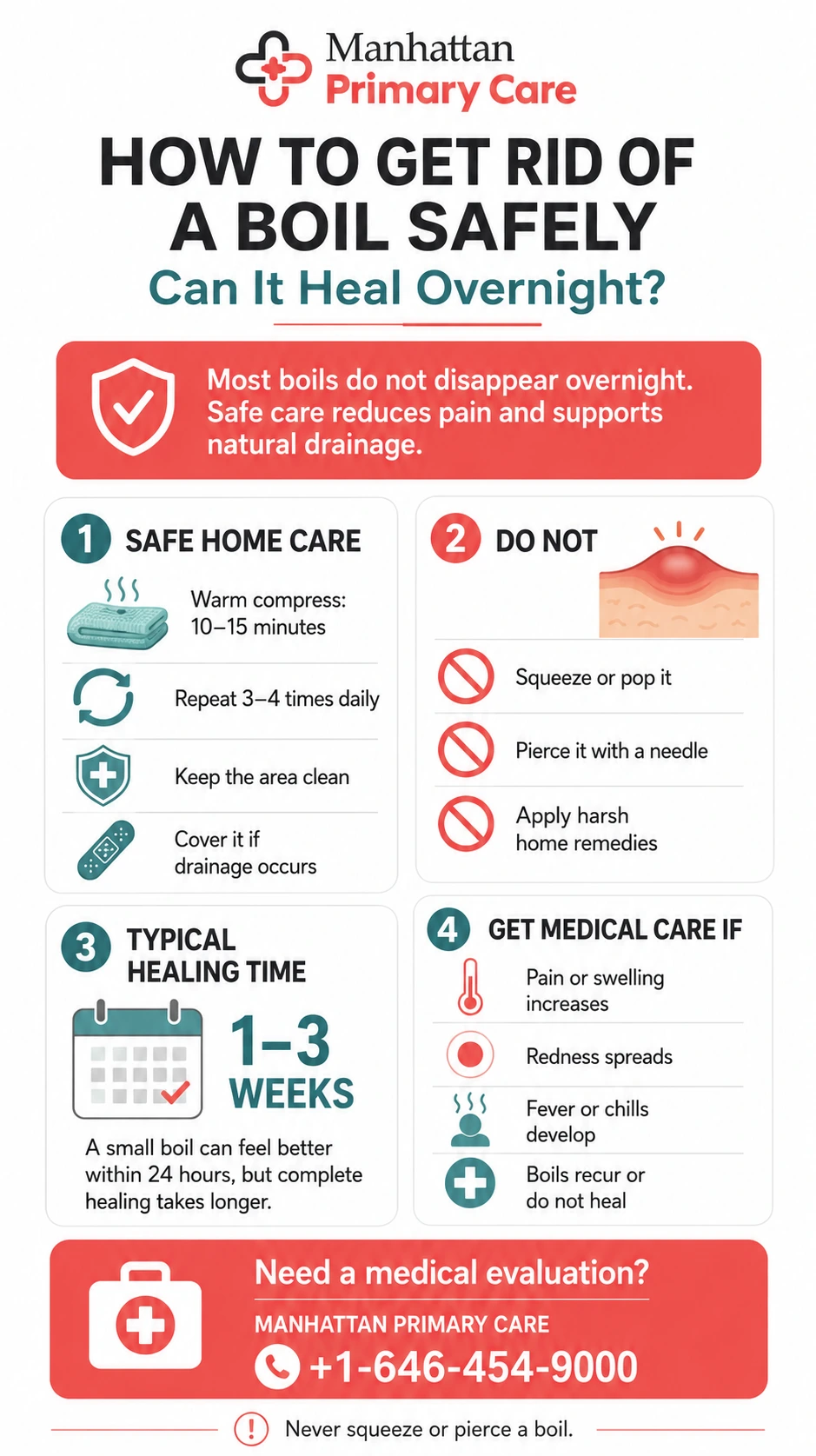
Can you get rid of a boil overnight? Most boils cannot fully heal overnight. However, applying a warm compress and keeping the skin clean can reduce discomfort and encourage natural drainage. Complete healing usually takes several days to a few weeks. Never squeeze, pierce or pop a boil because doing so can spread the infection.
What Is A Boil?
A boil, medically called a furuncle, is a painful, pus-filled bump that develops when bacteria infect a hair follicle. It usually begins as a small, tender lump. The bump may become larger and more painful as pus collects beneath the skin.
Boils commonly develop in areas with hair, sweat, pressure or friction, including:
- Face
- Neck
- Armpits
- Groin
- Inner thighs
- Buttocks
Boils can look different depending on skin tone. The affected area may appear red, purple, brown or darker than the surrounding skin.
What Causes Boils On Skin?
Most boils are caused by Staphylococcus aureus, commonly called staph. This bacterium often lives harmlessly on the skin or inside the nose. A boil can form when the bacteria enter a damaged or irritated hair follicle.
Common causes and risk factors include:
- Small cuts, scratches or insect bites
- Shaving or waxing irritation
- Blocked or damaged hair follicles
- Friction from tight clothing
- Heavy sweating
- Close contact with someone who has a skin infection
- Sharing contaminated towels, razors or clothing
- Skin conditions such as eczema or acne
- Diabetes or poorly controlled blood sugar
- A weakened immune system
The term “boil acne” is sometimes used to describe a deep, painful bump, but boils and acne are different conditions. Acne generally develops when oil, dead skin and inflammation block a pore. A boil results from a deeper bacterial infection around a hair follicle.
Is It A Boil, Acne Bump, Cyst or Abscess?
Understanding the difference helps ensure proper treatment.
These skin bumps look similar but have different causes:
- Boil: A painful infection involving a hair follicle that fills with pus.
- Acne bump: An inflamed or blocked pore that may produce a whitehead, blackhead or deeper nodule.
- Skin cyst: A closed sac beneath the skin containing fluid, keratin or other material.
- Skin abscess: A pocket of pus caused by infection. A boil is a type of skin abscess that develops around a hair follicle.
Appearance alone does not always provide a reliable diagnosis. A painful bump may be a boil, an ingrown hair, a cyst, folliculitis or another skin condition. A healthcare professional can examine the area and determine which boil treatment is appropriate.
How To Get Rid Of A Boil Safely?
If you are wondering how to treat a boil at home, focus on supporting natural healing rather than forcing the boil to open.
Apply A Warm Compress
A boil warm compress is the safest and most practical home treatment for a small, uncomplicated boil.
To use a warm compress for a boil:
- Soak a clean washcloth in warm water.
- Make sure the water is not hot enough to burn your skin.
- Wring out the excess water.
- Hold the cloth against the boil for 10 to 15 minutes.
- Repeat three or four times daily.
- Use a clean cloth each time.
The warmth increases circulation around the area, reduces pain and pressure and may encourage the boil to drain naturally.
Keep The Area Clean
Gently wash the affected area and avoid scrubbing or rubbing it. Wash your hands before and after touching the surrounding skin.
If the boil opens naturally:
- Do not squeeze out the remaining pus.
- Gently clean the surrounding skin.
- Cover the opening with sterile gauze or a clean bandage.
- Replace the dressing when it becomes wet or dirty.
- Wash your hands after changing the dressing.
- Do not share towels, bedding, clothing or razors.
Use Appropriate Pain Relief
An over-the-counter pain reliever such as acetaminophen or ibuprofen may provide boil relief when it is safe for you. Follow the package directions carefully.
Ask a healthcare professional before taking pain medication if you have kidney disease, liver disease, stomach ulcers, take blood-thinning medication, are pregnant or have another medical condition.
Be Careful With Boil Cream
No over-the-counter boil cream can reliably eliminate a deep pocket of pus overnight. Antibiotic ointments do not always reach bacteria inside a closed abscess and antibiotics are not necessary for every small boil.
Avoid applying toothpaste, undiluted essential oils, garlic, acids or harsh chemicals. These home remedies for boils can irritate or burn inflamed skin, particularly in sensitive areas.
Can A Boil Heal Overnight?
A very small boil may become less painful or swollen within 24 hours, but it rarely disappears completely that quickly. Most boils need time to soften, drain, close and allow the surrounding inflammation to settle.
Healing time depends on:
- The size and depth of the boil
- Its location on the body
- Whether it drains naturally
- The severity of the infection
- Your immune response
- Conditions such as diabetes
- Whether multiple boils are present
Most uncomplicated boils heal within approximately one to three weeks. Therefore, the safest answer to how to get rid of a boil overnight is to reduce discomfort with warmth, protect the area and allow it to heal without squeezing it.
What Should You Avoid When Treating A Boil?
Never squeeze, pop or pierce a boil, as this can worsen the infection and spread bacteria.
Never attempt to drain a boil by:
- Squeezing or repeatedly pressing it
- Piercing it with a needle
- Cutting it with a blade
- Picking at the center
- Applying excessive pressure
- Using products that burn or irritate the skin
These methods can push bacteria deeper into the skin, spread the infection, worsen pain, increase scarring and delay healing. A qualified healthcare professional should drain a boil when the procedure is medically necessary.
When Does A Boil Need Medical Treatment?
Some boils require medical attention to prevent complications and ensure proper healing.
Arrange a medical evaluation if:
- The boil grows rapidly.
- It becomes extremely painful.
- Redness or swelling spreads beyond the bump.
- You develop a fever or chills.
- Multiple boils appear together.
- The boil develops on your face or over your spine.
- A boil near your eye affects your vision.
- It continues growing despite home care.
- It has not healed within approximately two weeks.
- Boils keep returning.
- You have diabetes or a weakened immune system.
A healthcare professional may perform an incision and drainage procedure for a large boil or abscess. This involves creating a controlled opening so the pus can drain safely. Antibiotics may be prescribed when the infection is severe, spreading, recurring, accompanied by fever or more likely to cause complications. They are not automatically required for every boil.
Recurring boil-like lumps in the armpits, groin, buttocks or beneath the breasts may indicate hidradenitis suppurativa. This is a long-term inflammatory skin condition that requires a different treatment approach.
How Can Primary Care Help With A Boil?
A primary care provider can determine whether the bump is a boil or another skin condition. The examination may include checking its size, location, warmth, tenderness, drainage and surrounding redness.
Depending on the findings, treatment for boils may include:
- Continued warm compresses and wound care
- Guidance on appropriate pain relief
- Professional drainage when medically appropriate
- Antibiotics for selected infections
- A sample of the drainage for laboratory testing
- Blood sugar testing when recurrent infections suggest diabetes
- Referral to a skin specialist for recurring or unusual lesions
If your boil is painful, continues growing or does not improve with home care, Manhattan Primary Care can evaluate the area and recommend an appropriate treatment plan. Early assessment can also help identify underlying factors contributing to recurring boils.
How To Prevent Boils?
Boils can’t always be prevented, but good hygiene, not sharing personal items and promptly treating cuts and skin irritation can reduce risk, especially in warm, sweaty conditions or if you’re prone to skin infections.
But these habits can reduce your risk:
- Wash your hands and skin regularly.
- Keep cuts and abrasions clean and covered.
- Avoid sharing towels, razors, clothing or bedding.
- Wash items that come into contact with a draining boil.
- Use clean shaving equipment.
- Avoid shaving over irritated or infected skin.
- Wear loose clothing to reduce friction.
- Shower after heavy sweating.
- Manage diabetes and other underlying conditions.
- Seek medical care for recurring boils.
Conclusion
Most boils cannot disappear overnight, but proper care can reduce pain and support healing. Apply a warm compress, keep the skin clean and never squeeze or pierce the bump. If the boil becomes severe, continues growing or keeps returning, schedule an evaluation with Manhattan Primary Care for an accurate diagnosis and appropriate treatment.
Frequently Asked Questions
Are boils contagious?
The bacteria in a draining boil can spread through direct contact or contaminated personal items.
Can I exercise with a boil?
Yes, if exercise does not cause pain, sweating or friction around the boil.
Will a boil leave a scar?
Large, deep or squeezed boils may leave discoloration or a small scar.
Can I shave around a boil?
Avoid shaving near a boil because the razor may irritate the skin and spread bacteria.
Should I cover a boil or leave it open?
Cover a draining boil with sterile gauze and replace the dressing when it becomes wet or dirty.
Sources
- Health Line – A Guide to Home Remedies for Boils
- Acıbadem Healthcare – How to Get Rid of a Boil Overnight? Causes, Explanations, and Next Steps
- Manhattan Medical Arts – How To Get Rid of a Boil Overnight?
- AAD – How to treat boils and styes
- Medical News Today – Home remedies for boils
Disclaimer
This blog is for informational & educational purposes only and does not intend to substitute any professional medical advice or consultation. For any health-related concerns, please consult with your physician or call 911.
 492 6th Avenue New York, NY 10011
 +1-646-454-9000
 Hours of Operation


