

 Last updated: August 12, 2026
 8 min read
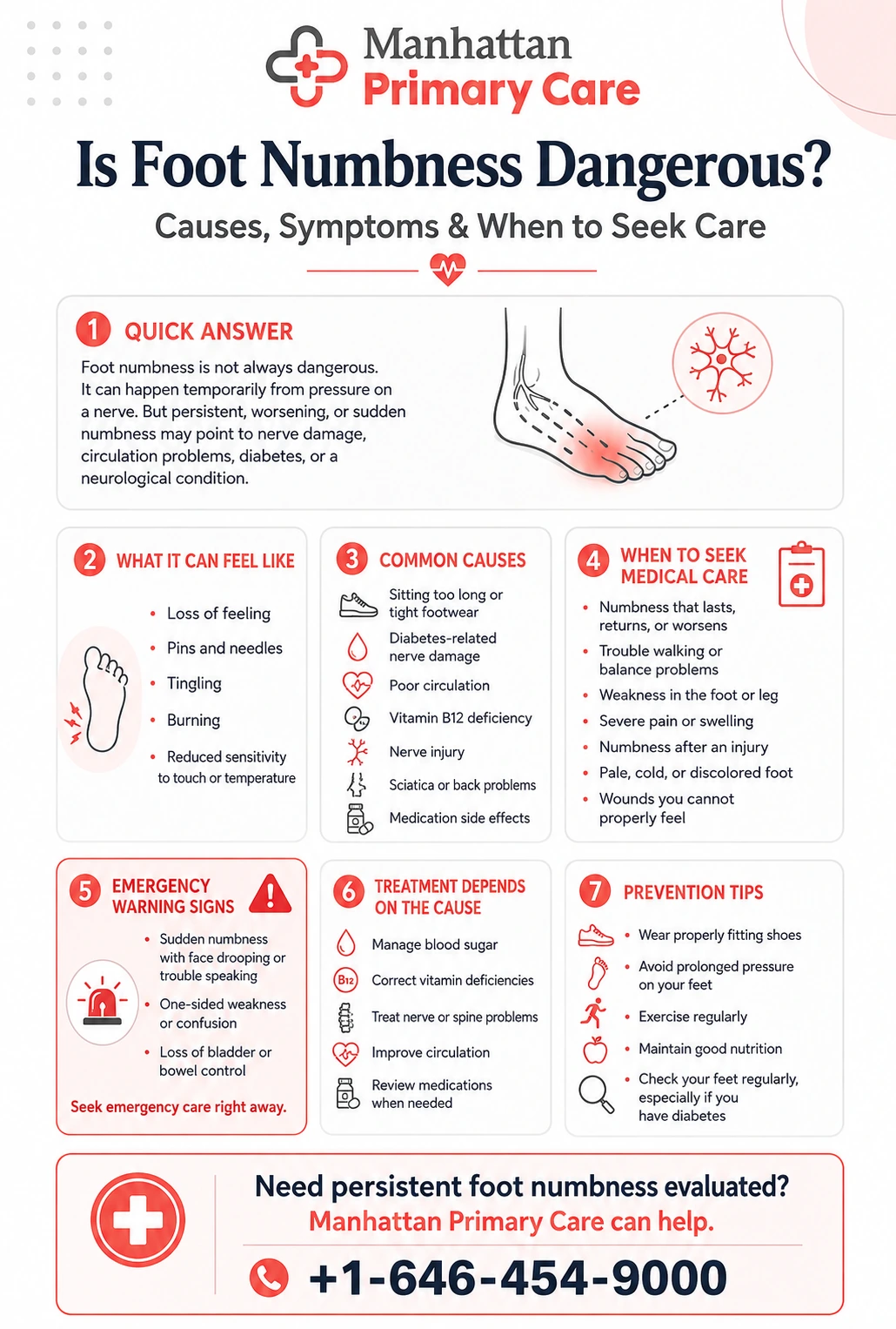
Is foot numbness dangerous? Not always. Foot numbness can happen temporarily after sitting or standing in one position or putting pressure on a nerve. However, numbness that persists, keeps returning, worsens or develops suddenly may be related to nerve damage, diabetes, circulation problems or neurological conditions and should be medically evaluated.
What Does Foot Numbness Feel Like?
Foot numbness means normal sensation in part or all of the foot has been reduced or altered. This usually happens when nerve signals are interrupted or when blood flow to an area is affected.
People with numbness in feet or numbness in toes may experience:
- Loss or reduction of feeling
- Pins and needles in feet
- Tingling or prickling
- Burning sensations
- Difficulty sensing hot or cold temperatures
- A feeling that the foot has “fallen asleep”
- Reduced sensitivity to touch
- Weakness or balance problems in some cases
Peripheral nerves carry sensory information between your feet, spinal cord and brain. When these nerves are compressed, injured or damaged, their signals may not travel normally.
What Causes Numbness In Feet?
There are many possible numb feet causes, ranging from temporary pressure on a nerve to medical conditions affecting the nervous or circulatory system.
Temporary Nerve Compression
One of the simplest causes of numbness in feet is temporary nerve pressure. Sitting cross-legged, remaining in one position too long or wearing tight footwear can compress nerves and cause a numb foot or tingling sensation.
This type of numbness usually improves once you move, change position or remove the pressure.
Diabetes And Nerve Damage
Diabetes is an important cause of persistent numbness in legs and feet. Over time, high blood sugar can damage peripheral nerves and the small blood vessels that supply them. This is known as diabetic peripheral neuropathy.
Symptoms often begin in the feet and may include numbness, burning, tingling, pain or reduced ability to sense temperature.
Reduced sensation can also make cuts, blisters or sores harder to notice, which is particularly important for people with diabetes.
Circulation Problems
Reduced blood flow can contribute to foot numbness. Peripheral artery disease or PAD, occurs when narrowed arteries limit blood flow to the legs.
Along with numbness or weakness, PAD may cause leg pain while walking, a colder foot or lower leg on one side, weak pulses, skin changes or sores that heal slowly.
Vitamin Deficiencies
Vitamin B12 and certain other nutritional deficiencies can interfere with normal nerve function. Vitamin B12 deficiency, in particular, can cause tingling or numbness in the hands and feet.
Nerve Injuries And Compression
An injury may stretch, compress or damage nerves supplying the foot. Local nerve compression can also develop because of repetitive activity, swelling or pressure around a nerve.
Sciatica And Spinal Problems
Sometimes the problem does not begin in the foot at all.
A herniated disc, spinal narrowing or another condition affecting nerves in the lower back may cause pain, tingling, weakness or numbness in foot and leg. Sciatica commonly causes symptoms that travel from the lower back or buttock into one leg.
Medications And Other Conditions
Certain medications, including some chemotherapy drugs, can cause peripheral neuropathy. Kidney disease, thyroid disorders, autoimmune conditions, infections, toxin exposure and less common neurological disorders may also affect peripheral nerves.
When Is Foot Numbness Dangerous?
Most temporary episodes are not emergencies. The more important question is when should I be worried about numbness in my toes or feet?
Get medical help right away if you experience numbness that:
- Appears suddenly without an obvious reason
- Occurs with new muscle weakness
- Makes walking or balancing difficult
- Continues to worsen
- Develops after a significant injury
- Occurs with severe pain or major swelling
- Is accompanied by a pale, unusually cold or discolored foot
- Occurs with a wound you cannot properly feel
- Is persistent or repeatedly returns
Call for emergency medical care if sudden numbness occurs along with facial drooping, difficulty speaking, confusion, severe weakness or numbness affecting one side of the body, as these can be warning signs of a stroke.
Loss of bladder or bowel control along with severe back or leg pain, leg weakness or increasing numbness around the inner thighs or groin can indicate severe compression of nerves in the lower spine and require emergency evaluation.
How Long Does Foot Numbness Last?
It depends on the cause. Temporary numbness caused by sitting awkwardly or putting pressure on a nerve may improve within minutes after the pressure is relieved.
Numbness caused by nerve damage, diabetes, spinal conditions, vitamin deficiencies or poor circulation may last much longer or repeatedly return.
If your numb feet remain numb for days, progressively worsen, frequently recur or have no obvious explanation, schedule a medical evaluation rather than waiting for the sensation to disappear on its own.
How Is Foot Numbness Evaluated?
Because many different conditions can cause the same symptom, evaluation focuses on finding the underlying problem.
A healthcare provider may ask:
- When did the numbness begin?
- Is one foot affected or both?
- Are only the toes numb?
- Is the numbness constant or intermittent?
- Do you have back or leg pain?
- Is there weakness, burning or tingling?
- Do you have diabetes or another chronic condition?
- What medications are you taking?
A physical examination may assess sensation, muscle strength, reflexes, balance and circulation.
Depending on your symptoms, additional evaluation may include blood tests for diabetes or nutritional deficiencies, nerve testing such as electromyography (EMG) or vascular testing when a circulation problem is suspected.
Manhattan Primary Care offers diagnostic testing that includes blood testing, EMG, vascular ultrasound and Doppler ultrasound when clinically appropriate.
What Is The Treatment For Numbness In Feet?
There is no single treatment for numbness in feet because treatment depends on why the numbness is occurring.
Options may include:
- Managing diabetes: Better blood sugar control can help reduce the risk of further nerve damage.
- Correcting deficiencies: A confirmed vitamin B12 or other nutritional deficiency may require dietary changes or supplementation under medical guidance.
- Treating nerve or spinal problems: Physical therapy or other treatments may help when nerve compression, sciatica or certain musculoskeletal conditions are involved.
- Managing nerve pain: Certain prescription medications may be used when neuropathy causes burning or painful sensations.
- Improving circulation: Treatment may involve exercise when appropriate, cardiovascular risk management, smoking cessation, medication or additional vascular care.
- Reviewing medications: If medication-related neuropathy is suspected, a healthcare provider can determine whether treatment needs adjustment.
If you are wondering how to treat numb toes or how to stop numbness in legs and feet, identifying the cause is usually more important than simply trying to suppress the sensation.
Can Foot Numbness Be Prevented?
Not every cause is preventable, but several habits can help protect nerve and foot health:
- Keep blood sugar within your recommended range if you have diabetes.
- Wear supportive, properly fitting footwear.
- Avoid prolonged pressure on your feet and legs.
- Exercise regularly according to your health and mobility.
- Eat a balanced diet that provides adequate vitamins and nutrients.
- Avoid smoking, which can affect circulation.
- Check your feet regularly if sensation is reduced.
- Manage chronic health conditions with your healthcare provider.
Conclusion
Foot numbness is often temporary, but persistent, recurring or worsening symptoms should not be ignored. Because numbness in feet and toes can result from nerve, metabolic, spinal or circulation problems, identifying the underlying cause is key.
If unexplained foot numbness is affecting you, Manhattan Primary Care can provide primary care services to help identify potential causes, recommend appropriate diagnostic testing and develop a treatment plan based on your individual health needs.
Frequently Asked Questions
Can foot numbness occur without pain?
Yes. Some nerve problems cause reduced sensation without burning or pain. Persistent loss of feeling should still be evaluated, especially if it affects walking, balance or awareness of injuries.
Why does my foot numbness get worse at night?
Symptoms may feel more noticeable at night because there are fewer distractions and certain sleeping positions can place additional pressure on nerves. Recurrent nighttime numbness may also occur with some neuropathies.
Is it safe to exercise with a numb foot?
It depends on the cause and severity. Mild temporary numbness may resolve with movement, but unexplained numbness, weakness, balance problems or reduced sensation can increase injury risk during exercise.
Can foot numbness make driving unsafe?
Yes. Significant numbness can reduce your ability to accurately feel the pedals or judge pressure with your foot. If sensation or muscle control is impaired, avoid driving until the cause has been evaluated.
Can numbness in just one toe require medical attention?
Yes. Isolated toe numbness may result from local nerve irritation or footwear pressure, but persistent or recurring numbness can have other causes. Evaluation is appropriate if it does not improve or new symptoms develop.
Sources
- Health Line – Potential Causes of Foot Numbness
- The Foot Institute – Why You Shouldn’t Ignore Tingling or Numbness in Your Feet
- Achilles Foot & Ankle – Is Foot Numbness Serious? Red Flags And When To See A Doctor
- The Foot Clinic – What Are the Symptoms of Foot Numbness?
- Florida Pain Medicine – I Have Numbness and Tingling in My Feet: Why?
Disclaimer
This blog is for informational & educational purposes only and does not intend to substitute any professional medical advice or consultation. For any health-related concerns, please consult with your physician or call 911.
 492 6th Avenue New York, NY 10011
 +1-646-454-9000
 Hours of Operation


