
 Last updated: May 6, 2026
 12 min read
Pitted keratolysis is a superficial bacterial skin infection that causes small holes or pits, usually on the soles of the feet. It often develops when sweat, moisture, and tight shoes allow bacteria to overgrow. The condition is usually not dangerous, but it can cause strong foot odor, discomfort, and visible skin changes.
What Is Pitted Keratolysis?
Pitted keratolysis is a bacterial skin condition that affects the outermost layer of the skin, called the stratum corneum. The word keratolysis means breakdown of keratin, the tough protein that helps form the skin’s protective surface.
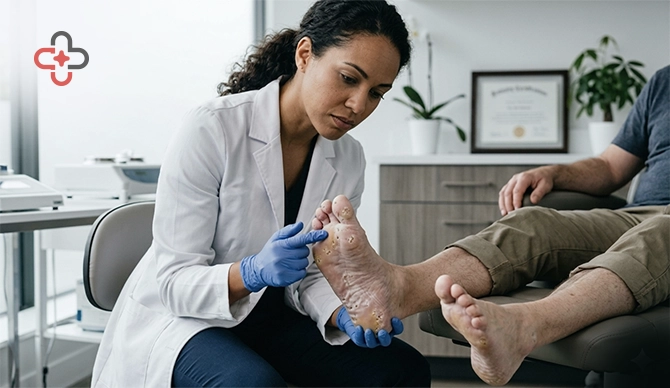
In pitted keratolysis, certain bacteria produce enzymes that soften and break down this outer skin layer. As the skin breaks down, tiny shallow depressions appear. These may look like holes in skin, especially on the pressure-bearing parts of the feet.
Most people notice pitted keratolysis on the:
- Heels
- Balls of the feet
- Soles
- Toe pads
- Areas where the foot stays moist inside shoes
Pitted keratolysis often explains holes in feet, small holes on bottom of feet, or a bottom of foot white and wrinkled appearance after long periods in shoes. It mainly affects the feet but can sometimes affect sweaty palms. The good news: it is treatable with hygiene, moisture control, and medical care when needed.
Why Does Pitted Keratolysis Cause Tiny Holes In The Skin?
The pits form because bacteria break down the thick outer layer of skin. This process is usually limited to the surface, which is why pitted keratolysis is generally not considered a deep or dangerous infection.
Here is what typically happens:
- Feet stay warm and damp inside shoes or socks.
- Bacteria multiply in the moist environment.
- The bacteria release enzymes that digest keratin.
- The outer skin layer softens and breaks down.
- Small pits or crater-like holes appear.
The pits may become more visible after bathing, sweating, working long shifts, exercising, or wearing closed shoes for many hours.
Pitted keratolysis is also known for causing odor. This odor is not a sign of poor character or poor hygiene. It happens because bacteria release sulfur-containing compounds as they grow on moist skin.
What Causes Pitted Keratolysis?
Pitted keratolysis is caused by bacterial overgrowth on the skin. Several types of bacteria may be involved, including species commonly found on human skin. These bacteria are more likely to cause symptoms when the skin stays wet, warm, and poorly ventilated.
Common bacterial causes may include:
- Corynebacterium species
- Kytococcus sedentarius
- Dermatophilus species
- Actinomyces species
- Streptomyces species
These organisms can contribute to a bacterial foot infection when the environment allows them to multiply.
Common Risk Factors
You may be more likely to develop pitted keratolysis if you have:
- Excessive sweating, also called hyperhidrosis
- Tight or non-breathable shoes
- Work boots or athletic shoes worn for long periods
- Damp socks or shoes
- Poor air circulation around the feet
- Long work shifts standing or walking
- Hot or humid weather exposure
- Frequent exercise
- Diabetes or immune system concerns
- Obesity
People who wear closed shoes for long hours, such as healthcare workers, athletes, military personnel, and commuters, are more prone to pitted keratolysis. Simply put, pitted keratolysis is caused by bacteria, moisture, and time.

Symptoms Of Pitted Keratolysis
Pitted keratolysis can look unusual, but the symptoms are usually easy to recognize once you know what to look for.
Common symptoms include:
- Tiny pits or holes in skin
- Small holes on bottom of feet
- White, gray, or yellowish patches on the soles
- Skin that looks wet, soft, or wrinkled
- A bottom of foot white and wrinkled appearance after shoes come off
- Strong foot odor
- Mild itching
- Burning or stinging
- Tenderness when walking
- Clusters of shallow crater-like spots
The pits are often more noticeable on weight-bearing areas, such as the heels and balls of the feet. In some cases, the pits merge into larger irregular patches.
Not everyone has pain. For many people, the biggest concerns are appearance and odor.
If the odor is strong or the pits keep coming back, it may be time to see a medical provider rather than relying only on foot sprays or home remedies.
Can Pitted Keratolysis Affect The Hands?
Yes, pitted keratolysis on hands is possible, but it is much less common than pitted keratolysis on the feet.
When it affects the hands, it usually appears on the palms. People may notice tiny holes in hands, shallow pits, or areas of softened skin. This is more likely in people with sweaty palms or frequent moisture exposure.
Possible triggers include:
- Excessive hand sweating
- Wearing occlusive gloves for long periods
- Frequent hand moisture exposure
- Warm work environments
- Repeated friction or pressure on the palms
Because holes in hand or palm pits can also come from other skin conditions, it is important to get an accurate diagnosis. Hand eczema, peeling skin conditions, warts, and fungal infections can sometimes look similar.
Is Pitted Keratolysis Dangerous?
Pitted keratolysis is usually not dangerous. It is a superficial bacterial infection, meaning it affects the top layer of the skin rather than deeper tissue.
For most people, the main issues are:
- Foot odor
- Visible pits or holes
- Moist, wrinkled-looking skin
- Mild discomfort
- Recurring symptoms
So, is pitted keratolysis dangerous? In most cases, no. But it should still be treated, especially if symptoms persist.
If left untreated, pitted keratolysis may cause ongoing odor, skin irritation, and discomfort. Rarely, it can lead to secondary infection, especially in people with diabetes, poor circulation, or weakened immunity.
You should seek medical care promptly if you notice:
- Increasing pain
- Redness or swelling
- Drainage or pus
- Open sores
- Fever
- Rapidly spreading skin changes
- Symptoms with diabetes or immune problems
Is Pitted Keratolysis Contagious?
Pitted keratolysis is not usually considered highly contagious in the way some fungal infections can be. The bacteria involved often live naturally on the skin or in the environment.
However, moisture and hygiene still matter. Sharing damp socks, shoes, towels, or locker room surfaces may increase exposure to microbes that contribute to foot infections.
To reduce risk:
- Do not share shoes or socks
- Wash socks after each use
- Let shoes dry fully
- Wear sandals in communal showers
- Keep feet clean and dry
Good foot hygiene helps prevent both bacterial and fungal conditions.
Pitted Keratolysis vs Fungal Infection: How Can You Tell The Difference?
Pitted keratolysis is bacterial. Athlete’s foot is fungal. They can both affect the feet, and they may both worsen in warm, damp environments, but they usually look and feel different.
| Feature | Pitted Keratolysis | Fungal Infection / Athlete’s Foot |
| Main cause | Bacteria | Fungus |
| Common appearance | Tiny pits or holes | Scaling, peeling, cracking |
| Odor | Strong odor is common | Odor may occur but is usually less defining |
| Itching | Mild or absent | Often more intense |
| Location | Soles, heels, balls of feet | Between toes, soles, sides of feet |
| Skin texture | White, moist, wrinkled, crater-like pits | Dry, flaky, red, cracked, or peeling |
| Treatment focus | Topical antibiotics, antibacterial washes, sweat control | Antifungal creams, powders, moisture control |
A common clue is odor plus pits. If you see tiny crater-like holes and notice strong foot odor, pitted keratolysis may be more likely than a fungal infection.
However, it is possible to have more than one condition at the same time. For example, someone may have athlete’s foot and pitted keratolysis together. That is one reason a medical exam can be helpful.
Pitted Keratolysis vs Eczema
Eczema can also affect the feet or hands, but it is not caused by bacterial keratin breakdown in the same way.
Eczema often causes:
- Redness
- Dryness
- Itching
- Cracking
- Scaling
- Blisters in some cases
- Flare-ups linked to irritants or allergies
Pitted keratolysis, on the other hand, usually causes:
- Small pits or holes
- Moist or white wrinkled skin
- Strong odor
- Symptoms linked to sweaty, enclosed feet
If the skin is very itchy, red, inflamed, or cracked, eczema or a fungal infection may be part of the problem. If the skin has visible pits with strong odor, pitted keratolysis should be considered.
How Is Pitted Keratolysis Diagnosed?
Pitted keratolysis is usually diagnosed with a physical examination and medical history. A healthcare provider will look at the affected skin and ask about sweating, footwear, odor, itching, work habits, exercise, and how long the symptoms have been present. In many cases, no lab test is needed.
A provider may consider additional testing if:
- The diagnosis is unclear
- Symptoms do not improve with treatment
- A fungal infection is suspected
- The skin changes are severe or unusual
- There are signs of another condition
Possible tests may include a skin scraping, bacterial culture, or special light exam. At Manhattan Primary Care, our primary care services can help diagnose pitted keratolysis and rule out similar conditions like athlete’s foot, eczema, or warts.
Pitted Keratolysis Treatment Options
The goal of pitted keratolysis treatment is to reduce bacteria, keep the skin dry, control sweating, and prevent recurrence.
Most cases respond well to a combination of medical treatment and daily foot-care changes.
Medical Treatments
A healthcare provider may recommend or prescribe:
- Topical antibiotic gel, lotion, or solution
- Topical clindamycin
- Topical erythromycin
- Mupirocin in selected cases
- Benzoyl peroxide wash
- Antibacterial cleansers
- Antiseptic foot washes
- Treatment for excessive sweating
Topical antibiotics are commonly used because pitted keratolysis is bacterial. Oral antibiotics are rarely needed but may be considered for stubborn, widespread, or recurrent cases.
Self-Care Treatments
If you are wondering how to treat pitted keratolysis or how to get rid of pitted keratolysis, start with moisture control.
Helpful steps include:
- Wash feet daily with soap and water
- Dry thoroughly, especially between the toes
- Change socks at least once daily, or more often if sweaty
- Wear moisture-wicking socks
- Rotate shoes so each pair can dry fully
- Choose breathable footwear when possible
- Avoid wearing the same damp shoes every day
- Use foot powder if recommended
- Avoid tight, occlusive shoes for long periods
- Let feet air out when safe and appropriate
For people with excessive sweating, an antiperspirant designed for feet may help. Some patients need medical treatment for hyperhidrosis if sweating is a major trigger.
How Long Does Treatment Take?
Many cases improve within a few weeks when treatment is used correctly. Odor may improve sooner, while the skin pits can take longer to fade as the outer skin layer renews.
If symptoms do not improve after a week or two of consistent care, or if they keep returning, schedule a medical visit. For painful, worsening, or sudden skin changes, acute illness treatment can help you get timely evaluation and care.
How To Keep Pitted Keratolysis From Coming Back?
Pitted keratolysis can recur if the feet stay warm, sweaty, and enclosed. Prevention focuses on keeping the skin dry and reducing bacterial overgrowth.
Try these practical prevention steps:
- Wash feet daily
- Dry feet completely before putting on socks
- Change socks after exercise or heavy sweating
- Wear clean, dry socks every day
- Use breathable shoes when possible
- Rotate shoes instead of wearing the same pair daily
- Let shoes dry in a ventilated area
- Avoid plastic or non-breathable footwear for long periods
- Use moisture-wicking socks
- Consider foot antiperspirant if sweating is frequent
- Wear shower shoes in gyms, pools, and locker rooms
For busy New Yorkers, prevention starts with dry feet, clean socks, and breathable shoes. A routine preventive care visit can also help identify sweating, infection, or diabetes-related risk factors.
When Should You See A Doctor For Pitted Keratolysis?
You should see a doctor if:
- The pits are spreading
- Foot odor is persistent or severe
- Skin becomes painful or tender
- You notice redness, swelling, drainage, or open sores
- Home care does not help
- Symptoms keep coming back
- You have diabetes, poor circulation, or a weakened immune system
- You are unsure whether it is pitted keratolysis, fungus, eczema, or warts
A primary care provider can diagnose the cause and recommend treatment. If symptoms keep returning, an annual physical can help review your overall health and risk factors.
Conclusion
Pitted keratolysis can look concerning, especially when it causes tiny holes in the feet, white wrinkled skin, or strong odor. But in most cases, it is not dangerous. It is a treatable bacterial skin condition that responds well to proper hygiene, moisture control, and medical treatment when needed.
If you are dealing with persistent foot odor, small holes on the bottom of your feet, or skin changes that are not improving, Manhattan Primary Care can help you get a clear diagnosis and an effective treatment plan.
Frequently Asked Questions
Can pitted keratolysis come back after treatment?
Yes. It can return if your feet stay sweaty, damp, or enclosed in tight shoes. Keeping feet dry helps prevent recurrence.
Does pitted keratolysis cause permanent skin damage?
Usually, no. It affects the outer skin layer, which can heal once the bacteria and moisture are controlled.
Why do my feet still smell after washing?
The odor may come from bacteria still active in damp skin, socks, or shoes. Drying and treatment may be needed.
Can I exercise with pitted keratolysis?
Usually, yes, if there is no pain, open skin, or spreading redness. Change socks and dry your feet after exercise.
Do I need to throw away my shoes?
Not always. Let shoes dry fully, rotate pairs, and replace old or non-breathable shoes if odor keeps returning.
Can children get pitted keratolysis?
Yes. Children and teens can get it, especially if they sweat heavily or wear athletic shoes for long periods.
Sources
- Medical News Today – Pitted keratolysis: What to know
- Manhattan Medical Arts – Happy Feet: Your Guide to Pitted Keratolysis
- Derm Net – What is pitted keratolysis?
- Medscape – Pitted Keratolysis: Background, Pathophysiology, Epidemiology
- Cleveland Clinic – What is pitted keratolysis?
Disclaimer
This blog is for informational & educational purposes only and does not intend to substitute any professional medical advice or consultation. For any health-related concerns, please consult with your physician, or call 911.
 492 6th Avenue New York, NY 10011
 +1-646-454-9000
 Hours of Operation


