
 Last updated: April 29, 2026
 6 min read
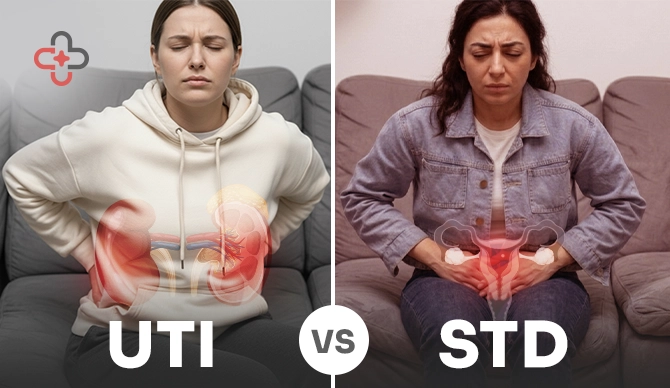
A UTI (urinary tract infection) is a bacterial infection of the urinary system, while an STD (sexually transmitted disease) is an infection passed through sexual contact. Though both can cause similar symptoms like burning during urination, they are different in causes, treatments, and risks. Accurate diagnosis is essential, as treatments vary significantly.
What Is A UTI?
A UTI is an infection that affects the urinary tract, which includes the bladder, urethra, and kidneys. It’s most commonly caused by Escherichia coli (E. coli) bacteria that enter the urinary system. UTIs are more frequent in women but can affect anyone.
Common Causes of UTIs:
- Poor hygiene
- Sexual activity
- Urinary retention
- Dehydration
UTIs are not sexually transmitted, but sexual activity can increase the risk of bacteria entering the urinary tract.
What Is An STD?
An STD (sexually transmitted disease) is an infection transmitted primarily through sexual contact. It can be caused by bacteria, viruses, or parasites, with common examples including chlamydia, gonorrhea, herpes, and syphilis. STDs are spread through vaginal, anal, or oral sex, as well as other forms of sexual contact.
Common STDs:
- Chlamydia: Caused by bacteria; often asymptomatic.
- Gonorrhea: Caused by bacteria; symptoms may include discharge and pelvic pain.
- Herpes: Caused by a virus; causes sores and blisters.
UTI vs STD: Key Differences
| Feature | UTI | STD |
| Cause | Bacteria (typically E. coli) | Bacteria, virus, or parasite |
| Transmission | Not sexually transmitted | Sexual contact (vaginal, anal, oral) |
| Symptoms | Burning urination, urgency, cloudy urine | Discharge, sores, pain during sex |
| Treatment | Antibiotics | Antibiotics (bacterial), Antivirals (viral) |
Why UTI And STD Symptoms Are Confused
The symptoms of UTIs and STDs often overlap, making it challenging to distinguish between the two without proper testing.
Some common symptoms that both conditions share include:
- Burning sensation during urination
- Frequent urge to urinate
- Pelvic discomfort or pain
These overlapping symptoms can cause confusion, but UTIs are usually caused by bacteria and can occur without any sexual activity, while STDs result from sexual transmission and may have additional symptoms, like sores or unusual discharge.
Common STDs That Mimic UTI Symptoms
Several STDs exhibit symptoms similar to UTIs, including:
Chlamydia
- Can cause painful urination, pelvic pain, and abnormal discharge, often mistaken for a UTI.
Gonorrhea
- Symptoms like burning urination and pelvic discomfort overlap with UTIs, but gonorrhea often also presents with abnormal discharge.
Herpes
- Genital herpes can cause painful sores or blisters that might be confused with irritation from a UTI.
Can An STD Cause A UTI?
While STDs don’t directly cause UTIs, certain STDs can increase the risk of urinary infections. For example, chlamydia and gonorrhea can lead to complications that affect the urinary tract, raising the likelihood of developing a UTI. In these cases, a UTI is a secondary infection.
Symptoms Comparison: UTI vs STD
| UTI Symptoms | STD Symptoms |
| Burning urination | Unusual discharge (green, yellow, or white) |
| Frequent urge to urinate | Sores or blisters in the genital area |
| Cloudy or strong-smelling urine | Pain during sex |
| Pelvic discomfort | Lower abdominal pain |
How Doctors Diagnose The Difference?
To accurately distinguish between a UTI and an STD, doctors rely on specific diagnostic tests:
- Urine tests: These detect bacterial infections and are used to diagnose a UTI.
- Swab tests: A swab from the genital area can help diagnose chlamydia, gonorrhea, or herpes.
- STD screening panels: Comprehensive testing for various STDs ensures no condition is overlooked.
At Manhattan Primary Care, we offer a wide range of diagnostic lab testing and our health screenings can help you catch issues like UTIs and STDs early, ensuring you get the right treatment.
Treatment Options
UTI Treatment:
- Antibiotics: To eliminate the bacteria causing the infection.
- Hydration: Drinking water helps flush bacteria from the urinary tract.
STD Treatment:
- Antibiotics (for bacterial STDs like gonorrhea and chlamydia)
- Antivirals (for viral STDs like herpes)
- Each STD requires a specific treatment plan depending on its type.
Testing through our same-day STD testing service ensures quick results and peace of mind.
When Should You Get Tested?
Testing is essential when you have any persistent or concerning symptoms. It’s also recommended if:
- You’ve had unprotected sex or a new sexual partner.
- Symptoms don’t improve with initial treatment.
- You’re experiencing recurrent UTIs or STDs.
Prevention Tips
- Practice safe sex (condoms or dental dams) to prevent STDs.
- Maintain good personal hygiene to reduce the risk of UTIs.
- Stay hydrated to help prevent bacterial buildup in the urinary tract.
Regular check-ups through our preventive care services can help identify health issues early and prevent further complications.
Myth vs Fact
Myth: A UTI is a type of STD.
Fact: UTIs are caused by bacteria in the urinary system, not sexual activity.
Myth: You can diagnose yourself based on symptoms.
Fact: Many STDs mimic UTI symptoms, making testing essential for an accurate diagnosis.
When To See A Doctor
Seek medical attention if:
- Symptoms persist beyond a few days.
- You experience severe pelvic pain, painful urination, or unusual discharge.
- You have recurrent infections or symptoms don’t improve with treatment.
Conclusion
Understanding the difference between a UTI and an STD is crucial for getting the right treatment. While both conditions can share similar symptoms, accurate diagnosis is essential as their causes and treatments vary significantly. If you’re experiencing symptoms like burning urination or pelvic discomfort, don’t hesitate to seek professional medical advice and get tested. Early diagnosis ensures you receive the appropriate treatment, leading to quicker recovery and better health outcomes. Your health matters, take action today.
Frequently Asked Questions
Is a UTI an STD?
No, a UTI is not an STD. A UTI is a bacterial infection in the urinary tract, while an STD is a disease transmitted through sexual contact.
How do I know if it’s a UTI or STD?
Consult a healthcare provider for proper testing. UTIs and STDs share symptoms like burning urination, but their causes, treatments, and risks differ.
Can STDs cause UTI symptoms?
Yes, some STDs like chlamydia and gonorrhea can cause symptoms that mimic a UTI, such as painful urination and pelvic discomfort.
What STD feels like a UTI?
Chlamydia, gonorrhea, and herpes can cause burning urination, pelvic discomfort, and discharge, making them resemble a UTI.
Should I get tested if I’m unsure?
If you have symptoms that could be related to either a UTI or an STD, testing is crucial for accurate diagnosis and appropriate treatment.
Sources
- ADA – Spotting the difference: UTIs and STIs
- Urgent Care Omaha – UTI or STD: How to Tell the Difference
- Verywell Health – UTI vs. STI: Which One Is It?
- Wonder Health – Understanding the Difference Between a UTI and an STD
- Evvy – UTIs or STDs: Shared Symptoms and Key Differences
Disclaimer
This blog is for informational & educational purposes only and does not intend to substitute any professional medical advice or consultation. For any health-related concerns, please consult with your physician, or call 911.
 492 6th Avenue New York, NY 10011
 +1-646-454-9000
 Hours of Operation


