

 Last updated: June 4, 2026
 6 min read
An annual physical exam checklist by age outlines the recommended preventive screenings, lab tests, vaccinations, and lifestyle assessments for each stage of life. It helps detect early signs of chronic diseases, keeps immunizations up to date, and supports long-term wellness. Age-specific checklists allow for more personalized and effective preventive care.
Why Annual Physical Exams Matter More Than You Think?
Many people only visit a doctor when they feel sick. Yet, serious health conditions like heart disease, diabetes, high blood pressure and certain cancers can develop silently for years.
An annual physical exam is one of the most effective ways to catch these issues early. It allows your primary care physician to assess your overall health, identify risk factors, recommend age-appropriate screenings, and develop a personalized wellness plan.
At Manhattan Primary Care, annual physicals do more than check vital signs, they are opportunities to proactively manage your health and prevent future complications.
What Is an Annual Physical Exam?
An annual physical exam is a comprehensive preventive health evaluation performed by a primary care physician. Its purpose is to assess current health, detect early signs of disease, identify risk factors, and provide guidance for long-term wellness.
Components Of An Annual Physical Exam
Medical History Review
Your physician will discuss:
- Current symptoms or health concerns
- Past medical conditions
- Family health history
- Medications and supplements
- Surgeries or hospitalizations
Vital Signs Assessment
Includes:
- Blood pressure
- Heart rate
- Respiratory rate
- Temperature
- Height and weight
- Body Mass Index (BMI)
- Physical Examination
A routine physical check up may include:
- Heart and lung exam
- Abdominal assessment
- Skin and lymph node evaluation
- Neurological and musculoskeletal assessment
- Thyroid and joint check
Laboratory Testing
Depending on age and risk factors:
- Blood tests: CBC, CMP, cholesterol, blood glucose, hemoglobin A1C
- Urinalysis
- Thyroid testing as appropriate
Lifestyle Counseling
Focus on:
- Nutrition and weight management
- Exercise and activity levels
- Sleep quality
- Stress management
- Tobacco and alcohol use
How Long Does a Physical Take?
Most annual physical exams last 30–60 minutes, depending on your health history and the need for additional testing.
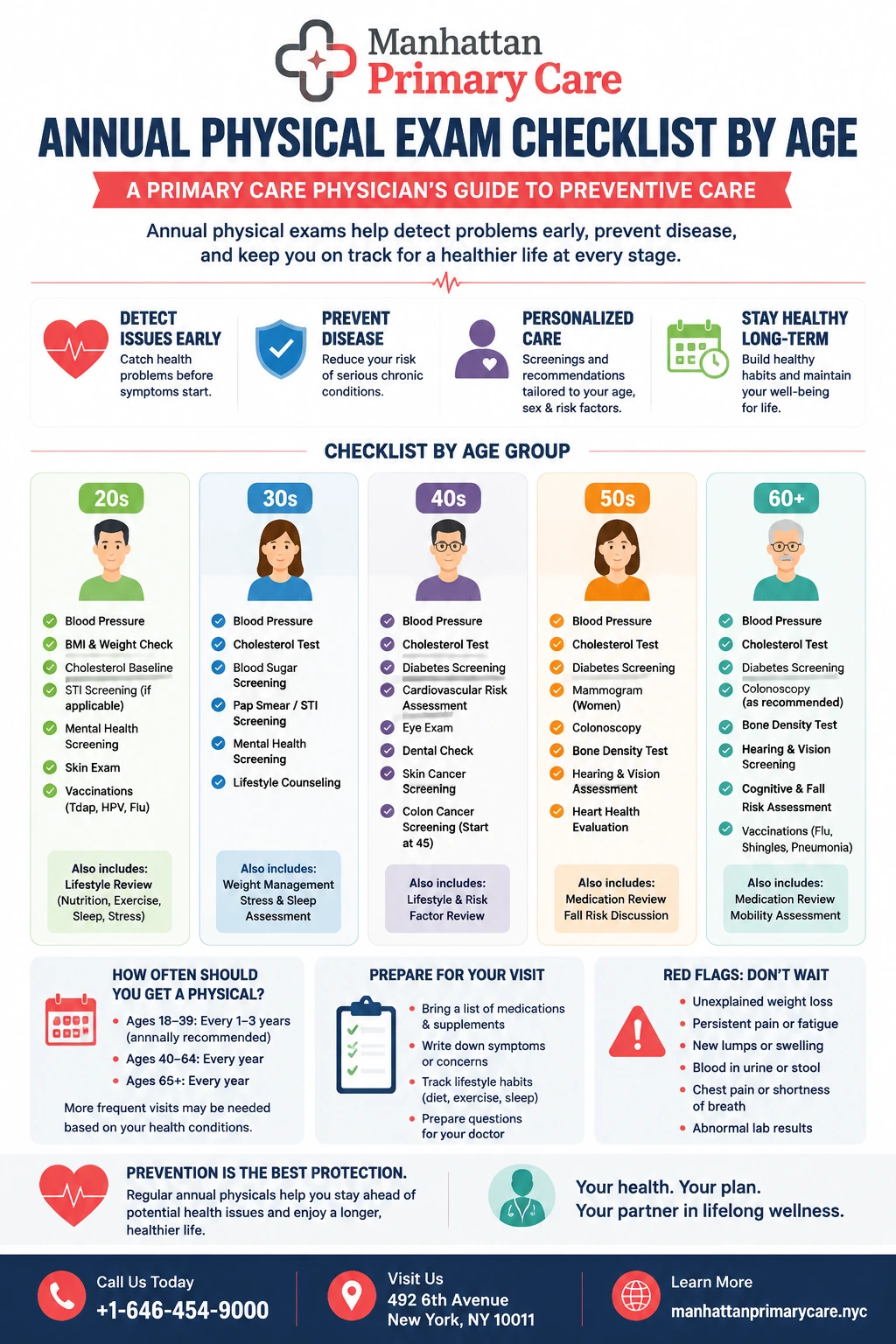
Annual Physical Exam Checklist By Age
Health priorities change as we age. Below is an annual physical exam checklist by age, with general preventive care recommendations.
Ages 20–29
- Screenings & Labs: Blood pressure, BMI, cholesterol baseline, depression/mental health, STI screening as appropriate
- Women: Pap smear starting at age 21, HPV testing, breast health discussion
- Men: Testicular health awareness, cardiovascular risk assessment
- Vaccinations: Influenza annually, COVID-19 as recommended, HPV series, Tdap booster every 10 years
- Lifestyle Evaluation: Diet, exercise, sleep, substance use
Ages 30–39
- Screenings & Labs: Blood pressure, cholesterol, blood glucose, BMI, mental health evaluation
- Women: Pap smear, cervical cancer screening, breast exam discussion
- Men: Cardiovascular risk evaluation
- Lifestyle Counseling: Weight management, exercise, stress reduction, sleep optimization
Ages 40–49
- Screenings & Labs: Blood pressure, cholesterol, diabetes screening, cardiovascular risk assessment
- Cancer Screening: Mammogram discussion for women, prostate discussion for men, colon cancer screening starting at 45
- Other Evaluations: Eye exam every 1–2 years, hearing assessment, skin cancer screening, dental check
Ages 50–59
- Screenings & Labs: Blood pressure, cholesterol, blood glucose, cardiovascular assessment
- Cancer Screening: Colonoscopy or other colon cancer tests, mammogram, prostate check, skin cancer evaluations
- Bone Health: Osteoporosis risk assessment and bone density testing
- Other Evaluations: Hearing, vision, medication review
Ages 60+
- Screenings & Labs: Blood pressure, cholesterol, diabetes, medication review
- Cancer Screening: Colon cancer, mammogram (as appropriate), prostate check
- Functional Assessments: Fall risk, cognitive screening, balance evaluation
- Vision & Hearing: Annual exams
- Bone Health: Osteoporosis screening, bone density testing
- Vaccinations: Influenza, shingles, pneumococcal, COVID-19 boosters
How Often Should You Get a Physical?
- Ages 18–39: Every 1–3 years; yearly visits often recommended for preventive care
- Ages 40–64: Annually
- Ages 65+: Annually
Those with chronic conditions may require more frequent visits. Your physician can help determine the best schedule based on your health needs.
Red Flags: When To See A Doctor Immediately
Seek care without waiting for your annual checkup if you notice:
- Unexplained weight loss
- Persistent fatigue
- Ongoing pain
- New lumps or swelling
- Blood in urine or stool
- Chest pain or shortness of breath
- Sudden vision changes
- Abnormal lab results
Early attention can prevent serious complications.
How To Prepare For Your Annual Physical?
Bring to Your Appointment:
- ID and insurance card
- Current medication and supplement lists
- Past medical records
Track Your Health:
- Blood pressure readings
- Weight changes
- Sleep, diet, and exercise habits
Write Down Questions:
- Which screenings are due this year?
- Are my vaccines current?
- What lifestyle changes could improve my health?
- Do I need specialist referrals?
How To Maximize Your Annual Checkup?
- Be honest about lifestyle habits: smoking, alcohol, stress, sleep, mental health
- Discuss family history of heart disease, diabetes, cancer, stroke, and genetic conditions
- Ask about prevention: health screenings, vaccines, and lifestyle changes
Myth vs Fact
Myth: Annual physicals aren’t needed if I feel healthy
Fact: Many conditions are asymptomatic early; preventive exams detect issues early
Myth: All screenings are the same for everyone
Fact: Screenings vary based on age, gender, lifestyle, and health risks
Myth: Physicals only focus on illness
Fact: They emphasize wellness, prevention, and long-term health
Take Charge Of Your Health With Preventive Care
An annual physical exam is a powerful tool for maintaining long-term health. Each decade of life has unique preventive care needs, from routine blood pressure checks in your 20s to fall-risk assessments in later years.
At Manhattan Primary Care, our annual physicals are designed to provide personalized recommendations, age-appropriate screenings, and proactive wellness plans. Scheduling a yearly exam helps ensure your health is managed proactively, keeping you strong, healthy, and prepared for the future.
Frequently Asked Questions
Can lifestyle changes between annual exams reduce the need for medications?
Yes. Healthy diet, exercise, sleep, and stress management can lower risk factors, potentially reducing medication needs under physician guidance.
How does an annual physical help detect hidden nutrient deficiencies?
Blood tests and diet reviews during a physical can uncover deficiencies like iron, vitamin D, or B12 early.
Are there screenings specifically for family history risks?
Yes. Your doctor can recommend earlier or additional tests based on family history of heart disease, cancer, or diabetes.
Can annual physicals help prevent cognitive decline?
Yes. Monitoring blood pressure, glucose, and sleep can identify risk factors for cognitive decline and guide preventive steps.
How do annual physicals support long-term weight management?
Tracking BMI, metabolism, and lifestyle allows physicians to tailor strategies and adjust plans to maintain healthy weight.
Can an annual physical detect early signs of immune system issues?
Yes. Lab tests and medical history can reveal immune problems early, enabling preventive care or further evaluation.
Sources
- Optum – Your age-by-age guide to annual physical exams
- Plush Care – What Is Included in an Annual Physical Exam?
- MANHATTAN RESTORATIVE HEALTH SCIENCES – Annual Physical Exam Checklist by Age: What Adults Actually Need Each Decade
- Nest Health – Annual Physical Exam Checklist by Age: What You Shouldn’t Miss
- Arcpoint Labs – Your Ultimate Annual Physical Exam Checklist Across Ages
Disclaimer
This blog is for informational & educational purposes only and does not intend to substitute any professional medical advice or consultation. For any health-related concerns, please consult with your physician, or call 911.
 492 6th Avenue New York, NY 10011
 +1-646-454-9000
 Hours of Operation


