

 Last updated: September 30, 2026
 7 min read
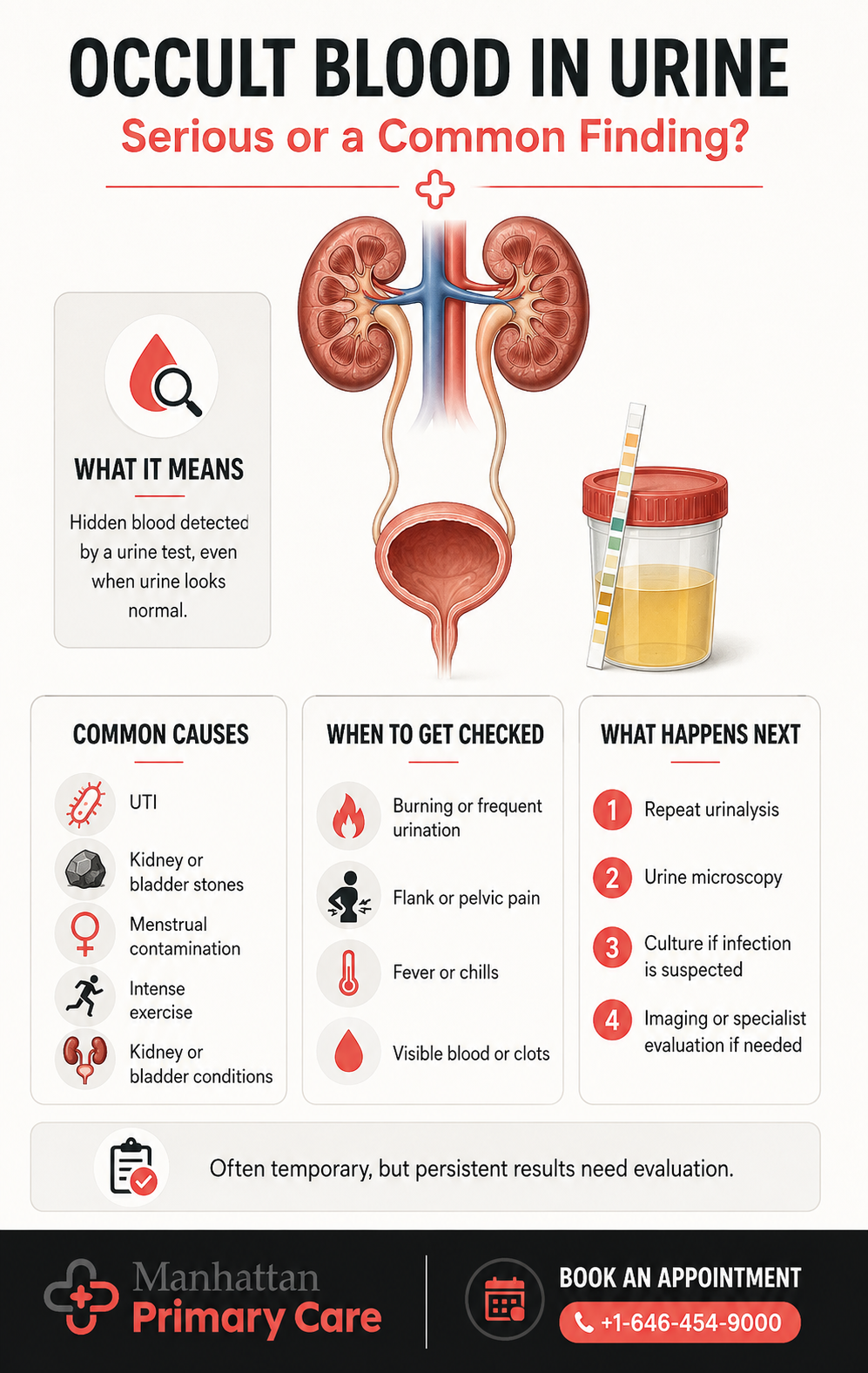
Occult blood in urine means a urine test detects red blood cells or blood-related markers that are not visible when you urinate. It may result from a UTI, kidney stone, exercise or sample contamination. It is not always serious, but persistent or confirmed blood should be medically evaluated.
What Is Occult Blood In Urine?
The word “occult” means hidden. Therefore, occult blood in urine refers to blood detected through urine testing even though the urine may look completely normal.
An occult blood urine test is commonly performed as part of a routine urinalysis. A test strip, called a dipstick, reacts to heme, a component associated with blood.
However, a positive dipstick may reflect:
- Intact red blood cells
- Free hemoglobin
- Myoglobin released after muscle injury or strenuous exercise
- Menstrual or other sample contamination
For this reason, a positive dipstick result usually needs to be confirmed with urine microscopy before microscopic hematuria is diagnosed.
How Is Microscopic Hematuria Different From Visible Blood?
Microscopic hematuria is blood in the urine that can only be detected through laboratory testing, while visible blood changes the urine’s color and can be seen without a microscope.
There are two main forms of blood in urine:
- Microscopic hematuria: The urine appears normal, but red blood cells are found under a microscope. This may be described on a laboratory report as urine occult blood or occult blood in urinalysis.
- Gross hematuria: Blood is visible, making the urine appear pink, red, brown or tea-colored. Blood clots may also be present.
Visible blood generally requires prompt medical attention. Microscopic blood may be less urgent, but persistent findings still need appropriate follow-up.
What Causes Occult Blood In Urine?
The causes of occult blood in urine range from temporary changes to urinary or kidney conditions.
Urinary Tract Infections
A urinary tract infection can inflame the bladder or another part of the urinary tract, leading to microscopic bleeding. Other signs may include burning, urgency, frequent urination, pelvic discomfort or strong-smelling urine.
Kidney or Bladder Stones
Stones may scrape or irritate urinary tissue. This can cause occult blood, visible bleeding or sudden pain in the side or back that may travel toward the groin.
Menstrual Contamination
Can occult blood in urine be from a period? Yes. Menstrual blood can enter the urine sample and produce an abnormal result even when there is no bleeding from the urinary tract.
A repeat clean-catch sample after menstruation may provide a more accurate result.
If abnormal results continue after your period ends, a women’s health services can help determine whether the blood is coming from the urinary or reproductive tract.
Exercise-Related Hematuria
Strenuous or prolonged exercise can temporarily produce blood-related markers in urine. The result often resolves after rest, but continued abnormal results require evaluation.
Kidney or Bladder Conditions
Kidney or bladder conditions can irritate the urinary tract and cause occult blood in urine.
Other possible occult blood in urine causes include:
- Kidney disease or inflammation
- Enlarged prostate
- Bladder inflammation
- Injury to the urinary tract
- Recent catheter use or urinary procedure
- Certain medications
- Less commonly, bladder, kidney or prostate cancer
Blood in urine has many possible causes and most are not cancer. The result must be interpreted alongside symptoms, medical history and individual risk factors.
Is Occult Blood In Urine Serious?
An occult blood trace in urine is not automatically dangerous. A trace of occult blood in urine may be temporary or caused by exercise, menstruation, sexual activity or sample contamination.
Its significance depends on:
- Whether red blood cells are confirmed under a microscope
- The amount detected
- Whether the finding continues on repeat testing
- Urinary symptoms
- Age and smoking history
- Kidney function
- Other findings, such as protein in urine
- Previous urinary conditions or visible bleeding
A report showing moderate occult blood in urine indicates a stronger dipstick reaction, but it does not identify the cause or determine how serious it is. Terms such as trace, 1+, 2+ and 3+ can also vary between laboratories.
Which Symptoms Require Medical Attention?
Some people with occult blood in their urine have no noticeable symptoms, while others may experience signs that warrant medical attention.
If an abnormal result occurs with:
- Burning or pain during urination
- Frequent or urgent urination
- Lower abdominal or pelvic pain
- Back or flank pain
- Fever or chills
- Nausea or vomiting
- Difficulty passing urine
- Visible blood in urine
Seek urgent medical care for blood clots, an inability to urinate, heavy visible bleeding or fever with severe flank pain.
What Happens After An Abnormal Result?
An abnormal occult blood in urine result does not always mean you need imaging or an invasive test. Primary care services can help confirm the finding, identify likely causes and determine whether further testing is necessary.
Your healthcare provider may recommend:
- Repeat urinalysis: This may be appropriate when menstruation, exercise or contamination could have affected the sample.
- Urine microscopy: This checks whether red blood cells are present and how many are visible.
- Urine culture: This may be ordered when a bacterial infection is suspected.
- Blood and kidney function tests: These may help identify kidney-related causes.
- Imaging: Ultrasound or CT imaging may be considered for stones or structural abnormalities.
- Specialist evaluation: Persistent or higher-risk findings may require evaluation by a urinary or kidney specialist.
At Manhattan Primary Care, a provider can review your complete occult blood in urine analysis, assess your symptoms and risk factors, arrange appropriate testing and coordinate additional care when necessary.
How Is Occult Blood In Urine Treated?
Treatment is based on the specific condition responsible for the blood found in your urine.
Possible approaches include:
- Antibiotics for a confirmed bacterial UTI
- Pain control, hydration guidance or procedures for kidney stones
- Treatment for prostate, bladder or kidney conditions
- Monitoring after a temporary exercise-related result
- Repeat testing after possible menstrual contamination
Occult blood itself is not treated as a separate illness. The goal is to identify and address what caused the abnormal urine result.
Conclusion
Occult blood in urine is a relatively common test finding and does not automatically indicate a serious condition. However, it should not be ignored when it persists, appears with symptoms or occurs alongside important risk factors.
Manhattan Primary Care can review your urinalysis, investigate possible causes, arrange appropriate follow-up testing and help determine the safest next step for your health.
Frequently Asked Questions
Can blood-thinning medication cause occult blood in urine?
Blood thinners may make urinary bleeding more noticeable, but they should not be assumed to be the only cause. Do not stop prescribed medication without speaking with your healthcare provider.
Can occult blood in urine occur during pregnancy?
Yes. Pregnancy-related UTIs, kidney stones or sample contamination may produce a positive result. Occult blood during pregnancy should be discussed with a healthcare provider.
Can certain foods cause a positive occult blood urine test?
Foods such as beets can change urine color but generally do not produce a true positive blood result. Laboratory testing can distinguish pigment-related discoloration from blood.
Can microscopic blood in urine cause anemia?
A small microscopic amount is unlikely to cause anemia. However, recurrent visible bleeding or an underlying condition causing ongoing blood loss may require further testing.
Does occult blood in urine affect fertility?
Occult blood itself does not affect fertility. It is a laboratory finding rather than a disease, although the condition responsible for it may require medical evaluation.
Sources
- Health Line – What Does Occult Blood In Urine Mean and How Is It Treated?
- Carolina Urology – Occult Blood in Urine: What Is It?
- Health Matters – Occult Blood in Urine: What Trace, 1+, 2+, 3+ Results Mean
- Manhattan Medical Arts – What is Occult Blood in Urine (Occult Hematuria)?
- Urology Specialists of Carolinas – Microscopic Blood in Urine: What Should I Do Next?
Disclaimer
This blog is for informational & educational purposes only and does not intend to substitute any professional medical advice or consultation. For any health-related concerns, please consult with your physician or call 911.
 492 6th Avenue New York, NY 10011
 +1-646-454-9000
 Hours of Operation


