

 Last updated: July 22, 2026
 16 min read
Food poisoning can turn an ordinary meal into several uncomfortable days of nausea, vomiting, diarrhea, stomach cramps and exhaustion. While most mild cases improve without medical treatment, the exact food poisoning recovery time depends on the germ involved, the severity of the illness and your overall health.
How Long Does Food Poisoning Last?
Most mild cases of food poisoning improve within 1-3 days, although some bacterial infections can last four to seven days or longer. Parasitic infections may continue for weeks. Rest and hydration are essential. Seek medical care for bloody diarrhea, high fever, severe dehydration, persistent vomiting or worsening symptoms.
What Is Food Poisoning?
Food poisoning, also called foodborne illness, is an infection or irritation of the digestive system caused by contaminated food or drinks. Viruses, bacteria and parasites cause most cases, although toxins and harmful chemicals can also make people sick.
Contamination can happen while food is being grown, processed, transported, stored, prepared or served. Food may look, smell and taste normal while still containing disease-causing germs.
Most food poisoning is acute, meaning it starts suddenly and lasts for a relatively short period. However, the food poisoning timeline can range from several hours to several weeks depending on what caused it.
What Causes Food Poisoning?
Understanding what causes food poisoning helps explain why symptoms and recovery times vary so widely.
Bacterial Food Poisoning
Common bacterial causes include:
- Salmonella
- Shiga toxin-producing E. coli or STEC
- Campylobacter
- Listeria monocytogenes
- Clostridium perfringens
- Staphylococcus aureus
- Shigella
Some bacteria infect the intestines directly. Others produce toxins in food before it is eaten. Toxin-related illnesses such as Staph food poisoning, often start rapidly and may resolve within a day. Infections such as Salmonella or E. coli usually take longer to appear and may last several days.
Viral Food Poisoning
Viruses that can spread through contaminated food include:
- Norovirus
- Rotavirus
- Hepatitis A
- Sapovirus
Norovirus is a leading cause of vomiting, diarrhea and foodborne illness. Symptoms usually begin 12 to 48 hours after exposure and most people recover within one to three days. Rotavirus is more common in infants and young children and can cause vomiting and watery diarrhea for three to eight days.
Parasitic Food Poisoning
Foodborne or waterborne parasites include:
- Giardia
- Cryptosporidium
- Cyclospora
- Entamoeba histolytica
Parasitic infections often have a slower food poisoning onset and a longer recovery period. Giardia symptoms may begin one to two weeks after exposure and last two to six weeks. Cryptosporidium symptoms usually begin within two to ten days and may continue for one to three weeks or longer.
Common Sources Of Contamination
Food poisoning may result from:
- Undercooked meat, poultry, seafood or eggs
- Unpasteurized milk, cheese or juice
- Raw sprouts or contaminated produce
- Contaminated drinking water
- Food left at an unsafe temperature
- Cross-contamination between raw and cooked foods
- Poor handwashing by someone preparing food
- Improperly canned or preserved foods
Unsafe food can cause hundreds of different illnesses, ranging from short-term diarrhea to serious infections affecting the kidneys, nervous system or bloodstream.
Is Food Poisoning Contagious?
The answer depends on the cause.
Food poisoning caused by a toxin already present in food such as Staph toxin, is generally not spread from person to person. However, infections caused by norovirus, Shigella, Salmonella, Giardia and certain types of E. coli can spread through contaminated hands, surfaces, food, water, vomit or stool.
Norovirus is particularly contagious. A person may continue spreading it for several days after symptoms improve and the virus can remain in stool for two weeks or longer. Careful handwashing with soap and water is important even after recovery.
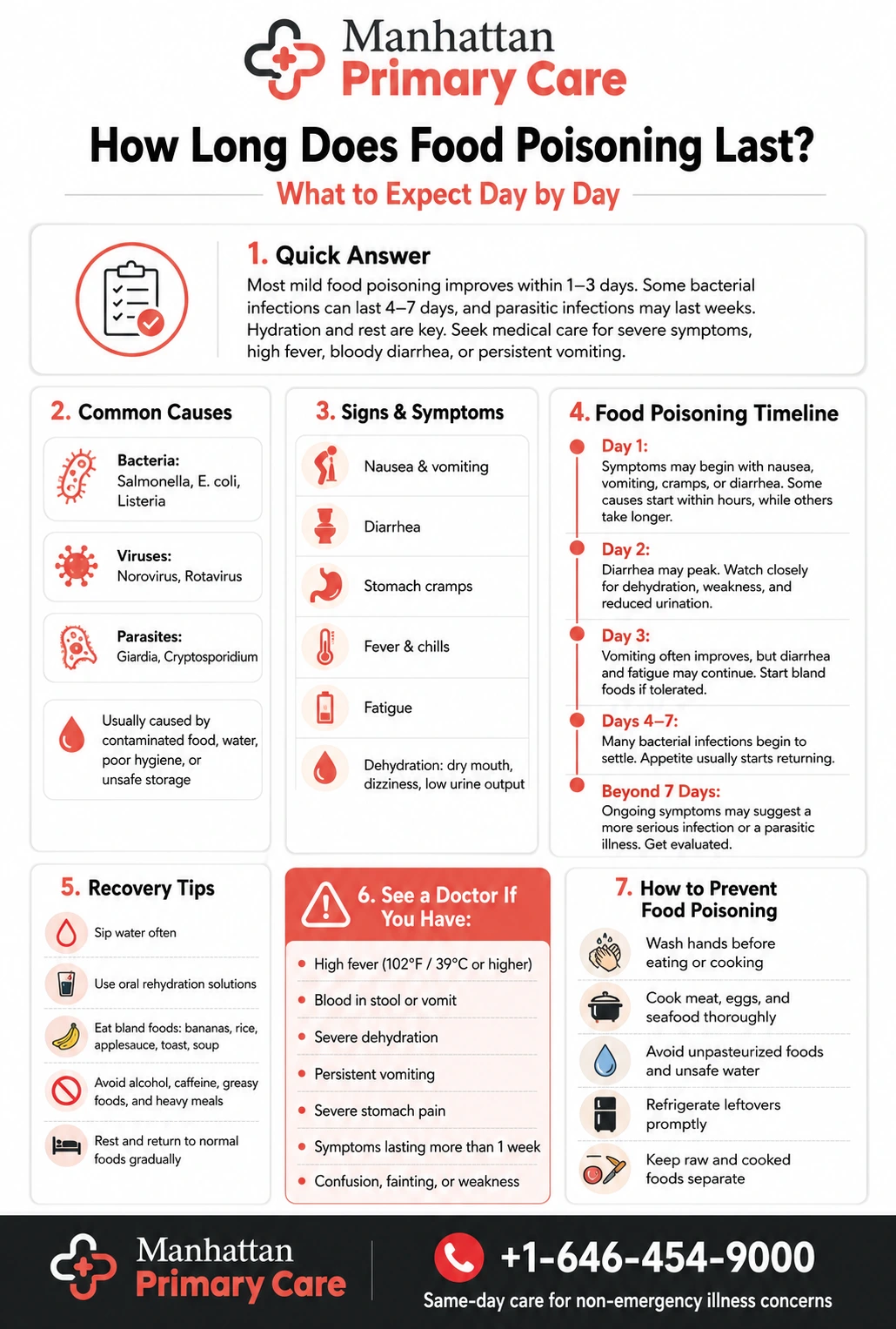
Signs And Symptoms Of Food Poisoning
The most common food poisoning symptoms include:
- Nausea
- Vomiting
- Watery or loose diarrhea
- Bloody diarrhea in some infections
- Stomach cramps
- Abdominal pain
- Fever
- Chills
- Headache
- Body aches
- Loss of appetite
- Weakness and fatigue
Symptoms may be mild and uncomfortable or severe enough to require hospital care. The specific combination depends on the organism involved.
What Does Food Poisoning Feel Like?
Many people describe food poisoning as a sudden wave of nausea followed by cramping, vomiting or an urgent need to use the bathroom.
Food poisoning stomach pain is often crampy and may come in waves. Some infections cause severe abdominal pain, while others mainly cause vomiting or watery diarrhea. Fever and body aches are more common with infections that trigger a stronger immune response.
Signs Of Dehydration
Vomiting and diarrhea can cause the body to lose water and electrolytes faster than they can be replaced.
Signs of dehydration include:
- Dry mouth or throat
- Excessive thirst
- Dark urine
- Urinating less often
- Dizziness when standing
- Weakness
- Rapid heartbeat
- Unusual sleepiness
- Confusion
Infants, young children, pregnant patients, older adults and people with weakened immune systems can become dehydrated more quickly.
How Soon After Food Poisoning Do You Vomit?
Vomiting may begin anywhere from 30 minutes to several days after exposure, depending on the cause.
For example:
- Staph toxin may cause vomiting within 30 minutes to eight hours.
- Clostridium perfringens usually begins within six to 24 hours, although vomiting is less common.
- Norovirus typically begins within 12 to 48 hours.
- Salmonella may begin six hours to six days later.
- E. coli symptoms often begin around three to four days after exposure.
- Giardia may not cause symptoms for one to two weeks.
The last meal you ate is not necessarily the meal that made you sick. The responsible food may have been eaten several days earlier.
How Long Does Food Poisoning Last By Cause?
| Cause | Typical symptom onset | Typical duration |
| Staphylococcus aureus toxin | 30 minutes to 8 hours | 24 hours or less |
| Clostridium perfringens | 6 to 24 hours | About 1 day |
| Norovirus | 12 to 48 hours | 1 to 3 days |
| Intestinal Listeria illness | Within 24 hours | 1 to 3 days |
| Rotavirus | About 2 days | 3 to 8 days |
| Salmonella | 6 hours to 6 days | 4 to 7 days |
| Shiga toxin-producing E. coli | Usually 3 to 4 days | Usually 5 to 7 days |
| Shigella | Usually 1 to 2 days | About 5 to 7 days |
| Cryptosporidium | 2 to 10 days | Usually 1 to 3 weeks |
| Giardia | Usually 1 to 2 weeks | Usually 2 to 6 weeks |
These are general ranges, not exact predictions. Age, immune health, hydration, medication use and the amount of contamination can all affect food poisoning timing and severity.
Food Poisoning Timeline: What To Expect Day By Day
The following timeline starts from the first day of symptoms, not the day you ate the contaminated food.
Some infections begin within hours, while others remain hidden for several days or weeks before symptoms appear.
Day 1: Nausea, Vomiting And Cramps Begin
On the first day, symptoms may appear suddenly or develop gradually.
You may experience:
- Nausea
- Repeated vomiting
- Stomach cramps
- Watery diarrhea
- Low-grade fever
- Chills or fatigue
- Loss of appetite
For fast-acting toxins, vomiting may be the most noticeable symptom. Other infections may begin with diarrhea, stomach pain or fever instead.
Focus on replacing fluids. After vomiting, allow your stomach to settle briefly, then try small sips of water or an oral rehydration solution. Drinking a large amount at once may trigger more vomiting.
Day 2: Diarrhea May Peak
By the second day, vomiting may continue, but diarrhea often becomes the main problem. Frequent loose stools can lead to dehydration and electrolyte loss.
You may notice:
- Increased thirst
- Dry mouth
- Weakness
- Lightheadedness
- Dark or reduced urine
- Continued cramps
- Mild fever
- Headache
Continue drinking small, frequent amounts. Oral rehydration solutions are especially helpful because they replace water, salt, glucose and other electrolytes in appropriate proportions.
Contact a healthcare provider if you cannot keep liquids down, are becoming dizzy, are urinating very little or have several episodes of diarrhea within a short period.
Day 3: Vomiting May Improve
In many mild viral or toxin-related illnesses, vomiting has stopped or is becoming less frequent by the third day. Diarrhea, abdominal sensitivity, fatigue and reduced appetite may continue.
You may be able to tolerate:
- Water
- Oral rehydration solution
- Clear broth
- Crackers
- Toast
- Rice
- Bananas
- Applesauce
- Potatoes
- Soup
- Other simple foods
A temporary bland diet may feel easier to tolerate, but you do not need to remain on the BRAT diet exclusively. It is nutritionally limited. When your appetite returns, most people can gradually resume their normal diet, even if mild diarrhea remains.
If symptoms are not beginning to improve by day three, a medical evaluation may be appropriate.
Days 4 to 7: Gradual Recovery
During this period, many bacterial infections begin resolving. Your appetite may return, stools may become more formed and stomach cramps should become less frequent.
However, it is common to experience:
- Mild fatigue
- Reduced appetite
- Temporary food sensitivity
- Bloating
- Irregular bowel movements
- Difficulty digesting dairy products
Some people temporarily have trouble digesting lactose after an intestinal infection. Caffeine, alcohol, high-fat foods, sugary drinks and large amounts of dairy may worsen diarrhea during recovery.
Persistent fever, bloody stool, severe pain or worsening diarrhea during this stage is not a normal sign of recovery.
Beyond Day 7: Persistent Symptoms Need Attention
Symptoms lasting longer than a week may indicate:
- A prolonged bacterial infection
- A parasitic infection
- Significant dehydration
- Medication-related diarrhea
- Inflammatory bowel disease
- Another digestive condition
- A complication of the original illness
Parasites such as Giardia and Cryptosporidium may last for several weeks. A clinician may recommend stool testing, blood tests or other evaluation based on your symptoms, recent foods, travel, health conditions and possible exposure.
How To Tell If You Have Food Poisoning?
It can be difficult to distinguish food poisoning from a stomach virus, medication side effect, food intolerance, appendicitis, inflammatory bowel disease or another digestive problem.
Clues that may point toward food poisoning include:
- Symptoms began after a potentially risky meal
- Other people who ate the same food became sick
- Symptoms started suddenly
- You recently ate raw or undercooked food
- You recently traveled
- You drank untreated water
- You received notice of a food recall
However, these clues cannot confirm the diagnosis. Through comprehensive primary care services, a clinician can review your symptoms, recent meals, travel history, possible exposures, medications and signs of dehydration. A physical examination, blood tests or stool testing may be recommended when symptoms are severe, prolonged, bloody or associated with a possible outbreak.
Food Poisoning Treatment And Home Care
There is no single way to cure food poisoning instantly. In most mild cases, treatment focuses on preventing dehydration and allowing the digestive system time to recover.
1. Replace Fluids And Electrolytes
Hydration is the most important part of food poisoning treatment.
Try:
- Water
- Oral rehydration solution
- Clear broth
- Diluted juice
- Electrolyte drinks
- Ice chips if drinking triggers nausea
Take small sips every few minutes rather than drinking a full glass at once. Oral rehydration solutions are preferable for children, older adults, people with weakened immune systems and anyone showing signs of dehydration.
2. Eat As Your Appetite Returns
You do not have to force yourself to eat during active vomiting. Once nausea improves, begin with small portions.
Foods that may be easier to tolerate include:
- Bananas
- Rice
- Applesauce
- Toast
- Crackers
- Oatmeal
- Potatoes
- Soup
- Plain pasta
- Lean protein
You can gradually return to your regular diet as tolerated. Prolonged fasting or an unnecessarily restrictive diet is generally not recommended.
3. Temporarily Avoid Digestive Irritants
During recovery, consider limiting:
- Alcohol
- Caffeine
- Fried or fatty foods
- Very spicy meals
- Sugary drinks
- Large amounts of dairy
- Heavy meals
These may worsen diarrhea, nausea, bloating or cramping.
4. Be Careful With Antidiarrheal Medication
Some adults with mild, watery diarrhea and no fever may be able to use an over-the-counter antidiarrheal medicine.
Do not use these medicines without medical guidance if you have:
- Bloody diarrhea
- A high fever
- Severe abdominal pain
- Suspected E. coli infection
- Symptoms in an infant or child
Slowing the intestines may keep certain germs or toxins in the digestive system longer. With Shiga toxin-producing E. coli, antidiarrheal medicines may increase the risk of serious complications.
5. Antibiotics Are Not Always Appropriate
Most people with food poisoning do not need antibiotics.
Antibiotics do not treat viruses or toxin-mediated food poisoning. They may be prescribed for certain severe bacterial infections or for patients at greater risk of invasive disease. Antibiotics should be avoided in suspected STEC infections because they may increase the risk of hemolytic uremic syndrome, a serious kidney complication.
Never take leftover antibiotics or another person’s prescription.
6. Prescription Treatment
Depending on the cause and severity, a clinician may recommend:
- Prescription anti-nausea medication
- Oral rehydration therapy
- Intravenous fluids
- Targeted antibiotics
- Antiparasitic medication
- Laboratory testing
- Hospital monitoring for complications
People with mild, short-lived symptoms often do not need testing. Stool tests, blood tests or additional evaluation may be recommended for severe, persistent or unusual symptoms.
When To See A Doctor For Food Poisoning
Seek prompt medical care if you have:
- Bloody diarrhea
- Black or tarry stool
- Blood in your vomit
- A fever over 102°F or about 39°C
- Diarrhea lasting longer than three days
- Frequent vomiting
- Six or more loose stools in one day
- Severe abdominal or rectal pain
- Symptoms that are getting worse
- Inability to drink enough fluid
- Very little or no urination
- Severe weakness or dizziness
- Confusion or unusual sleepiness
- Neurologic symptoms such as blurred vision, tingling, difficulty swallowing or muscle weakness
These symptoms may indicate severe dehydration, an invasive infection, kidney complications, botulism or another condition requiring urgent evaluation.
High-Risk Patients Should Seek Care Earlier
Contact a healthcare professional sooner if the patient is:
- An infant or young child
- Pregnant
- Aged 65 or older
- Living with diabetes, kidney disease or another chronic condition
- Immunocompromised
- Receiving cancer treatment
- Taking immune-suppressing medication
These groups have a greater risk of dehydration and serious complications. Pregnant patients should contact a clinician promptly after a possible Listeria exposure if they develop fever, unusual fatigue, muscle aches, vomiting or diarrhea.
When To Seek Emergency Care
Call 911 or go to an emergency department for:
- Fainting or loss of consciousness
- Severe confusion
- Difficulty breathing
- Severe or rapidly worsening abdominal pain
- Signs of shock
- Seizures
- Muscle paralysis
- Inability to wake the patient normally
- Severe dehydration with little or no urine
- Vomiting blood
- Sudden neurologic symptoms
Can Food Poisoning Cause Long-Term Side Effects?
Most people recover completely, but serious infections can occasionally cause longer-term effects.
Possible complications include:
- Kidney injury or hemolytic uremic syndrome
- Reactive arthritis
- Post-infectious irritable bowel symptoms
- Guillain-Barré syndrome
- Malnutrition after prolonged parasitic infection
- Persistent lactose intolerance
- Nervous system complications
- Bloodstream infection
These complications are uncommon but are more likely after severe infections or in high-risk patients.
How To Prevent Food Poisoning?
Food poisoning cannot always be prevented, but safe food handling significantly lowers the risk.
Clean
- Wash your hands with soap and water before preparing or eating food.
- Wash hands after using the bathroom, touching animals or handling raw meat.
- Clean counters, utensils and cutting boards after each use.
- Rinse fruits and vegetables under running water.
Separate
- Keep raw meat, poultry, seafood and eggs away from ready-to-eat foods.
- Use separate cutting boards when possible.
- Never place cooked food on a plate that holds raw meat.
Cook
- Cook meat, poultry, seafood and eggs thoroughly.
- Use a food thermometer rather than relying only on color.
- Reheat leftovers until they are steaming hot.
- Avoid raw or undercooked eggs, shellfish and ground meat.
Chill
- Refrigerate perishable foods promptly.
- Do not leave perishable food at room temperature for more than two hours.
- Refrigerate food within one hour when temperatures are above 90°F.
- Thaw food in the refrigerator, cold water or microwave rather than on the counter.
Choose Safer Foods
- Avoid unpasteurized dairy products and juices.
- Drink treated or bottled water when water safety is uncertain.
- Pay attention to food recalls.
- Avoid food from damaged, swollen or improperly sealed cans.
Safe food storage, handwashing, separation, refrigeration and thorough cooking are central to preventing foodborne disease.
Myth vs Fact
Myth: Food poisoning always comes from spoiled food
Fact: Food can look, smell and taste fresh while carrying harmful bacteria, viruses, parasites or toxins. Contamination is not always visible.
Myth: The last thing you ate made you sick
Fact: Some food poisoning starts within hours, but other infections take several days or weeks to produce symptoms. The responsible food may not have been your most recent meal.
Myth: Vomiting cures food poisoning
Fact: Vomiting is the body’s response to irritation or infection, but it does not guarantee that the germ or toxin has been eliminated. Replacing fluids and electrolytes is more important for safe recovery.
Myth: Everyone with food poisoning needs antibiotics
Fact: Most cases improve without antibiotics. Antibiotics do not work against viruses or preformed toxins and they may be harmful in certain E. coli infections.
Myth: You should stop eating until diarrhea is completely gone
Fact: You may pause eating during active vomiting, but once your appetite returns, you can usually resume a normal diet gradually. Extended fasting and highly restrictive diets are generally unnecessary.
Conclusion
So, how long does food poisoning last? Mild cases often improve within one to three days, but bacterial illnesses may last a week and parasitic infections can continue much longer. Hydration, rest and gradual return to normal food support recovery.
For persistent or non-emergency symptoms, Manhattan Primary Care offers acute illness treatment, same-day appointments, walk-in availability, diagnostic testing and telehealth consultations. Call +1-646-454-9000 to schedule an appointment. Seek emergency care immediately for severe dehydration, bloody stool, confusion, fainting, neurologic symptoms or other life-threatening warning signs.
Frequently Asked Questions
Can you have food poisoning without vomiting?
Yes. Some foodborne illnesses mainly cause diarrhea, stomach cramps, fever or fatigue without vomiting.
Why do I still feel weak after my stomach settles?
Fluid loss, reduced food intake and electrolyte imbalance can cause fatigue for several days after vomiting or diarrhea improves.
Can food poisoning temporarily change bowel habits?
Yes. Some people experience bloating, loose stools, constipation or food sensitivity for a short time while the digestive system recovers.
Should suspected food poisoning from a restaurant be reported?
Consider reporting it to your local health department, especially if several people became sick after eating the same food.
Does reheating contaminated food always make it safe?
No. Reheating may kill some germs, but certain toxins can remain in food even after it is heated.
Sources
- CVS – How long does food poisoning typically last?
- Ubie Health – Still Sick? How Long Does Food Poisoning Last & Medically Approved Next Steps
- BASS Medical Group – Do I Have Food Poisoning or a Stomach Bug? Here’s How to Tell the Difference
- The Doctors’ Office Urgent Care – Food Poisoning Symptoms and How Long Does It Last
- Health – How Long Does Food Poisoning Usually Last?
- University of Utah Health – How Long Until Food Poisoning Takes Effect?
Disclaimer
This blog is for informational & educational purposes only and does not intend to substitute any professional medical advice or consultation. For any health-related concerns, please consult with your physician or call 911.
 492 6th Avenue New York, NY 10011
 +1-646-454-9000
 Hours of Operation


