

 Last updated: May 19, 2026
 4 min read
An annual physical exam is a preventive checkup to assess your overall health. During the visit, doctors review your medical history, medications, lifestyle and family history, perform a physical examination and may order blood tests, screenings and vaccinations. The goal is to detect health issues early and maintain long-term wellness.
What Is An Annual Physical Exam?
An annual physical exam is a comprehensive, routine checkup aimed at evaluating your overall health. This physical examination helps doctors detect potential health problems early, track existing conditions and provide personalized preventive care.
Purpose and Benefits:
- Identify early signs of chronic diseases
- Review and update vaccinations and screenings
- Discuss lifestyle habits and preventive strategies
- Build a continuous relationship with your healthcare provider
Who Should Get One:
- Adults of all ages
- Individuals with chronic conditions or family history of diseases
- Recommended once a year for most adults
Preparing For Your Exam
Proper preparation ensures your annual physical is thorough and productive.
Consider the following tips:
- Bring medical records, medication lists and insurance information
- Write down any symptoms or health concerns
- Fast if your blood tests require it (e.g., cholesterol, glucose)
- Wear comfortable clothing for easy examination
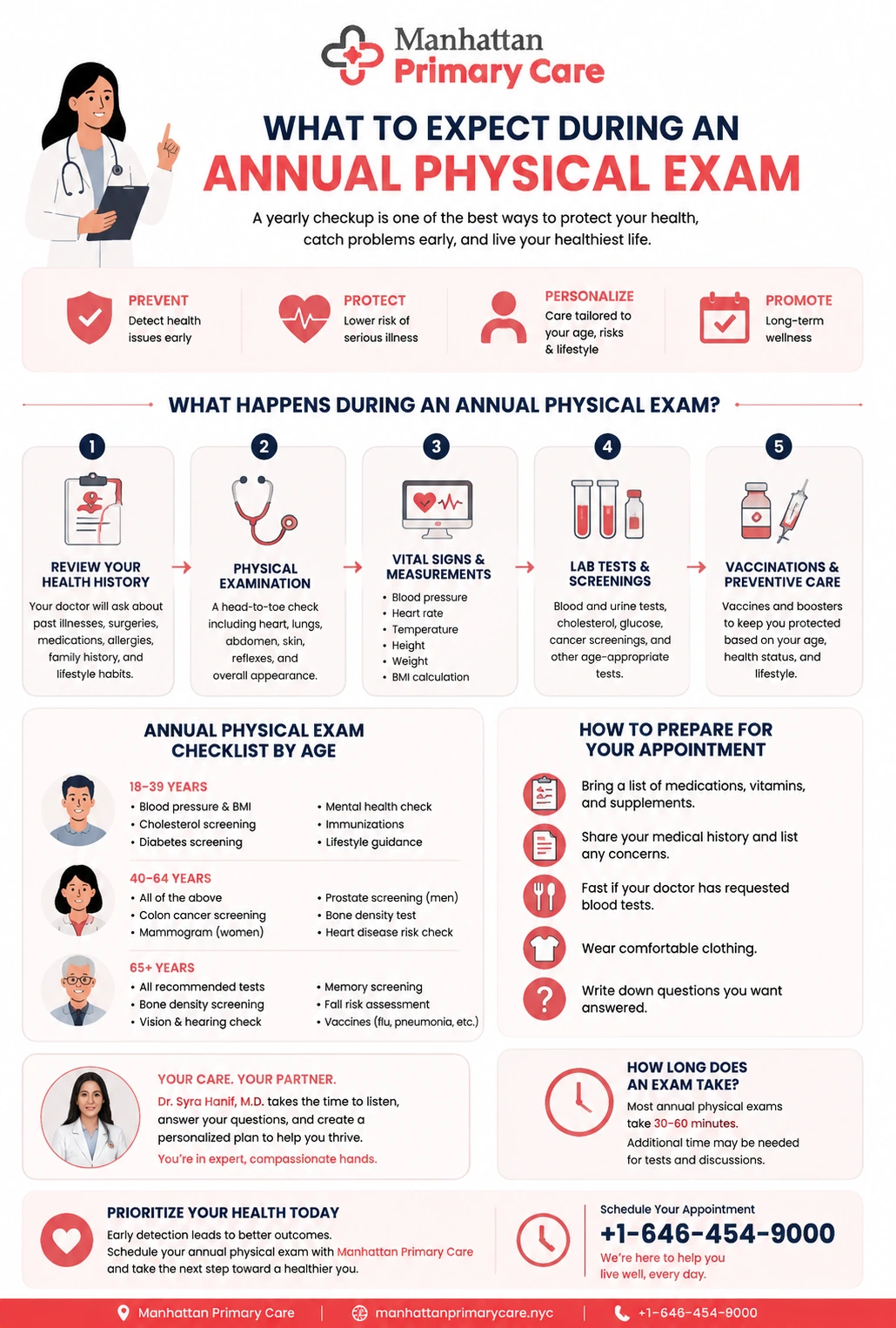
Step-By-Step: What To Expect
Here’s a clear guide to walk you through each stage of your annual physical exam, so you know exactly what to expect.
Medical History Review
- Past illnesses, surgeries, medications
- Family medical history
- Lifestyle habits (diet, exercise, alcohol, smoking)
Physical Examination
- Vital signs: blood pressure, heart rate, temperature, respiration rate
- Measurements: weight, height, Body Mass Index (BMI)
- Body systems: heart, lungs, abdomen, skin, reflexes
- Vision and hearing checks
Lab Tests And Screenings
- Blood tests: cholesterol, glucose, liver/kidney function
- Urine analysis
- Age-appropriate screenings: mammogram, colonoscopy, Pap smear
- Vaccinations: flu, Tdap, COVID, shingles, based on age
Common Questions During The Exam
- Medication use and side effects
- Explanation of current symptoms
- Lifestyle counseling (diet, exercise, sleep)
- Preventive advice for long-term health
Age-Specific Considerations
- Young Adults: focus on lifestyle habits, mental health, immunizations
- Middle-Aged Adults: screenings for cholesterol, blood pressure, diabetes
- Seniors: bone density, vision/hearing, heart disease risk, cognitive assessments
How Long Does An Annual Physical Take?
A typical physical appointment lasts 30–60 minutes, depending on your medical history and tests ordered. More extensive screenings or lab work may extend the visit.
Common Myths vs Facts
- Myth: Annual physicals are unnecessary if you feel healthy.
- Fact: Preventive exams detect early issues even before symptoms appear.
- Myth: Annual physicals always involve painful procedures.
- Fact: Most exams are non-invasive and routine.
When To See Your Doctor Between Annual Exams
If you notice any of the following, contact your doctor, such as Dr. Syra Hanif, M.D., at Manhattan Primary Care:
- New or worsening symptoms
- Sudden weight changes
- Unexplained fatigue or pain
Conclusion
An annual physical exam is a simple yet powerful tool for maintaining long-term health. By preparing for your visit and understanding what to expect, you can take control of your wellness, detect issues early and enjoy peace of mind knowing your health is in expert hands. Schedule your annual checkup at Manhattan Primary Care to ensure personalized, comprehensive preventive care.
Frequently Asked Questions
Can lifestyle changes reduce the need for frequent tests?
Yes, adopting healthy habits like balanced nutrition, regular exercise, and stress management can improve overall health and may influence the frequency or type of tests your doctor recommends. Preventive care complements lifestyle improvements.
Will my family history affect what happens at my exam?
Absolutely. Doctors consider your family history of heart disease, diabetes, cancer, or other conditions to tailor screenings and preventive recommendations specifically for you.
Are mental health assessments part of an annual physical?
Many primary care providers, including Manhattan Primary Care, include brief mental health screenings to check for stress, anxiety, or depression, because overall wellness includes emotional health.
Can I discuss alternative or complementary therapies during my checkup?
Yes. Your annual physical is a good opportunity to talk about supplements, herbal remedies, or other non-traditional treatments to ensure they are safe and won’t interfere with medications or procedures.
Is it okay to bring my child to my annual checkup?
While the primary focus is your health, some clinics allow family members to accompany you. This can be useful if you need assistance or want to schedule future checkups for dependents.
Sources
- WebMD – Annual Physical Exams: What to Expect
- Cleveland Clinic – What to Expect at Your Annual Physical Exam
- Michigan Primary Care Partners – What To Expect During Your Annual Physical Exam
- Sadler Health – What to Expect During Your Annual Physical Exam
- Avera – What Happens at an Annual Physical Exam?
Disclaimer
This blog is for informational & educational purposes only and does not intend to substitute any professional medical advice or consultation. For any health-related concerns, please consult with your physician, or call 911.
 492 6th Avenue New York, NY 10011
 +1-646-454-9000
 Hours of Operation


