
 Last updated: June 17, 2026
 10 min read
RDW, or Red Cell Distribution Width, measures how much your red blood cells vary in size. An abnormal RDW does not diagnose a specific condition, but it can help identify issues such as anemia, nutritional deficiencies, inflammation or chronic disease.
If your CBC shows a high or low RDW, understanding what the result means and whether additional testing is needed can help you take the right next steps for your health.
What Level Of RDW Is Dangerous?
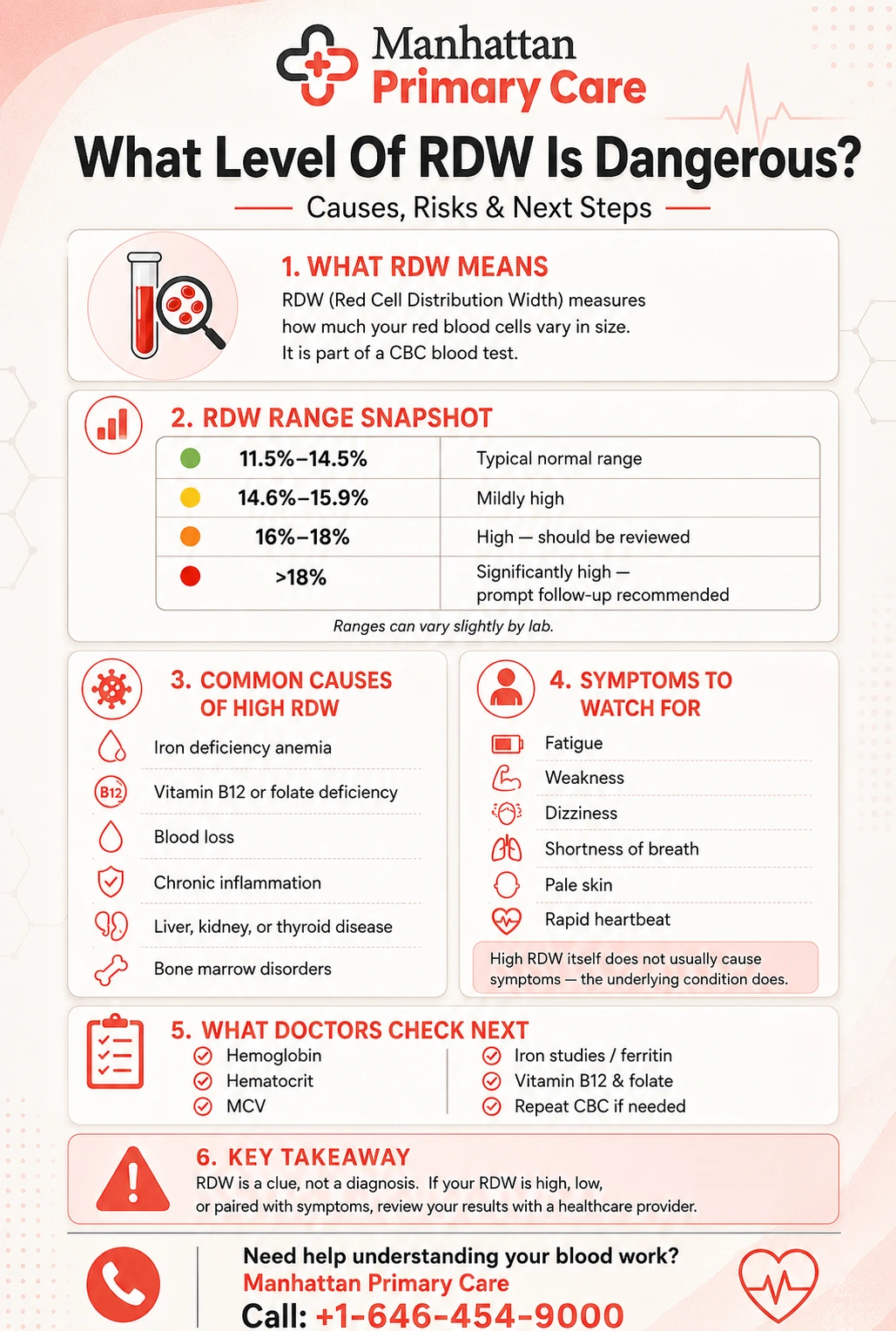
RDW or Red Cell Distribution Width, measures how much your red blood cells vary in size. A typical RDW normal range is about 11.5% to 14.5%, though some labs use slightly different ranges. RDW above 15% to 16% may suggest anemia, nutritional deficiency, inflammation or another health issue. Very high, very low or persistent abnormal RDW should be reviewed by a healthcare provider.
In general, RDW above 16% is more concerning, especially if your hemoglobin, hematocrit or MCV is also abnormal. RDW above 18% may need prompt medical follow-up, particularly if you have fatigue, shortness of breath, dizziness, chest discomfort or signs of bleeding.
The key point: RDW is a clue, not a diagnosis.
What Is RDW In A Blood Test?
RDW stands for Red Cell Distribution Width. It is part of a complete blood count also called a CBC.
Your red blood cells carry oxygen throughout your body. Normally, these cells are fairly similar in size. RDW measures how much their size varies.
A higher RDW means your red blood cells are more uneven in size. This can happen when your body is making new red blood cells that are smaller or larger than usual.
Doctors use the RDW blood test to help evaluate:
- Iron deficiency anemia
- Vitamin B12 deficiency
- Folate deficiency
- Blood loss
- Chronic inflammation
- Liver or kidney disease
- Bone marrow problems
- Mixed types of anemia
RDW is most useful when it is interpreted with other blood test results, especially MCV, hemoglobin and hematocrit.
RDW Normal Range
For most adults, the typical RDW range is:
11.5% to 14.5%
However, your lab may list a slightly different reference range. Some labs may use 12% to 15% as normal. That is why you should always compare your result with the range shown on your own blood test report.
RDW Normal Range By Age
RDW can vary by age, lab method and overall health. Newborns and children may have different reference ranges than adults. Older adults may also have slightly higher RDW because chronic illness, inflammation, kidney disease, nutritional deficiencies and medication use become more common with age.
| RDW Level | General Meaning | What It May Suggest |
| Below lab range | Low RDW | Usually less concerning by itself; interpret with other CBC values |
| 11.5%–14.5% | Normal RDW | Red blood cells are fairly similar in size |
| 14.6%–15.9% | Mildly high RDW | Possible early deficiency, anemia, blood loss or lab variation |
| 16%–18% | High RDW | More likely anemia, iron deficiency, B12/folate deficiency, inflammation or chronic disease |
| Above 18% | Significantly high RDW | Needs medical review, especially with symptoms or abnormal hemoglobin |
What Causes RDW To Be High?
A high RDW means your red blood cells vary more than expected in size. This can happen for several reasons.
Iron Deficiency Anemia
Iron deficiency is one of the most common causes of RDW high blood test results. It often causes smaller red blood cells, which can increase RDW.
Possible causes include:
- Heavy menstrual bleeding
- Low iron intake
- Digestive bleeding
- Pregnancy
- Poor iron absorption
- Frequent blood donation
Vitamin B12 Or Folate Deficiency
Vitamin B12 and folate help your body make healthy red blood cells. When either is low, red blood cells may become larger than normal, causing elevated RDW.
Symptoms may include fatigue, weakness, numbness, tingling, memory issues or balance problems.
Blood Loss
Recent or ongoing blood loss can raise RDW as your body produces new red blood cells. This may happen with heavy periods, surgery, injury, gastrointestinal bleeding or hidden blood in the stool.
Chronic Inflammation Or Infection
Long-term inflammation can affect how your body produces red blood cells. RDW may be high in people with chronic infections, autoimmune disease, kidney disease, inflammatory bowel disease or other ongoing illnesses.
Liver, Kidney Or Thyroid Disease
These conditions can affect red blood cell production, nutrient balance and red blood cell survival. RDW may be abnormal along with other lab changes.
Bone Marrow Disorders
Less commonly, high RDW may be linked to bone marrow disorders or blood cell production problems. This is more concerning if RDW is high along with abnormal white blood cells, low platelets, easy bruising, frequent infections, fevers, night sweats or unexplained weight loss.
High RDW Symptoms
High RDW itself usually does not cause symptoms. Symptoms usually come from the underlying condition causing it.
Possible high RDW symptoms include:
- Fatigue
- Weakness
- Dizziness
- Shortness of breath
- Pale skin
- Rapid heartbeat
- Chest discomfort
- Headaches
- Cold hands and feet
- Trouble concentrating
- Numbness or tingling if B12 deficiency is involved
Seek urgent care if you have chest pain, fainting, severe shortness of breath, black or bloody stools or severe weakness.
Is High RDW A Sign Of Cancer?
Many patients worry about this question: is high RDW a sign of cancer?
High RDW does not automatically mean cancer. In fact, elevated RDW is more commonly related to iron deficiency, vitamin B12 deficiency, folate deficiency, anemia, inflammation or blood loss.
However, cancer or bone marrow disorders can sometimes affect blood counts. Doctors become more concerned when high RDW appears with other abnormal results, such as low hemoglobin, abnormal white blood cells, low platelets, unexplained weight loss, night sweats, persistent fever or enlarged lymph nodes.
If your RDW is high, the best next step is to review your full CBC with a healthcare provider.
What Causes Low RDW?
A low RDW blood test result means your red blood cells are very similar in size. Low RDW is usually less clinically important than high RDW.
In many cases, low RDW is not dangerous if the rest of your CBC is normal.
Possible explanations include:
- Normal lab variation
- Uniformly small red blood cells
- Uniformly large red blood cells
- Lab-specific reference differences
- Chronic conditions when other blood values are also abnormal
Is Low RDW Bad?
Usually, low RDW is not bad by itself. But if low RDW appears with low hemoglobin, abnormal MCV, fatigue, weakness or shortness of breath, your provider should interpret it with the rest of your blood work.
Like high RDW, low RDW is not usually meaningful alone.
How RDW Works With MCV, Hemoglobin And Hematocrit?
RDW becomes more helpful when your doctor compares it with other CBC values.
- MCV measures the average size of your red blood cells.
- Hemoglobin measures the oxygen-carrying protein in red blood cells.
- Hematocrit measures how much of your blood is made up of red blood cells.
Here is how doctors may interpret common patterns:
| Pattern | Possible Meaning |
| High RDW + Low MCV | Often seen with iron deficiency anemia |
| High RDW + High MCV | May suggest B12 deficiency, folate deficiency, liver disease or alcohol-related changes |
| High RDW + Normal MCV | May occur early in iron, B12 or folate deficiency |
| Normal RDW + Low MCV | May suggest thalassemia trait or long-standing small red blood cells |
| High RDW + Low Hemoglobin | Anemia is likely and should be evaluated |
This is why you should not try to diagnose yourself from RDW alone.
Health Risks Associated With Abnormal RDW
Abnormal RDW can point to conditions that may need treatment.
Possible risks include:
- Untreated anemia
- Severe fatigue and weakness
- Shortness of breath
- Nutritional deficiencies
- Nerve problems from untreated B12 deficiency
- Hidden blood loss
- Chronic inflammation
- Increased strain on the heart in people with anemia or heart disease
- Possible bone marrow or blood disorders in rare cases
Some studies have linked elevated RDW with heart disease, stroke, kidney disease and chronic illness. However, RDW is not used alone to predict these conditions. It is one piece of a larger health picture.
Next Steps After Abnormal RDW
If your RDW is abnormal, do not panic. Follow these steps:
Review the full CBC
Look at RDW with hemoglobin, hematocrit, MCV, RBC count, white blood cells and platelets.
Compare your result with your lab’s range
A slightly high RDW may be less concerning than a rising or significantly elevated result.
Talk to a healthcare provider
A primary care provider can help connect the dots between your RDW result, symptoms, medical history, diet, medications and other CBC values. If your RDW is high or low, we offer primary care services to help review abnormal blood work, identify possible causes and recommend the right follow-up testing.
Ask about follow-up tests
Depending on your results, your provider may also recommend health screenings to look for related issues such as anemia, nutritional deficiencies, diabetes, cholesterol problems, thyroid imbalance, kidney disease or other chronic conditions that may affect your overall health.
Treat the cause
Treatment may involve iron, B12, folate, dietary changes, managing chronic disease, evaluating blood loss or referral to a specialist.
At Manhattan Primary Care, our team can help review abnormal blood test results, order appropriate lab testing and guide your next steps.
Conclusion
RDW is an important part of a CBC, but it should not be interpreted alone. A normal RDW is usually around 11.5% to 14.5%, while RDW above 15% to 16% may need medical review.
If your RDW is high, low, or paired with symptoms, schedule a visit with a healthcare provider. Manhattan Primary Care can help you understand your blood work, identify possible causes, and choose the right next steps.
Frequently Asked Questions
Can RDW change quickly?
RDW can change over time, but usually not overnight. It may shift during anemia recovery, after blood loss or after starting iron, B12 or folate treatment.
Can dehydration affect RDW results?
Dehydration usually does not directly raise RDW, but it can affect other blood values. Your doctor may repeat the CBC if results seem unusual.
Does a normal RDW rule out anemia?
No. Some types of anemia can occur with normal RDW. Hemoglobin, hematocrit, MCV and iron studies are also needed.
Can RDW be high after taking iron supplements?
Yes. RDW may stay high temporarily as your body makes new red blood cells during recovery.
Is RDW different from RBC count?
Yes. RDW measures red blood cell size variation. RBC count measures the number of red blood cells.
Should I repeat my RDW test if it is abnormal?
Often, yes. A repeat CBC can confirm whether RDW is persistent, improving or related to a temporary issue.
Sources
- MEDEX – What Level of RDW Is Dangerous? Understanding High RDW in Blood Tests
- Manhattan Medical Arts – Understanding The Risks: What Level of RDW is Dangerous?
- Your Health Magazine – Is Your RDW Level in the Danger Zone? Discover the Risks and What It Means for Your Health
- Cardiology Care NYC – What Level of RDW Is Dangerous? Normal vs High RDW Explained
- Ambar Lab – High RDW: what does it mean?
- Health Line – Red Cell Distribution Width (RDW) Test
Disclaimer
This blog is for informational & educational purposes only and does not intend to substitute any professional medical advice or consultation. For any health-related concerns, please consult with your physician, or call 911.
 492 6th Avenue New York, NY 10011
 +1-646-454-9000
 Hours of Operation


