
 Last updated: October 28, 2026
 7 min read
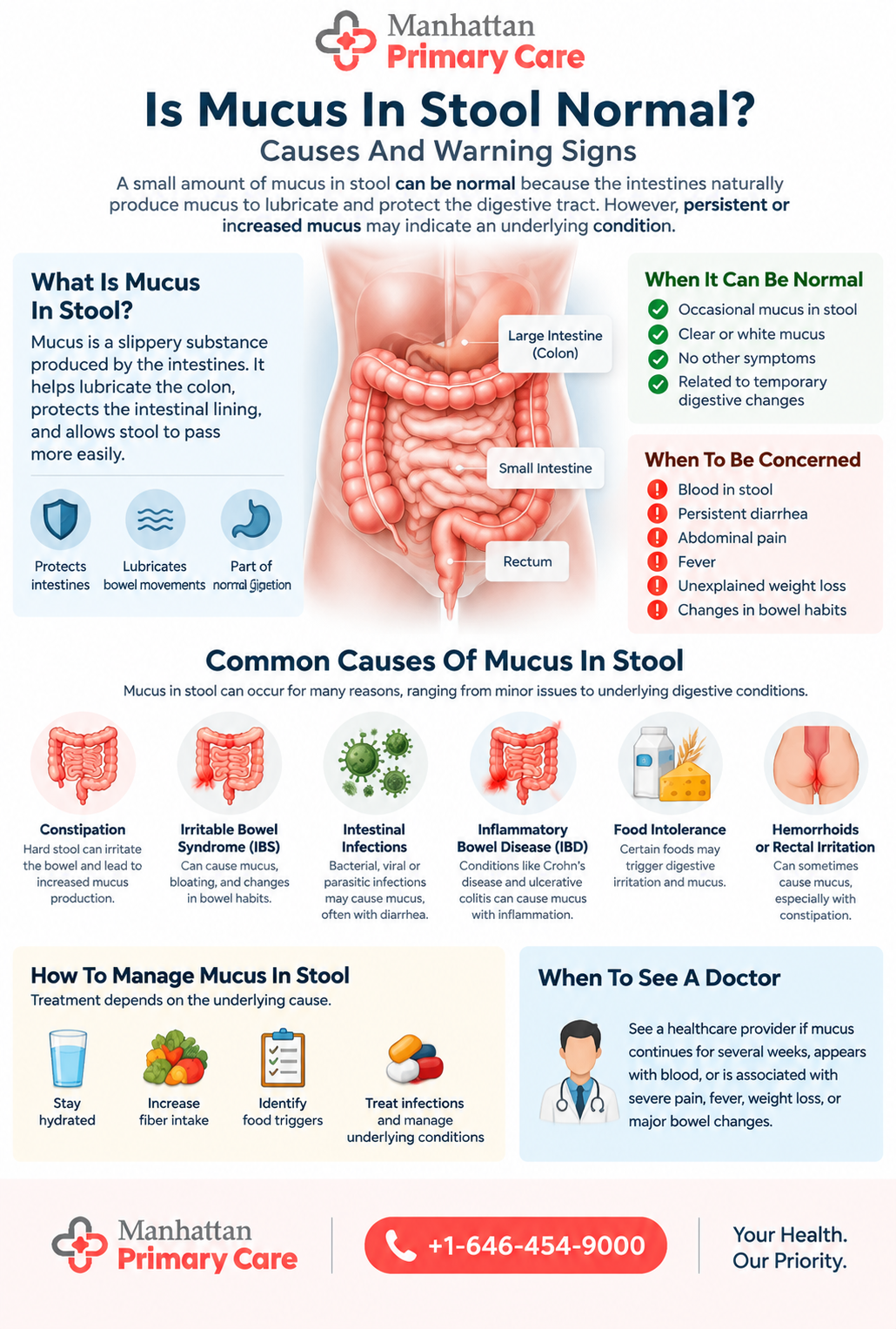
Yes, a small amount of mucus in stool can be normal. The intestines naturally produce mucus to lubricate bowel movements and help stool pass through the digestive tract. However, noticeable, persistent or increasing mucus, especially with blood, diarrhea, abdominal pain, fever or changes in bowel habits, may require medical evaluation.
Seeing mucus in your stool can be concerning, but it does not always mean there is a serious problem. The digestive system normally produces mucus to protect the intestinal lining. The important factors are how much mucus appears, how often it happens and whether it occurs with other symptoms.
At Manhattan Primary Care, digestive symptoms are evaluated by looking at your complete health history, symptoms and possible causes rather than focusing on one symptom alone.
What Is Mucus In Stool?
Mucus in stool is a slippery substance produced by the intestines that helps protect the digestive tract and allows stool to move smoothly.
The intestinal lining naturally creates mucus as part of normal digestion. Most people do not notice it because it usually mixes with stool in very small amounts.
Visible mucus may appear as:
- Clear mucus
- White mucus in stool
- Jelly-like mucus
- A coating around stool
- Mucus on toilet paper after a bowel movement
Occasional mucus in poop may be normal. However, excess mucus can occur when the intestines become irritated, inflamed or affected by another digestive issue.
Is Mucus In Stool Normal?
Small amounts of mucus in stool can be normal, but frequent or increased mucus may indicate an underlying digestive problem.
Normal mucus is usually:
- Occasional
- Clear or slightly white
- Not associated with other symptoms
Mucus may need medical evaluation when it occurs with:
- Blood in stool
- Persistent diarrhea
- Abdominal pain
- Fever
- Unexplained weight loss
- Long-lasting changes in bowel habits
The presence of mucus alone does not determine the cause. A healthcare provider considers your symptoms, medical history and other factors to understand what may be happening.
What Causes Mucus In Stool?
Common causes of mucus in stool include constipation, irritable bowel syndrome, infections, inflammation, food intolerance and rectal irritation.
Constipation
Can constipation cause mucus in stool? Yes, constipation can cause mucus in stool.
When stool becomes hard and difficult to pass, it can irritate the intestinal lining and rectal area. The body may produce extra mucus to help stool move through the digestive tract more easily.
Constipation and mucus in stool often improve when bowel movements become more regular through proper hydration, fiber intake and lifestyle changes.
Irritable Bowel Syndrome (IBS)
IBS is a digestive condition that can affect bowel habits without causing permanent damage to the intestines.
People with IBS may experience:
- Abdominal discomfort
- Bloating
- Constipation
- Diarrhea
- Mucus in stool
Some individuals with IBS notice white mucus in stool, especially during periods when symptoms become more active.
Intestinal Infections
Bacterial, viral or parasitic infections can irritate the digestive tract and increase mucus production.
Infections may cause:
- Mucus in diarrhea
- Stomach cramps
- Loose stools
- Fever
- Nausea or vomiting
Diarrhea with mucus is more concerning when it is severe, persistent or accompanied by blood.
Inflammatory Bowel Disease (IBD)
Inflammatory bowel diseases, including Crohn’s disease and ulcerative colitis, cause ongoing inflammation in the digestive tract.
These conditions may cause:
- Frequent diarrhea
- Abdominal pain
- Blood and mucus in stool
- Urgency to have a bowel movement
- Unexplained weight loss
Persistent mucus with other inflammatory symptoms should be evaluated by a healthcare professional.
Food Intolerance
Certain foods may trigger digestive irritation, leading to changes in bowel movements, bloating, diarrhea and sometimes increased mucus.
Identifying food triggers may help reduce symptoms, but recurring mucus should not be ignored without understanding the underlying cause.
Hemorrhoids Or Rectal Irritation
Irritation around the rectum, including hemorrhoids, may sometimes contribute to mucus appearing with bowel movements, especially when constipation or straining is present.
What Causes Jelly-Like Mucus In Stool?
Jelly-like mucus in stool usually occurs when the intestines produce more mucus than usual.
This mucus may appear as:
- Clear gel-like material
- White or cloudy mucus
- Strings or coating around stool
Possible causes include constipation, IBS, infections and inflammation.
The appearance of mucus alone cannot confirm the cause. The pattern of symptoms, duration and associated changes in bowel habits are more important.
What Does Mucus In Stool With Diarrhea Or Blood Mean?
Mucus with diarrhea can happen when the intestinal lining becomes irritated or inflamed.
Mucus in diarrhea may occur with:
- Digestive infections
- IBS flare-ups
- Inflammatory bowel conditions
However, diarrhea with blood and mucus should receive medical attention because it may indicate a condition requiring evaluation.
Seek medical advice if diarrhea with mucus occurs with:
- Blood in stool
- Fever
- Severe abdominal pain
- Signs of dehydration
- Symptoms lasting several days
Is Mucus In Stool Dangerous?
Occasional mucus in stool is usually not dangerous, but persistent changes should be evaluated.
Mucus becomes more concerning when it is:
- Increasing over time
- Occurring frequently
- Mixed with blood
- Associated with pain or weight loss
- Combined with ongoing diarrhea or constipation
Is Mucus In Stool A Sign Of Cancer?
Mucus in stool alone does not mean you have cancer.
Many common digestive issues can cause mucus, including constipation, IBS, infections and irritation.
However, persistent bowel changes, blood in stool, unexplained weight loss or changes that continue over time should be evaluated to identify the cause.
What Is The Treatment For Mucus In Stool?
Treatment for mucus in stool depends on the underlying cause.
There is no single treatment that removes mucus because mucus is usually a symptom rather than a condition itself.
Treatment may include:
- Increasing fiber intake when constipation is involved
- Drinking enough fluids
- Identifying food triggers
- Managing IBS symptoms
- Treating infections when diagnosed
- Addressing inflammatory digestive conditions with medical care
If you are wondering how to get rid of mucus in stool, the most effective approach is identifying why your body is producing extra mucus.
When Should You See A Doctor?
Knowing when mucus in stool needs medical attention can help identify digestive problems early and prevent symptoms from being overlooked.
You should schedule a medical evaluation if mucus in stool:
- Continues for several weeks
- Becomes more frequent
- Appears with blood
- Occurs with severe abdominal pain
- Is associated with fever or dehydration
- Happens with unexplained weight loss
- Comes with a major change in bowel habits
At Manhattan Primary Care, your symptoms can be evaluated through a complete medical assessment to help identify possible causes and determine whether additional testing or specialized primary care service is needed.
Conclusion
Mucus in stool can sometimes be a normal part of digestion, especially when it appears occasionally and without other symptoms. However, frequent mucus, blood, diarrhea, abdominal pain, fever or ongoing bowel changes may require evaluation.
Understanding the cause is the first step toward effective treatment. Manhattan Primary Care helps patients evaluate digestive symptoms and determine the appropriate next steps for their health.
Frequently Asked Questions
Is mucus in stool affected by stress?
Stress does not directly cause mucus, but it may worsen digestive conditions like IBS that can lead to mucus in stool.
Can dehydration make mucus in stool more noticeable?
Yes, dehydration can contribute to constipation and harder stools, which may make mucus more noticeable.
Does the color of mucus in stool provide clues about the cause?
The color may provide clues, but it cannot confirm the cause. Blood, persistent changes or unusual symptoms need medical evaluation.
Can mucus in stool happen after taking antibiotics?
Yes, antibiotics can change gut bacteria and may cause digestive changes, including diarrhea or mucus in stool.
Should I track mucus in stool before seeing a doctor?
Yes, noting mucus frequency, stool changes, diet and other symptoms can help your doctor identify possible causes.
Sources
- Health Line – Why Is There Mucus in My Stool?
- Medical News Today – What causes mucus in stools, and is it an urgent health concern?
- Ubie Health – Mucus in Stool? 7 Causes & Female Triggers: Don’t Ignore This
- Manhattan Medical Arts – Is Mucus in Stool a Red Flag? Discover the Hidden Signs
- Health Central – What Mucus in Your Stool Could Mean
Disclaimer
This blog is for informational & educational purposes only and does not intend to substitute any professional medical advice or consultation. For any health-related concerns, please consult with your physician or call 911.
 492 6th Avenue New York, NY 10011
 +1-646-454-9000
 Hours of Operation


