
 Last updated: September 16, 2026
 9 min read
Noticing unexpected bleeding after you thought your period had ended can be confusing. You may wonder whether you are experiencing a second period, light spotting or a change that needs medical attention. Although two periods in one month can sometimes result from a naturally short cycle, the timing, flow, frequency and accompanying symptoms all matter.
Temporary hormonal changes, stress, birth control, pregnancy-related bleeding, perimenopause or an underlying health condition may affect your cycle. Understanding what is normal for your body can help you decide whether to monitor the change or schedule an evaluation with Manhattan Primary Care.
Is It Normal To Get Two Periods In One Month?
Getting two periods in one month can happen and is not always a cause for concern. A naturally short menstrual cycle, temporary hormonal changes, stress or a birth control adjustment may explain it. However, frequent, heavy, painful or unusual bleeding should be evaluated to rule out pregnancy-related concerns or an underlying medical condition.
What Does A Normal Menstrual Cycle Look Like?
A menstrual cycle is counted from the first day of one period to the first day of the next. A typical adult menstrual cycle lasts approximately 21 to 35 days, while menstrual bleeding generally lasts up to seven days.
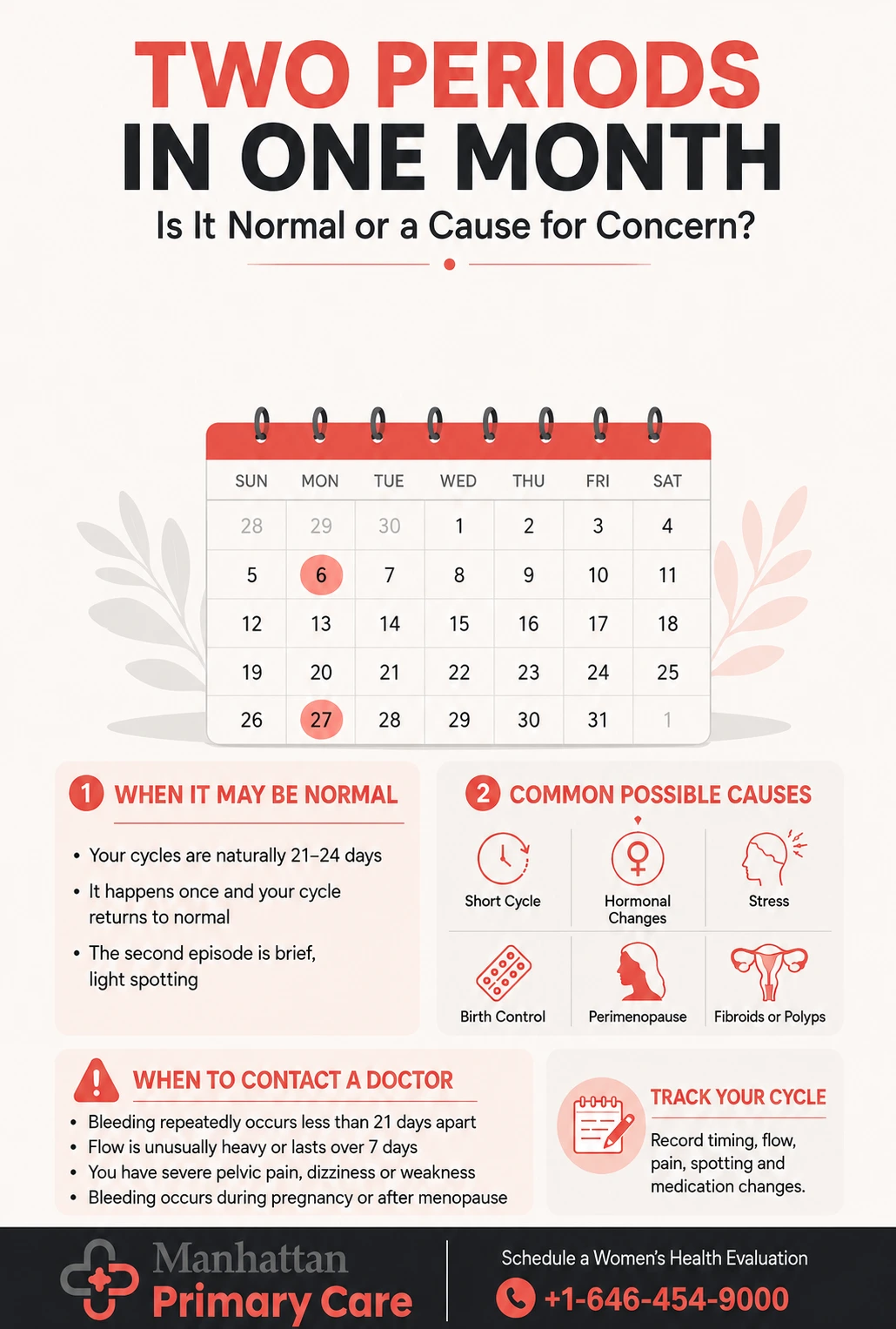
Because calendar months contain 28 to 31 days, someone with a 21- to 24-day cycle may have a period near the beginning of the month and another near the end. In this situation, having 2 periods in one month may simply reflect a shorter but regular cycle.
It is also important to distinguish between:
- A period: A steady menstrual flow that follows your usual pattern.
- Spotting: Light bleeding that may only appear when wiping or leave a small stain.
- Abnormal bleeding: Bleeding between periods, after sex, after menopause or a significant change in your normal flow.
Frequent periods may require evaluation when they repeatedly occur less than 21 days apart or represent a new change in a previously predictable cycle.
What Causes Two Periods In One Month?
The reasons you may wonder, “why did I get my period twice in one month,” can vary based on your age, cycle length, medications, pregnancy possibility and other symptoms.
Short Menstrual Cycles
Some people naturally have cycles shorter than the commonly referenced 28 days. For example, a period every 23 days can result in 2 periods in a month without indicating a health problem.
What matters is whether the pattern is normal for you. A sudden change from a 30-day cycle to bleeding every two weeks deserves closer attention.
Hormonal Fluctuations
Estrogen and progesterone help regulate ovulation and the uterine lining. Temporary hormonal fluctuations may cause early bleeding, delayed periods, spotting or back-to-back periods.
These fluctuations are especially common:
- During the first few years after menstruation begins
- After pregnancy or while breastfeeding
- During perimenopause
- Following major weight or exercise changes
- During illness or recovery
Conditions that interfere with ovulation, such as polycystic ovary syndrome, may also cause unpredictable bleeding.
Stress
Can stress cause periods twice a month? It may contribute. Significant physical or emotional stress can disrupt the hormonal signals involved in ovulation and menstruation. This may cause a period to arrive earlier, later or differently than usual.
Stress should not automatically be assumed to be the cause, particularly when bleeding is heavy, painful, persistent or accompanied by other symptoms.
Birth Control Changes
Starting, stopping, switching or inconsistently using hormonal contraception can cause breakthrough bleeding. This may happen with birth control pills, injections, implants, hormonal intrauterine devices and emergency contraception.
Missing a pill may also trigger bleeding that resembles another period. Do not stop prescribed birth control without discussing the change with your healthcare provider.
Perimenopause
During perimenopause, estrogen and progesterone levels become less predictable. Periods may become shorter, longer, heavier, lighter or more frequent.
Although irregular cycles are common during this stage, periods occurring less than 21 days apart, bleeding between periods or very heavy bleeding should still be evaluated. Any vaginal bleeding after 12 consecutive months without a period also requires medical attention.
Thyroid Disorders
Both an underactive and an overactive thyroid can affect menstrual timing and flow.
Additional symptoms may include:
- Unexplained weight changes
- Fatigue or difficulty sleeping
- Feeling unusually hot or cold
- Constipation or frequent bowel movements
- Changes in heart rate
A blood test can help determine whether thyroid dysfunction is contributing to frequent periods.
Fibroids or Polyps
Fibroids are noncancerous growths in or around the uterus, while polyps develop from the uterine lining. Either can cause heavy periods, prolonged bleeding, spotting between periods or what appears to be 2 periods a month.
Fibroids may also cause pelvic pressure, lower back pain, frequent urination or discomfort during sex. An ultrasound may be recommended when a structural cause is suspected.
Could Two Periods In One Month Mean Pregnancy?
Pregnancy does not cause a true period, though early-pregnancy spotting may resemble one. If you are wondering, “I got my period twice this month, am I pregnant?” Remember that bleeding twice in one month does not necessarily mean pregnancy. It may result from a short menstrual cycle, hormonal changes, birth control or another cause.
Take a pregnancy test if pregnancy is possible, especially if the bleeding is unusual, your period was late or you have other early-pregnancy symptoms. Contact a healthcare professional about unexplained bleeding during pregnancy.
Seek urgent care for possible pregnancy with heavy bleeding, severe or one-sided pelvic pain, shoulder pain, dizziness, weakness or fainting, which may indicate an ectopic pregnancy or another complication.
Is Getting A Period Again After One Week Normal?
A period again after 1 week is less likely to represent a normal menstrual cycle. It may be spotting, breakthrough bleeding, bleeding related to ovulation or abnormal vaginal bleeding rather than another true period.
Track the amount, duration, color, timing and associated symptoms. Arrange an evaluation if the bleeding is heavy, repeatedly returns or differs from your normal pattern.
When Should You Be Concerned About Frequent Bleeding?
Frequent bleeding warrants evaluation if it is heavy, prolonged, recurrent or accompanied by pelvic pain, dizziness, weakness, fever or bleeding after sex. Seek urgent care if you soak a pad or tampon hourly for several hours, feel faint or may be pregnant.
Schedule a medical evaluation if:
- You repeatedly experience two periods in one month
- Your periods regularly occur less than 21 days apart
- The change continues for several cycles
- Bleeding lasts longer than seven days
- You repeatedly bleed between periods or after sex
- You have pelvic pain, fever, unusual discharge or pain during sex
- You feel unusually tired, weak, dizzy or short of breath
- Pregnancy is possible
- You experience any bleeding after menopause
Seek urgent care for severe pelvic or abdominal pain, fainting, rapidly increasing bleeding or bleeding that soaks a pad or tampon every hour for more than two hours, particularly when accompanied by dizziness, chest pain or shortness of breath.
How Are Two Periods In One Month Diagnosed?
Our healthcare provider may ask about your usual cycle, bleeding pattern, birth control, medications, pregnancy possibility, recent stress, weight changes and accompanying symptoms.
Depending on your situation, evaluation may include:
- Pregnancy testing
- A complete blood count to check for anemia
- Thyroid testing
- Additional hormone tests when appropriate
- Testing for sexually transmitted infections
- A pelvic or physical examination
- Pelvic ultrasound to look for fibroids, polyps or other structural causes
Tracking your cycle in an app or calendar can help. Record the starting date, duration, flow, clots, pain, spotting and any medication changes.
How Are Frequent Periods Treated?
Treatment depends on the underlying cause. An isolated early period may only require monitoring.
Other options may include:
- Adjusting hormonal contraception under medical guidance
- Medication to control heavy bleeding
- Treatment for thyroid dysfunction or infection
- Iron supplementation when iron deficiency is confirmed
- Treatment for fibroids, polyps or another uterine condition
There is no single treatment for getting a period twice a month. Identifying the reason for the bleeding is the first step.
Conclusion
Having two periods in one month may be a normal result of a short menstrual cycle or temporary hormonal change. However, repeated, heavy, painful or otherwise unusual bleeding should not be ignored.
Manhattan Primary Care offers personalized women’s health services and diagnostic lab testing in NYC to identify the cause of menstrual changes and recommend appropriate next steps. Schedule an appointment if your bleeding pattern has changed or you are concerned about frequent periods.
Frequently Asked Questions
Does having two periods mean I ovulated twice?
No. Two bleeding episodes do not necessarily mean two ovulations occurred. Hormonal or anovulatory bleeding can resemble a period even when no egg was released.
Can medicines other than birth control cause unexpected bleeding?
Yes. Blood thinners and certain other medications may increase vaginal bleeding. Do not stop prescribed medication without first speaking with your healthcare provider.
Does the color of the blood reveal the cause?
Not reliably. Bright red blood is usually fresher, while brown blood is older. Color alone cannot determine whether bleeding is normal or caused by a medical condition.
Can sex cause bleeding that looks like another period?
Sex may cause light spotting due to friction, dryness or cervical irritation. Repeated bleeding after sex should be evaluated, especially with pain or unusual discharge.
Can having two periods affect fertility?
The bleeding itself does not necessarily affect fertility. However, an underlying condition that disrupts ovulation or reproductive health may make conception more difficult.
Sources
- Health Line – What Causes Two Periods in One Month?
- Medical News Today – Is it normal to get your period twice a month?
- Verywell Health – Why Am I Getting My Period Twice in One Month?
- Women’s Health Arizona – Two Menstrual Periods in One Month
- Samphire – Is It Normal to Have Your Period Twice a Month? Common Causes Explained
Disclaimer
This blog is for informational & educational purposes only and does not intend to substitute any professional medical advice or consultation. For any health-related concerns, please consult with your physician or call 911.
 492 6th Avenue New York, NY 10011
 +1-646-454-9000
 Hours of Operation


