
 Last updated: August 21, 2026
 7 min read
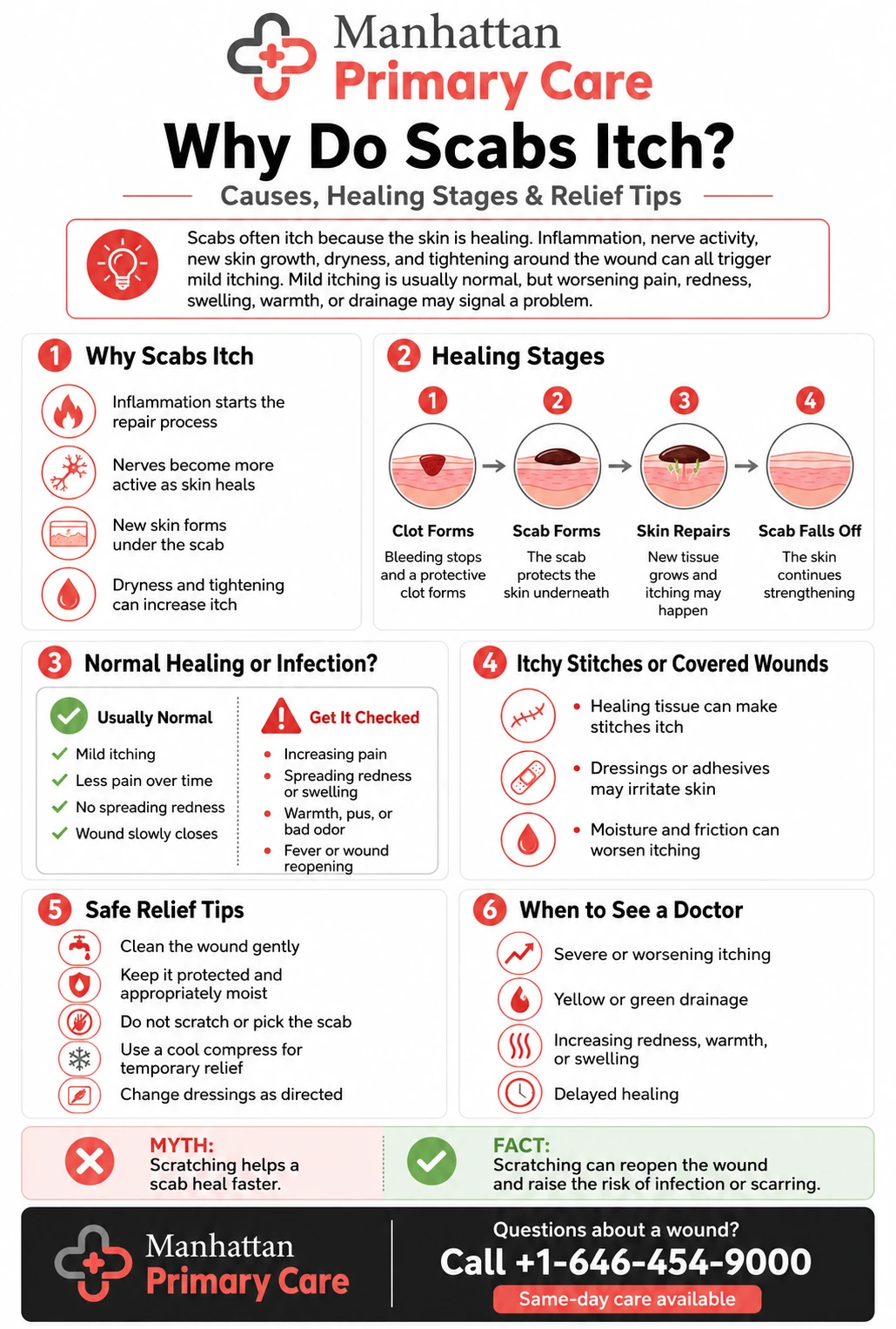
Why do scabs itch? Scabs often itch because your body is repairing damaged skin. During healing, inflammation activates itch-sensitive nerve pathways, new tissue develops beneath the wound and the surrounding skin may become dry or tight. Mild itching is usually normal, but increasing pain, redness, swelling, warmth or drainage can signal a problem.
Why Do Scabs Itch During Healing?
An itchy scab is common because several parts of the healing process happen at the same time.
Common reasons for scab itching include:
- Inflammation: After an injury, immune cells and chemical messengers move into the damaged area to begin repair. Some of these signals can contribute to itching.
- Nerve activity: Itch signals travel through sensory nerve fibers. Changes in nerve signaling during tissue repair can make a healing wound feel itchy.
- New skin formation: Skin cells gradually move across the wound as damaged tissue repairs itself.
- Dryness: Dry skin around a scab can make itching more noticeable.
- Tightening of the wound: As the wound contracts and repairs, the area may feel tight, sensitive or itchy.
So, does itching mean healing? It can occur during normal healing, but itching by itself cannot confirm that a wound is healing properly.
What Are The Healing Stages Of A Scab?
Wound healing is a continuous process. It involves overlapping phases of blood clotting, inflammation, tissue repair and remodeling rather than completely separate stages.
Stage 1: Blood Clot Formation
Immediately after the skin is injured, blood vessels constrict and platelets gather at the wound. A clot forms to control bleeding and create a temporary protective barrier.
Stage 2: Scab Formation And Inflammation
When a blood clot exposed to air dries, it may form the crust commonly called a scab. At the same time, immune cells help remove damaged tissue and protect the wound during the early repair process.
Some itching may begin during this stage.
Stage 3: Skin Repair
New blood vessels and tissue develop, collagen is produced and skin cells grow across the wound.
This is often when people notice that a healing wound is itchy, tight or sensitive.
Stage 4: Scab Separation And Remodeling
As the skin beneath the scab closes, the scab eventually loosens and falls away naturally. The new tissue continues strengthening and remodeling afterward.
Avoid pulling off a scab before it is ready, as this can damage the newly formed skin underneath.
Is Itching A Sign Of Healing Or Infection?
Mild itching can be a normal part of healing, but itching alone does not tell you whether a wound is healing normally or becoming infected.
Normal Healing Itching
An itchy wound is more likely to be part of routine healing when:
- Itching is mild or gradually improving
- Pain is decreasing rather than increasing
- Redness remains limited to the immediate wound area
- Swelling is improving
- There is no pus or unusual drainage
- The wound is gradually closing
Possible Signs Of Infection
Seek medical advice if wound itching occurs along with:
- Increasing pain
- Spreading redness
- Increasing swelling
- Warmth around the wound
- Pus or unusual drainage
- An unpleasant odor
- Fever
- Wound edges reopening
So, is itching a good sign of healing? Mild itching can accompany normal repair, but the overall appearance and progression of the wound are more important than itching alone.
Why Do Stitches And Covered Wounds Itch?
Itchy stitches can occur because the tissue around a surgical incision is undergoing inflammation and repair just like other wounds.
If you are wondering why do stitches itch, possible reasons include healing tissue, increased nerve activity, skin dryness and irritation around the incision.
A wound itching under a dressing may also occur because of:
- Friction from the dressing
- Moisture or sweat around the surrounding skin
- Irritation from adhesive
- Sensitivity to dressing materials
- Normal healing underneath the covering
Do not remove surgical dressings earlier than instructed simply because the wound is itchy. If itching becomes intense or a rash develops around the dressing, contact your healthcare provider.
How To Stop A Scab From Itching?
If you’re looking for wound itching relief, protecting the healing tissue is more important than scratching the itch.
For a minor cut or scrape:
- Clean it gently: Wash the wound carefully with mild soap and water.
- Prevent excessive dryness: Keeping an uncomplicated minor wound appropriately moist can help protect the healing surface.
- Cover it as recommended: A clean dressing can protect healing skin from dirt, friction and repeated scratching.
- Try a cool compress: A cool compress around the affected area may temporarily reduce itching.
- Avoid scratching or picking: Scratching can damage healing tissue and reopen the skin.
- Change dressings as directed: Replace dirty or wet bandages and follow wound-care instructions provided by your healthcare professional.
- Ask before using anti-itch treatments: Not every cream or medication is appropriate for open or recently injured skin.
A thick scab is not necessary for every wound to heal properly. Minor wounds are generally better supported by keeping them clean, protected and appropriately moist rather than deliberately allowing them to become excessively dry.
If a burn itches, avoid picking at peeling or blistered skin. Minor burns require appropriate wound care, while larger, deeper or worsening burns should be medically evaluated.
When Should You See A Doctor For An Itchy Wound?
Consider medical evaluation if your wound is itchy and you also notice:
- Severe or progressively worsening itching
- Increasing redness, warmth or swelling
- Yellow, green or unusual drainage
- Increasing pain instead of improvement
- Fever
- Wound reopening
- A wound that repeatedly scabs but does not heal
- Delayed healing, especially if you have diabetes or circulation problems
Conditions that affect blood flow or the body’s ability to repair tissue can make wounds take longer to heal and increase the risk of complications.
If you are unsure whether a wound is healing normally, a primary care provider can examine the area, check for infection or delayed healing and determine whether additional treatment is needed. Manhattan Primary Care provides evaluation and treatment for acute medical concerns, including minor injuries and wounds.
Conclusion
Scabs often itch because inflammation, nerve signaling, new skin formation and dryness occur as damaged tissue heals. Mild scab itching is usually expected, but worsening pain, redness, swelling, warmth or drainage should not be ignored. Avoid scratching and seek medical evaluation when a wound does not appear to be healing normally.
Frequently Asked Questions
Why Does a Scab Itch More at Night?
Itching may feel stronger at night because there are fewer distractions, making skin sensations more noticeable.
Can Exercise Make a Healing Scab Itch?
Yes. Sweat, friction, and movement during exercise can temporarily increase irritation around a healing scab.
Why Does a Scab Feel Tingly?
Mild tingling can occur as sensory nerves around the injured skin recover and become active during healing.
Can Sunlight Affect Skin After a Scab Falls Off?
Yes. Newly healed skin can be more sensitive to sunlight and more prone to temporary discoloration.
Why Does the Same Spot Keep Forming a Scab?
Repeated scabbing may result from ongoing irritation or reopening. If it does not fully heal, consider medical evaluation.
Sources
- Health Line – Why Do Scabs Itch? Causes and Treatments
- Verywell Health – Why Scabs Itch and Why You Shouldn’t Scratch Them
- HMP Global – Why Do Wounds Itch?
- Manhattan Medical Arts – Why Do Wounds Itch? Explained by Dr. Syra Hanif
- Live Science – Why are scabs so itchy?
- West Coast Wound & Skin Care – Understanding the Itch: Exploring Why Wounds Itch During Healing
Disclaimer
This blog is for informational & educational purposes only and does not intend to substitute any professional medical advice or consultation. For any health-related concerns, please consult with your physician or call 911.
 492 6th Avenue New York, NY 10011
 +1-646-454-9000
 Hours of Operation


