

 Last updated: July 21, 2026
 14 min read
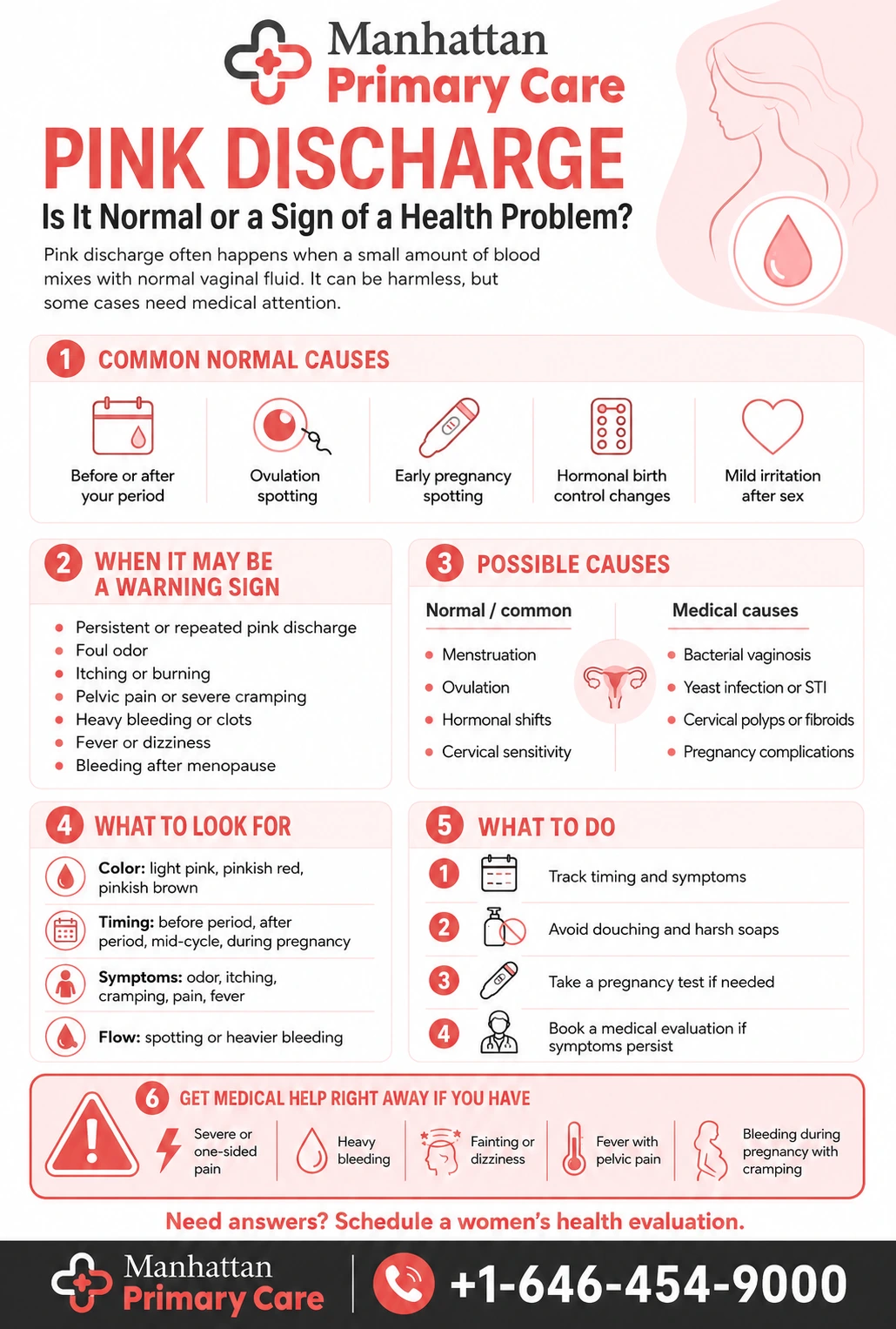
Noticing pink discharge can be confusing, especially when it appears unexpectedly. In many cases, the color simply comes from a small amount of blood mixing with normal vaginal fluid. It may happen around your period, during ovulation, after sex or because of hormonal changes.
However, persistent pink vaginal discharge or discharge accompanied by pain, itching, odor or fever may require medical evaluation.
Is Pink Discharge Normal?
Light pink discharge can be normal when a small amount of blood mixes with vaginal fluid, especially during ovulation, before or after a period or in early pregnancy. However, persistent pink discharge or discharge accompanied by itching, foul odor, fever, pelvic pain or cramping should be evaluated by a healthcare professional.
What Is Pink Discharge?
Pink discharge is vaginal fluid containing a small amount of fresh blood. When blood mixes with clear or white vaginal secretions, the discharge may appear:
- Light pink
- Pinkish red
- Pinkish brown
- Pink tinged
- Slightly bloody
- Similar to bloody mucus discharge
Normal vaginal discharge is usually clear or white and does not have a strong or unpleasant odor. Its amount and consistency can naturally change throughout the menstrual cycle. A change in color, odor, amount or consistency may be considered abnormal, especially when it differs from what is typical for you.
Pink discharge differs from a menstrual period because the amount of blood is generally much lighter. You may only notice light pink spotting when wiping or a small pink stain in your underwear rather than a steady flow.
What Does Pink Discharge Mean?
Pink discharge usually means that a small amount of bleeding has occurred somewhere in the reproductive tract. The blood may come from the uterus, cervix, vagina or irritated tissue near the vaginal opening.
The most likely explanation depends on:
- Where you are in your menstrual cycle
- Whether pregnancy is possible
- Whether you recently had sex
- Whether you use hormonal birth control
- How long the discharge lasts
- Whether you have pain, odor, itching or other symptoms
A single episode of slight pink discharge is often harmless. Recurrent discharge with blood should not be ignored.
Normal vs Abnormal Pink Discharge
| Situation | Possible Cause | Other Symptoms | Recommended Action |
| Pink discharge before a period | Menstrual bleeding beginning | Mild PMS symptoms | Monitor |
| Pink discharge after a period | Residual menstrual blood | No pain or odor | Usually monitor |
| Midcycle pink spotting | Ovulation-related spotting | Mild one-sided cramps | Monitor if brief |
| Spotting after starting birth control | Hormonal adjustment | Irregular light bleeding | Monitor and contact your doctor if persistent |
| Brief spotting after sex | Vaginal dryness or cervical irritation | Mild temporary discomfort | Monitor |
| Pink discharge with itching | Vaginitis, yeast infection, irritation or STI | Burning, redness or soreness | Schedule an evaluation |
| Pink discharge with foul odor | Bacterial vaginosis, trichomoniasis or another infection | Gray, yellow or unusual discharge | Seek medical testing |
| Pink discharge and cramping | Period, ovulation, pregnancy complication or pelvic condition | Pelvic or abdominal pain | Seek care if persistent or severe |
| Pink discharge during pregnancy | Cervical sensitivity, early spotting or a pregnancy complication | Pain, dizziness or heavier bleeding | Contact a healthcare professional |
| Bleeding after menopause | Vaginal thinning, polyps or uterine conditions | May occur without pain | Always seek evaluation |
What Causes Pink Discharge?
There are several possible pink discharge causes. Some are part of normal hormonal changes, while others require testing and treatment.
Pink Discharge Before Your Period
Pink discharge before a period often means menstrual bleeding is beginning. A small amount of pink blood may mix with vaginal secretions before your regular flow starts.
This type of light pink bleeding is usually not concerning when:
- It occurs close to your expected period
- It changes into your usual menstrual flow
- It does not have a foul smell
- It is not accompanied by severe pain
Hormonal fluctuations associated with premenstrual syndrome may also cause slight spotting.
Pink Discharge After Your Period
Pink discharge after a period is commonly caused by residual blood leaving the uterus. Older blood may mix with cervical fluid and appear pinkish brown rather than bright red.
It is usually normal when it lasts briefly and does not occur with pain, itching, fever or odor. Pink discharge that continues well after your period or repeatedly appears between cycles should be evaluated.
Pink Discharge During Ovulation
Some women experience light pink spotting around ovulation. This usually happens near the middle of the menstrual cycle when hormonal changes trigger the release of an egg.
Ovulation spotting is generally:
- Much lighter than a period
- Brief, often lasting one or two days
- Pink, red or light brown
- Sometimes accompanied by mild one-sided cramping
Recurring or unexplained bleeding between periods should still be discussed with a healthcare professional.
Hormonal Birth Control
Birth control pills, injections, implants, hormonal intrauterine devices and emergency contraception can cause breakthrough bleeding. This may appear as light pink discharge, particularly after starting a new method, missing pills or changing the dose.
Breakthrough bleeding is commonly a small amount of spotting outside the expected period. It often improves as the body adjusts, but persistent or heavy bleeding should be evaluated.
Hormonal Changes And Perimenopause
Changes in estrogen and progesterone can affect ovulation and the uterine lining.
Irregular spotting may occur during:
- Perimenopause
- Breastfeeding
- Major weight changes
- Thyroid disorders
- Polycystic ovary syndrome or PCOS
- Periods of significant stress
- Changes in hormonal medication
Lower estrogen levels can also make vaginal tissue thinner and more sensitive, increasing the likelihood of irritation or light bleeding.
Sexual Activity
Light pink discharge after sex may result from friction, vaginal dryness or minor irritation of the cervix or vaginal tissue.
It may be more likely after:
- Vigorous sexual activity
- Sex without adequate lubrication
- A long period without sexual activity
- Menopause-related vaginal dryness
- Pregnancy, when the cervix may be more sensitive
Repeated bleeding after sex should be evaluated because infections, cervical inflammation, polyps and other cervical conditions can produce similar symptoms.
Pink Discharge During Pregnancy
Pink discharge while pregnant can have several explanations. Light spotting may occur early in pregnancy and bleeding can also happen because increased blood flow makes the cervix easier to irritate.
Very light spotting may occur around the time a fertilized egg attaches to the uterine lining. However, pink discharge alone cannot confirm pregnancy. A missed period and pregnancy test provide more useful information.
Bleeding during pregnancy can also be related to:
- Cervical sensitivity
- Sex or a pelvic examination
- Infection
- Pregnancy loss
- Ectopic pregnancy
- Placental conditions
- Preterm labor
Later in pregnancy, clear, pink or slightly bloody mucus discharge may be part of the “bloody show” as the cervix prepares for labor. Bloody or watery discharge before 37 weeks, however, may indicate preterm labor and requires prompt medical advice.
Contact a healthcare professional about any unexplained pink discharge during pregnancy, particularly when it occurs with pain, pressure, contractions, dizziness or increasing bleeding.
Postpartum Discharge
Bleeding and discharge after childbirth are called lochia. It commonly begins bright red and gradually becomes lighter and more pink as the uterus heals.
Seek immediate care if postpartum bleeding becomes suddenly heavy, you soak through pads rapidly, pass very large clots, feel faint or develop a fever.
When Is Pink Discharge A Warning Sign?
Pink discharge may be abnormal when it lasts several days, repeatedly returns or appears with other vaginal or pelvic symptoms.
Pink Discharge And Itching
Pink discharge and itching may indicate vaginal inflammation or irritation.
Possible causes include:
- Yeast infection
- Contact irritation from scented products
- Bacterial vaginosis
- Trichomoniasis
- Another sexually transmitted infection
- Small scratches caused by irritation or scratching
A yeast infection commonly causes intense itching, irritation and thick or clumpy discharge. Pink coloring may occur if irritated tissue bleeds slightly, but bloody discharge is not a classic yeast infection symptom.
Pink Discharge With An Unusual Odor
A strong, fishy or unpleasant odor is not typical of normal discharge. Pink discharge with odor may be associated with bacterial vaginosis, trichomoniasis, cervicitis or another infection.
Bacterial vaginosis is a common and treatable vaginal condition. Douching can increase the risk by disrupting the vagina’s natural bacterial balance.
Pink Discharge And Cramping
Mild cramping with pink discharge may occur around ovulation or near the beginning of a period.
Medical evaluation is recommended when cramping is:
- Severe or worsening
- Limited to one side
- Accompanied by fever
- Associated with heavy bleeding
- Occurring during pregnancy
- Combined with dizziness, weakness or fainting
Pink discharge and cramping during pregnancy can sometimes indicate miscarriage or ectopic pregnancy. These conditions cannot be diagnosed from discharge alone.
Thick Pink Discharge
Thick pink discharge may be cervical mucus mixed with blood. It can occur near a period, during pregnancy, after cervical irritation or as labor approaches.
When thick pink discharge is accompanied by itching, odor, burning or pelvic discomfort, an infection or inflammation may be present.
Sexually Transmitted Infections
Some STIs can cause pink vaginal discharge by inflaming the cervix or reproductive tract. Chlamydia and gonorrhea may cause abnormal discharge, bleeding between periods, bleeding after sex, pelvic pain or burning during urination.
Many STIs cause mild symptoms or no symptoms at all, so testing is the only reliable way to know whether an infection is present.
Untreated infections can sometimes progress to pelvic inflammatory disease, which may affect fertility and increase the risk of ectopic pregnancy.
Other Gynecological Causes Of Bloody Discharge
Persistent blood in discharge may occasionally be related to an underlying reproductive health condition.
Possible causes include:
- Cervical inflammation, known as cervicitis
- Cervical ectropion, sometimes called cervical erosion
- Cervical or uterine polyps
- Uterine fibroids
- Endometriosis
- Ovarian cysts
- PCOS
- Endometrial abnormalities
- Vaginal or cervical tissue changes
- Cervical or uterine cancer
Cancer is not the most common reason for pink discharge. However, persistent unexplained bleeding, bleeding after sex or any bleeding after menopause should always be evaluated.
Postmenopausal bleeding may appear pink, brown or red and can occur without pain. Although many causes are noncancerous, prompt evaluation is necessary to rule out serious disease.
How To Manage Pink Discharge?
You cannot determine the exact cause from color alone. The following steps can help you monitor the symptom and give your healthcare provider useful information.
Step 1: Note The Timing
Record whether the discharge appeared:
- Before or after your period
- Around the middle of your cycle
- After sex
- After starting birth control
- During pregnancy
- After menopause
Step 2: Observe The Amount And Consistency
Note whether it is:
- Light pink spotting
- Pinkish brown discharge
- Pinkish red discharge
- Thick or mucus-like
- Watery
- Clumpy
- Becoming heavier
Step 3: Check For Other Symptoms
Pay attention to:
- Itching
- Burning
- Foul odor
- Painful urination
- Pain during sex
- Pelvic pain
- Cramping
- Fever
- Dizziness
- Missed period
Step 4: Consider Pregnancy
Take a home pregnancy test when pregnancy is possible, especially if your period is late. A negative test taken too early may need to be repeated according to the test instructions.
Step 5: Avoid Irritating Products
Wash the external vulvar area gently with water or a mild, fragrance-free cleanser. Avoid:
- Vaginal douching
- Scented sprays
- Perfumed wipes
- Deodorizing products
- Harsh soaps
- Unnecessary vaginal washes
The vagina cleans itself naturally. Douching can disrupt its normal balance and may worsen irritation or increase infection risk.
Step 6: Do Not Guess The Infection
Avoid treating yourself repeatedly with over-the-counter yeast medication unless you are reasonably certain that yeast is the cause. Bacterial vaginosis, STIs and other conditions can produce overlapping symptoms but require different treatments.
Step 7: Schedule An Evaluation
Arrange a medical visit when the discharge is persistent, recurrent, unexplained or accompanied by other symptoms.
Manhattan Primary Care provides women’s health services, diagnostic laboratory services and confidential STD testing. Same-day and walk-in appointments are available for patients who need timely assessment.
How Is Pink Discharge Diagnosed?
Your healthcare professional may ask about:
- Your last menstrual period
- Cycle regularity
- Pregnancy possibility
- Birth control use
- Recent sexual activity
- New sexual partners
- Associated pain, odor or itching
- Current medications
- Previous gynecological conditions
Depending on your symptoms, the evaluation may include:
- Pregnancy testing
- Urine testing
- Vaginal or cervical swabs
- Chlamydia and gonorrhea testing
- Blood tests
- Pelvic examination
- Pap testing when appropriate
- Hormone or thyroid testing
- Pelvic ultrasound
- Referral to an OB-GYN
A detailed history and pelvic examination help identify vaginal or cervical causes of abnormal bleeding and guide appropriate laboratory or imaging tests.
How Is Pink Discharge Treated?
Treatment depends on the underlying cause. Pink discharge itself is a symptom, not a diagnosis.
Possible treatments include:
- Normal menstrual or ovulation spotting: Monitoring may be all that is needed.
- Bacterial vaginosis: Prescription antibiotics may be recommended.
- Yeast infection: Antifungal treatment may be prescribed or recommended after diagnosis.
- STI or cervicitis: Treatment depends on the specific infection and may include testing or treatment for sexual partners.
- Hormonal spotting: A healthcare professional may adjust birth control or evaluate hormone-related conditions.
- Vaginal dryness: Lubricants, moisturizers or prescribed hormonal treatment may help in appropriate patients.
- Polyps or fibroids: Monitoring, medication or a procedure may be considered depending on symptoms.
- Pregnancy-related bleeding: Treatment depends on the cause, pregnancy stage and severity of symptoms.
Do not use leftover antibiotics or another person’s medication. Accurate testing helps ensure the right condition is treated.
When Should You See A Doctor?
Schedule a medical appointment if:
- Pink discharge continues or repeatedly returns
- Spotting occurs between periods
- You experience bleeding after sex
- There is itching, burning or irritation
- The discharge smells unpleasant
- You have pain during sex or urination
- You have pelvic pain or recurring cramps
- Pregnancy is possible
- You may have been exposed to an STI
- Your menstrual pattern has changed
- You notice bloody discharge after menopause
When To Seek Immediate Medical Attention
Seek urgent medical care for pink discharge or vaginal bleeding accompanied by:
- Severe or one-sided abdominal pain
- Heavy or rapidly increasing bleeding
- Dizziness, weakness or fainting
- Shoulder pain during possible pregnancy
- Fever with pelvic pain
- Shortness of breath or chest pain
- Large blood clots
- Pregnancy with severe cramps
- Bleeding after pregnancy that soaks pads rapidly
Heavy bleeding combined with lightheadedness, chest pain or difficulty breathing may require emergency treatment.
Pink Discharge: Myth vs Fact
Myth: Pink discharge is always abnormal.
Fact: Mild pink discharge can occur before or after a period, during ovulation, after sex or while the body adjusts to hormonal birth control.
Myth: Pink discharge always means an infection.
Fact: Infections are only one possible cause. Menstruation, ovulation, pregnancy, hormonal changes and cervical irritation are also common explanations.
Myth: Pink discharge confirms pregnancy.
Fact: Light spotting can occur during early pregnancy, but it is not a reliable pregnancy test. Take a pregnancy test and contact a healthcare professional if you have concerning symptoms.
Myth: A lack of odor means there cannot be an infection.
Fact: Some infections, including chlamydia and gonorrhea, may produce mild symptoms or no noticeable symptoms. Testing may still be appropriate after possible exposure.
Myth: Douching will remove abnormal discharge.
Fact: Douching does not treat the underlying cause and can disturb the normal vaginal microbiome, potentially worsening irritation or infection risk.
Conclusion
Pink discharge is often caused by menstrual blood, ovulation or temporary hormonal changes. However, persistent discharge with blood, odor, itching, pain or cramping may signal an infection or another gynecological condition.
Manhattan Primary Care offers personalized women’s health evaluations, laboratory testing and confidential STD testing in NYC. Schedule an appointment for clear answers and an evidence-based treatment plan tailored to the underlying cause.
Frequently Asked Questions
Can blood-thinning medications cause pink discharge?
Yes. Blood thinners can make minor vaginal bleeding more noticeable. Contact your doctor if the spotting is new, persistent or heavy.
Can intense exercise lead to pink spotting?
Strenuous exercise may sometimes trigger spotting by affecting hormone levels. Recurrent bleeding after exercise should be evaluated.
Could the pink color be coming from urine instead?
Yes. Blood in urine may look like pink vaginal discharge. Burning, frequent urination or back pain may suggest a urinary problem.
Can a retained tampon cause pink discharge?
Yes. A forgotten tampon may cause bloody discharge, odor or irritation. Seek medical help if you cannot remove it easily.
Does pink discharge affect fertility?
Pink discharge itself does not affect fertility. However, an underlying infection or hormonal condition may affect reproductive health if untreated.
Is pink spotting normal after a Pap test?
Mild spotting after a Pap test is common and usually resolves quickly. Contact your doctor if bleeding becomes heavy or continues.
Sources
- Health Line – What Causes Pink Vaginal Discharge and How Is It Treated?
- Flo Health – Pink discharge: What is it, and why does it happen?
- Medical News Today – What causes pinkish-brown discharge?
- Manhattan Medical Arts – Early Pregnancy Sign or Health Issue? Understanding Light Pink Discharge
- Rela Institute – Pink Discharge: Causes, Symptoms, and When to See a Doctor
Disclaimer
This blog is for informational & educational purposes only and does not intend to substitute any professional medical advice or consultation. For any health-related concerns, please consult with your physician or call 911.
 492 6th Avenue New York, NY 10011
 +1-646-454-9000
 Hours of Operation


