
 Last updated: June 10, 2026
 15 min read
A blood filled pimple can look scary, especially when a regular breakout suddenly turns red, purple, swollen, or starts bleeding. The good news is that most blood pimples are not dangerous. However, they do need gentle care because squeezing, picking, or using harsh products can increase the risk of infection, scarring, and delayed healing.
This guide explains what a blood filled pimple is, why it forms, how it differs from a normal pimple, cyst, or blood blister, and how to treat it safely at home. You’ll also learn when it’s time to see a healthcare provider for professional care.
What Is A Blood Filled Pimple?
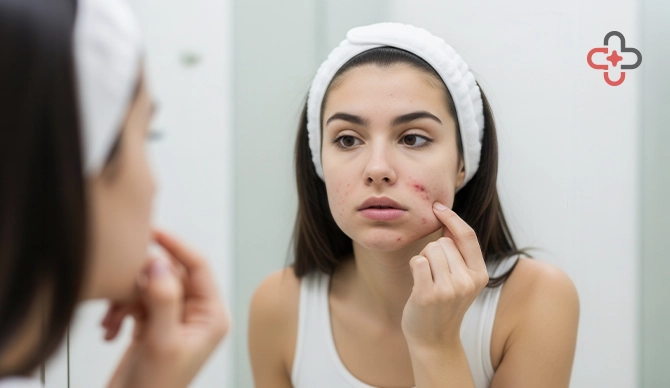
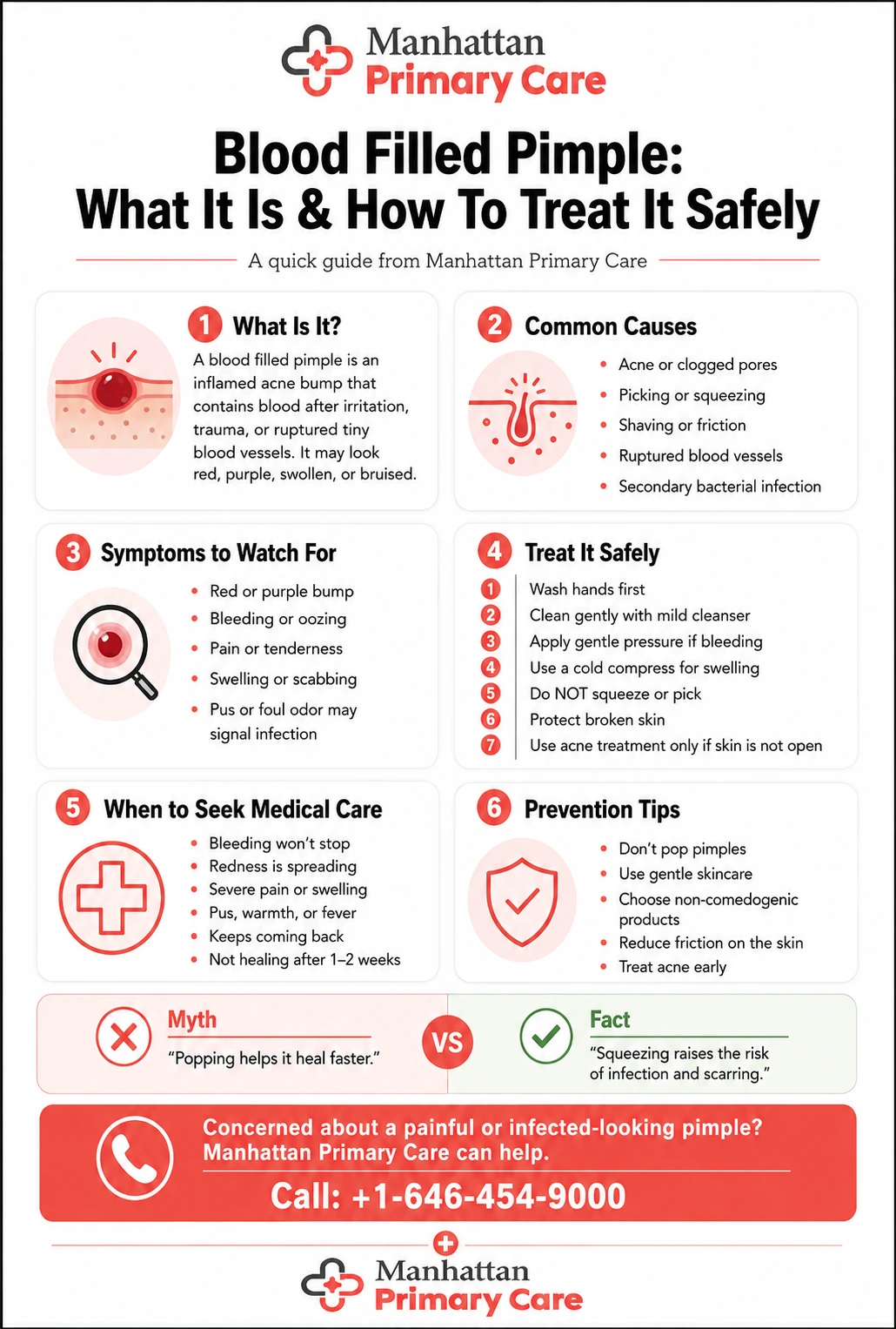
A blood filled pimple is usually a regular pimple that has become irritated, injured, or severely inflamed. When a clogged pore swells, the surrounding blood vessels can become damaged and leak blood into the lesion. As a result, the bump may appear red, dark red, purple, or bruised and may contain a mixture of blood, oil, dead skin cells, and sometimes pus.
Unlike a typical whitehead or pustule, a blood filled pimple often develops after picking, popping, scratching, shaving, or other forms of skin trauma. In some cases, it can resemble a blood blister, although the underlying cause is usually acne-related inflammation rather than direct injury alone.
People may refer to this condition as:
- Blood pimple
- Pimple filled with blood
- Pimple full of blood
- Bleeding pimple
- Blood acne
- Blood-filled pimple
- Blood blister pimple
In many cases, a blood filled pimple starts as a regular whitehead, pustule, papule, or cystic acne bump. It may become bloody after being squeezed, scratched, shaved over, rubbed by clothing, or irritated by harsh skin products.
Why Do Pimples Bleed?
Pimples bleed when the skin barrier breaks and small blood vessels under the surface are damaged. This often happens when a person picks or pops a pimple, but it can also happen when inflammation is deep or severe.
A pimple may bleed because of:
- Pressure from squeezing or popping
- Scratching or picking at the bump
- Shaving over acne
- Friction from masks, helmets, collars, or tight clothing
- A deep inflamed acne lesion
- An infected acne bump
- Ruptured blood vessels under swollen skin
- A pimple that has turned into a blood blister-like lesion
A little bleeding from a pimple can happen, but repeated bleeding, worsening pain, spreading redness, or pus may be a sign that the bump needs medical attention.
Blood Filled Pimple vs Normal Pimple vs Cyst vs Blood Blister
Not every red or purple bump is the same. Knowing the difference can help you decide whether home care is reasonable or whether you should see a healthcare provider.
Blood Filled Pimple
A blood filled pimple is usually an inflamed acne lesion that contains blood. It may look red, dark red, purple, or brownish. It can be tender, swollen, or crusted if it has opened.
Common signs include:
- Blood inside or around the pimple
- Red or purple discoloration
- Swelling
- Tenderness
- Possible pus or drainage
- Scabbing after bleeding
Normal Pimple
A normal pimple forms when oil, dead skin cells, and bacteria clog a pore. It may appear as a whitehead, blackhead, red bump, or pus-filled pustule.
A normal pimple usually does not contain visible blood unless it is irritated, squeezed, scratched, or inflamed enough to damage nearby blood vessels.
Cystic Acne
Cystic acne is deeper, larger, and often more painful than a surface-level pimple. It may feel like a firm or soft lump under the skin. Cysts can become inflamed, infected, and more likely to scar.
A cystic acne bump may sometimes drain blood or pus, especially if it ruptures or is squeezed. Because cystic acne can cause permanent scarring, recurrent or painful cysts should be evaluated by a healthcare provider.
Blood Blister
A blood blister is different from acne. It usually forms when skin is pinched, rubbed, or injured, causing blood to collect under the outer layer of skin. Blood blisters are common on fingers, toes, heels, or areas exposed to friction.
A blood blister pimple may look similar, but the cause is different. Acne starts in a clogged pore or hair follicle. A blood blister starts from trauma or pressure.
What Causes Blood Pimples?
Several factors can lead to a blood pimple. Sometimes, more than one cause is involved.
Acne or Inflamed Pores
Acne develops when pores become clogged with oil, dead skin cells, and bacteria. When the clogged pore becomes inflamed, the skin around it may swell and become more fragile.
If pressure builds inside the lesion, or if the bump is picked or squeezed, blood vessels can rupture and create a pimple filled with blood.
Trauma or Squeezing
The most common reason a pimple turns bloody is trauma. This can include:
- Popping a pimple
- Pressing too hard
- Scratching the area
- Picking at a scab
- Shaving over a bump
- Using abrasive scrubs
- Wearing tight masks, helmets, or clothing
Squeezing can push inflammation deeper into the skin. It can also introduce bacteria from the hands into broken skin, increasing the risk of infected acne.
Ruptured Blood Vessels Under the Skin
Inflamed skin has increased blood flow and can be more delicate. If tiny vessels under the skin rupture, blood can collect inside or around the pimple.
This may make the pimple look:
- Bright red
- Dark red
- Purple
- Brownish as it heals
- Bruised around the edges
Blood Blister Formation
Sometimes, a bump that looks like a blood filled pimple may actually be a blood blister. This is more likely if it appeared after friction, pressure, pinching, or injury rather than a typical acne breakout.
Examples include:
- A bump after shaving
- A blister-like lesion from a tight mask or helmet
- A sore spot where clothing rubs
- A bump after skin was pinched or scratched
Secondary Bacterial Infection
A pimple can become infected when bacteria enter through broken skin. This is more likely if the pimple was popped, squeezed, or picked.
Signs of infected acne may include:
- Increasing pain
- Spreading redness
- Warmth around the bump
- Swelling
- Pus
- Foul odor
- Fever
- Red streaking around the area
An infected pimple should not be squeezed or drained at home. It may need professional treatment.
Blood Filled Pimple Symptoms
A blood filled pimple may look more dramatic than a regular breakout. Some symptoms are expected, while others may suggest infection or a deeper skin problem.
Common symptoms include:
- Red or purple discoloration
- A visible pimple filled with blood
- Mild bleeding after irritation
- Tenderness or soreness
- Swelling around the pimple
- Scabbing or crusting as it heals
- Dark mark after inflammation fades
Symptoms that may suggest infection include:
- Pus or yellow-green drainage
- Foul odor
- Increasing pain
- Warmth around the lesion
- Redness spreading outward
- Fever or chills
- Swollen lymph nodes
- The bump keeps getting larger
- The lesion does not heal
If you notice signs of infection, it’s best to seek medical care rather than trying to drain the pimple yourself.
How To Treat Blood Pimples Safely At Home?
Most mild blood filled pimples can be cared for at home with gentle skin care and patience. The goal is to stop bleeding, protect the skin barrier, reduce inflammation, and prevent infection.
Step 1: Wash Your Hands First
Before touching the area, wash your hands with soap and water. This lowers the chance of transferring bacteria into broken skin.
Avoid touching the pimple repeatedly throughout the day.
Step 2: Clean the Area Gently
Clean the skin with mild soap and lukewarm water. You can also use a gentle, non-comedogenic cleanser.
Avoid:
- Harsh scrubs
- Alcohol
- Hydrogen peroxide
- Lemon juice
- Toothpaste
- Strong exfoliating acids on open skin
These can irritate the area and slow healing.
Step 3: Stop Any Active Bleeding
If the pimple is bleeding, apply light pressure with clean gauze or a clean tissue for several minutes.
Here’s how to make a pimple stop bleeding:
- Wash your hands.
- Rinse the area gently with clean water.
- Apply steady, gentle pressure with clean gauze.
- Hold pressure for several minutes without repeatedly checking.
- Once bleeding stops, avoid picking at the scab.
If bleeding does not stop after steady pressure, or if the bleeding keeps returning, contact a healthcare provider.
Step 4: Use a Cold Compress for Swelling
A cold compress can help reduce swelling, redness, and discomfort.
Wrap ice or a cold pack in a clean cloth and apply it for 5–10 minutes at a time. Do not place ice directly on the skin.
Step 5: Do Not Squeeze or Pop It
This is the most important rule. Popping a blood pimple can worsen inflammation, push bacteria deeper, increase bleeding, and raise the risk of scarring.
Even if the pimple looks “ready,” squeezing can make it worse.
Step 6: Protect Broken Skin
If the pimple has opened, keep it clean and protected. A small amount of plain petroleum jelly and a clean bandage may help protect the area while it heals.
A hydrocolloid pimple patch may also help protect the bump from picking, but avoid using medicated patches on open, actively bleeding, or severely irritated skin unless advised by a clinician.
Step 7: Use Acne Treatment Carefully
If the skin is not open or actively bleeding, over-the-counter acne treatments may help reduce breakouts.
Common options include:
- Benzoyl peroxide
- Salicylic acid
- Adapalene
- Sulfur-based spot treatments
Use these products as directed. Do not apply strong acne products directly into an open wound because they can sting, irritate, and delay healing.
If you have recurring blood filled pimples, painful cystic acne, or infected acne, a healthcare provider may recommend prescription treatment.
Medical Treatment For Blood Filled Pimples
Professional treatment depends on what is causing the bump. A clinician may examine the area to determine whether it is acne, a cyst, an infected follicle, a boil, a blood blister, or another skin condition.
If the lesion is painful, rapidly worsening, draining pus, or surrounded by spreading redness, acute illness treatment may be appropriate to check for infection and determine whether prescription medication or additional care is needed.
Treatment may include:
- Prescription topical acne medication
- Oral antibiotics for bacterial infection
- Anti-inflammatory treatment for severe acne
- Drainage by a medical professional if an abscess is present
- Steroid injection for selected painful cystic acne lesions
- Acne prevention plan for recurring breakouts
- Dermatology referral for severe or persistent lesions
Do not attempt to drain a cyst, boil, or infected pimple at home with a needle. This can make infection worse and may lead to scarring.
When To Seek Medical Attention
A blood filled pimple is often manageable at home, but some symptoms need professional care. If you’re concerned about a persistent, painful, or infected-looking lesion, Dr. Syra Hanif, M.D., and the team at Manhattan Primary Care can evaluate the area through our primary care services and recommend appropriate treatment.
See a healthcare provider if:
- The pimple continues to bleed
- The bump is getting larger
- Pain is worsening
- Redness is spreading
- The area feels hot or swollen
- Pus or foul-smelling drainage appears
- You develop fever or chills
- The lesion is near the eye, nose, lip, or genitals
- You have multiple unexplained blood pimples
- The bump keeps coming back in the same place
- It does not improve within 1–2 weeks
- You have diabetes, poor circulation, or a weakened immune system
- You are worried it may not be acne
How Long Does A Blood Filled Pimple Take To Heal?
Healing time depends on the size, depth, inflammation level, and whether the pimple was picked or infected.
Day 1–2: Bleeding and Inflammation
The pimple may look red, purple, swollen, or tender. If it has opened, a small scab may begin to form.
Best care: clean gently, avoid squeezing, use cold compresses, and protect broken skin.
Day 3–5: Scabbing and Reduced Swelling
Swelling and pain should start improving. The color may darken as blood breaks down under the skin.
Best care: keep the area moisturized and protected. Do not pick the scab.
Day 5–10: Healing and Fading
Many mild blood filled pimples improve within about a week. Some deeper pimples or cystic acne bumps may take longer.
Best care: continue gentle skin care and avoid harsh exfoliation.
2 Weeks or Longer: Evaluate If Not Healing
If the bump is still bleeding, growing, painful, draining pus, or not improving after 1–2 weeks, schedule a medical evaluation.
A non-healing or recurring bump may be a cyst, boil, infected acne lesion, or another skin condition that needs treatment.
Risks And Complications
Most blood filled pimples heal without serious problems. However, complications are more likely when the pimple is popped, squeezed, picked, or ignored when infected.
Possible complications include:
Secondary Infection
Broken skin allows bacteria to enter. This can turn a mild pimple into infected acne, a boil, or an abscess.
Acne Scarring
Deep inflammation and repeated picking can damage collagen in the skin. This may lead to pitted scars, raised scars, or long-lasting texture changes.
Dark Spots or Post-Inflammatory Hyperpigmentation
After a blood pimple heals, it may leave a dark red, brown, or purple mark. These marks are more common after inflammation, picking, or deeper acne.
Cyst Formation
Some deep acne lesions can become cyst-like. These may recur, become painful, or need professional treatment.
Delayed Healing
Harsh products, frequent touching, or repeated trauma can slow the healing process and keep the area irritated.
How To Prevent Blood Filled Pimples?
Prevention focuses on reducing acne, avoiding skin trauma, and protecting the skin barrier.
Do Not Pick or Pop Pimples
Picking is one of the biggest reasons pimples bleed. If you struggle with picking, cover the spot with a pimple patch or bandage to reduce the urge to touch it.
Use a Gentle Skin Care Routine
A simple routine is often better than an aggressive one.
Try:
- Gentle cleanser
- Lightweight moisturizer
- Non-comedogenic sunscreen
- Acne treatment if recommended
- Makeup labeled non-comedogenic
Avoid over-washing, harsh scrubs, and layering too many active ingredients.
Manage Acne Early
Treating acne before it becomes inflamed can reduce the chance of bleeding pimples.
Helpful acne ingredients may include:
- Benzoyl peroxide for acne-causing bacteria
- Salicylic acid for clogged pores
- Adapalene for comedonal acne
- Azelaic acid for acne-prone sensitive skin
If over-the-counter products are not helping after several weeks, a healthcare provider can recommend a stronger treatment plan.
Reduce Friction
Friction can irritate acne and trigger bleeding.
To reduce friction:
- Clean phone screens regularly
- Change pillowcases often
- Avoid tight collars or straps over acne
- Use clean masks
- Shave carefully with a clean razor
- Avoid rubbing your face with towels
Watch Hormonal and Lifestyle Triggers
Acne can flare with hormonal changes, stress, sleep disruption, certain skin products, and sometimes diet patterns. Triggers vary from person to person.
If breakouts are frequent, painful, or tied to menstrual cycles, a clinician can help identify treatment options.
How Manhattan Primary Care Can Help?
If you have a blood filled pimple that is painful, infected-looking, not healing, or keeps coming back, Manhattan Primary Care can help you understand what’s going on and treat it safely.
Our providers can:
- Examine the bump and surrounding skin
- Check for infected acne, cysts, boils, or other skin concerns
- Recommend safe home care
- Prescribe medication when needed
- Help manage recurring acne
- Provide referrals to dermatology if specialized care is needed
- Offer convenient care options for NYC patients
You do not have to wait until a skin bump becomes severe. If something looks unusual, hurts, bleeds repeatedly, or worries you, a medical visit can help prevent complications and give you peace of mind.
Conclusion
A blood filled pimple is usually an irritated or inflamed acne bump that contains blood from ruptured tiny blood vessels. Most heal with gentle care, but squeezing or picking can make them worse.
The safest approach is simple: keep the area clean, stop any bleeding with gentle pressure, reduce swelling with a cold compress, avoid popping, and watch for infection. If the pimple is worsening, painful, recurring, or not healing, professional care can help prevent scarring and protect your skin health.
Frequently Asked Questions
Are blood pimples dangerous?
Most blood pimples are not dangerous, but they need gentle care. The main risks are infection, scarring, delayed healing, and dark marks. A blood filled pimple should be checked if it keeps bleeding, becomes very painful, drains pus, spreads redness, or does not heal within 1–2 weeks.
Can blood pimples leave scars?
Yes, blood pimples can leave scars, especially if they are deep, infected, squeezed, or repeatedly picked. They may also leave temporary dark red, purple, or brown marks after healing. Gentle care, early acne treatment, sun protection, and avoiding picking can reduce the risk of scarring.
Is it normal for pimples to bleed?
It can happen, especially if a pimple is squeezed, scratched, shaved over, or irritated. However, frequent bleeding is not something to ignore. If a pimple bleeds repeatedly, does not heal, or looks unusual, it should be evaluated to rule out infection or another skin condition.
How do I get rid of blood pimples safely?
Do not pop or squeeze them. Clean the area gently, apply a cold compress for swelling, protect broken skin, and use acne treatment only if the skin is not open or actively bleeding. See a healthcare provider if the bump is painful, infected, recurring, or not healing.
What if my pimple turned into a blood blister?
If a pimple turned into a blood blister-like bump, it may have been injured by friction, pressure, or picking. Keep it clean, avoid popping it, and protect it from further irritation. If it grows, becomes painful, drains pus, or does not heal, have it checked by a clinician.
Sources
- Medical News Today – How to get rid of blood-filled pimples
- Your Health Magazine – Why Is My Blood-Filled Pimple Not Disappearing?
- Health Line – How to Spot and a Treat a Blood-Filled Pimple
- FMS SKIN – Blood Filled Pimples: Causes, Treatments, Prevention Tips
- Manhattan Medical Arts – Blood Filled Pimples: Types, Causes, Treatment & Prevention
Disclaimer
This blog is for informational & educational purposes only and does not intend to substitute any professional medical advice or consultation. For any health-related concerns, please consult with your physician, or call 911.
 492 6th Avenue New York, NY 10011
 +1-646-454-9000
 Hours of Operation


