
 Last updated: June 29, 2026
 14 min read
Can allergies cause fever? In most cases, no. Typical allergies rarely cause a true fever. Fever is usually a sign of infection rather than a simple allergic reaction. Mild temperature changes may occur during severe immune reactions, but persistent or high fever should be medically evaluated to rule out infection or another cause.
Allergies can make you feel tired, congested, warm, irritated or sick, which is why many people confuse allergy symptoms with a cold, flu, sinus infection or fever. The key difference is that allergies are triggered by an immune reaction to an allergen, while fever usually means your body is responding to an infection or inflammatory illness.
If you have allergy symptoms with fever, it may be more than allergies. Our primary care services can help determine whether you are dealing with seasonal allergies, a sinus infection, cold, flu, COVID-19, bronchitis or another condition that needs treatment.
How Allergies Affect The Body?
Allergies happen when your immune system overreacts to a normally harmless substance. These substances are called allergens.
Common allergens include:
- Pollen
- Dust mites
- Mold
- Pet dander
- Certain foods
- Insect stings
- Latex
- Some medications
When your body identifies an allergen as a threat, it releases immune chemicals such as histamine. Histamine helps create the classic allergy symptoms people recognize, including sneezing, nasal congestion, itchy eyes, watery eyes, runny nose, postnasal drip, hives and throat irritation.
This immune response can feel intense, but it is different from the immune response that typically causes fever. A true fever usually occurs when the body raises its temperature to fight an infection or another illness. Allergic inflammation usually stays focused in areas exposed to the allergen, such as the nose, eyes, throat, skin or airways.
That is why the answer to “do allergies cause fever?” is usually no. Allergies cause inflammation, irritation and immune activation, but they rarely raise your core body temperature enough to cause a true fever.
Why Do Allergies Usually Do Not Cause True Fever?
A fever is not just feeling warm. A true fever usually means your body temperature is elevated, often around 100.4°F or 38°C or higher.
Allergies do not usually cause this type of temperature rise because they are not infections. Seasonal allergies, hay fever and allergic rhinitis are caused by immune sensitivity to allergens, not by viruses or bacteria.
For example, pollen may trigger sneezing, itchy eyes and a runny nose. Dust mites may cause congestion and coughing. Pet dander may cause watery eyes or wheezing. These reactions can be uncomfortable, but they do not usually cause the body-wide temperature response seen with infections.
So, when someone has allergies and fever together, the fever may be coming from another cause, such as a cold, flu, COVID-19, sinus infection, bronchitis, pneumonia or another illness.
Fever vs Allergy Symptoms
Allergies and infections can overlap. Both may cause a runny nose, congestion, cough, sore throat, fatigue or headache. The difference is that fever, chills and body aches are more suggestive of infection than simple allergies.
Common Allergy Symptoms
Allergy symptoms often include:
- Sneezing
- Runny nose, often with clear mucus
- Nasal congestion
- Itchy eyes
- Watery eyes
- Itchy nose, mouth or throat
- Postnasal drip
- Dry cough
- Sinus pressure
- Skin rash or hives
- Wheezing in people with allergy-related asthma
- Fatigue from poor sleep or constant congestion
Common Fever Symptoms
Fever symptoms may include:
- Measured temperature of 100.4°F / 38°C or higher
- Chills or shaking
- Sweating
- Body aches
- Headache
- Weakness or malaise
- Flushed skin
- Loss of appetite
- Dehydration
- Worsening sore throat or cough
If you have a fever with allergies, it is important to look at the whole symptom pattern. Itchy eyes and sneezing point more toward allergies. Chills, body aches, thick mucus, worsening sore throat and persistent fever point more toward infection.
Allergy Symptoms That Mimic Fever vs True Fever Causes
| Symptom or Situation | More Likely Allergy-Related | More Likely True Fever or Infection |
| Feeling warm or flushed | Can happen from inflammation, irritation or discomfort | May happen with actual elevated temperature |
| Fatigue | Common with poor sleep, congestion or antihistamine use | Common with flu, COVID-19, bacterial infection or systemic illness |
| Head pressure | May happen with nasal congestion or sinus pressure | May happen with sinus infection, flu or another infection |
| Runny nose | Usually clear and watery with allergies | May become thicker with viral or bacterial infection |
| Sneezing | Very common with allergies | Can happen with colds but usually less itchy |
| Itchy eyes | Strongly suggests allergies | Less common with fever-causing infections |
| Chills and sweating | Not typical of allergies | Common with fever |
| Body aches | Not typical of simple allergies | Common with flu, COVID-19 and other infections |
| Thick yellow or green nasal discharge | Can occasionally occur with prolonged congestion | More concerning for sinus infection when persistent or worsening |
| Fever after allergic reaction | Not typical; needs evaluation if persistent | May suggest infection, drug reaction or another condition |
Can Seasonal Allergies Cause A Fever?
Seasonal allergies usually do not cause fever. This is true even though seasonal allergies are often called “hay fever.” The name is confusing because hay fever does not usually involve a true fever.
Seasonal allergies happen when your immune system reacts to pollen, mold spores, grass, weeds or other airborne allergens. Symptoms may include sneezing, itchy eyes, watery eyes, congestion, runny nose, sinus pressure and fatigue.
If you have fever from seasonal allergies, the fever may not be from the allergies themselves. It may be due to a viral infection, sinus infection, flu, COVID-19 or another illness happening at the same time.
This is especially important in spring and fall, when seasonal allergies and respiratory infections can overlap. A person may assume they have allergies when they actually have an infection or they may have allergies first and then develop a secondary sinus infection.
Can An Allergic Reaction Cause Fever?
A typical allergic reaction does not usually cause fever. Allergic reactions may cause hives, itching, swelling, sneezing, runny nose, watery eyes, wheezing, stomach upset or throat irritation, depending on the trigger and severity.
However, there are a few situations where fever and allergic reaction symptoms may appear close together:
- The person has an infection at the same time as the allergy flare.
- Severe inflammation or immune activation causes the person to feel warm or unwell.
- A medication reaction causes rash, fever or systemic symptoms.
- A secondary infection develops after prolonged congestion or airway irritation.
- Symptoms are being mistaken for allergies when they are actually caused by another illness.
If someone has an allergic reaction with fever, the fever should not be ignored. A provider may need to evaluate whether the symptoms are due to infection, a medication reaction or another immune-related condition.
Important Note About Anaphylaxis
Anaphylaxis is a severe, potentially life-threatening allergic reaction. It usually causes symptoms such as throat tightness, trouble breathing, swelling of the lips or tongue, wheezing, dizziness, fainting, widespread hives, vomiting or a sudden drop in blood pressure.
Fever is not the main warning sign of anaphylaxis. If symptoms suggest anaphylaxis, use prescribed epinephrine if available and seek emergency medical care immediately.
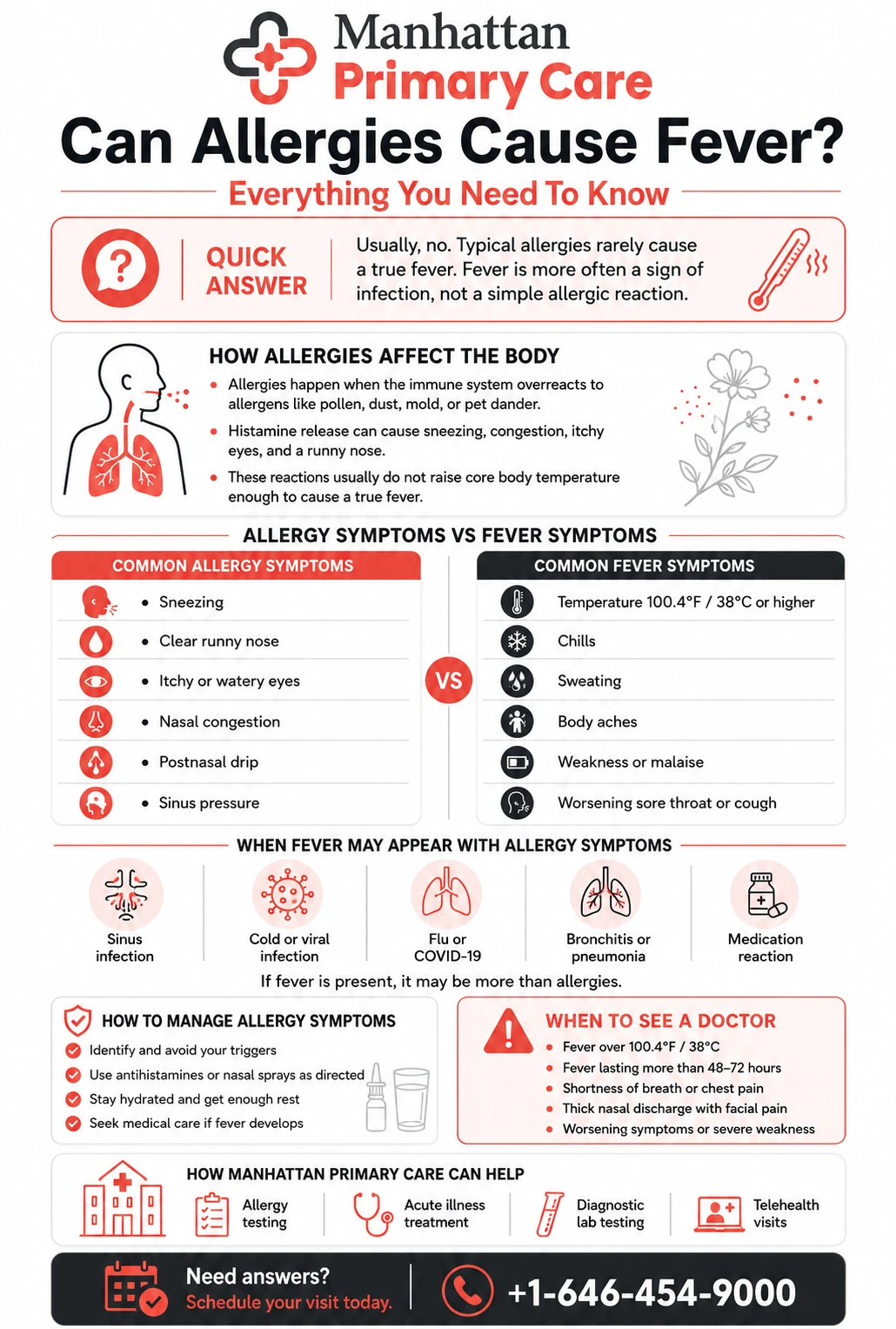
When Fever May Appear With Allergy Symptoms
Allergies and fever can happen at the same time, but the fever often has a separate cause. Here are the most common situations.
Secondary Sinus Infection
Allergies can cause nasal swelling, mucus buildup and blocked sinus drainage. When mucus gets trapped, bacteria or viruses may grow more easily. This can lead to sinus infection.
Signs that allergies may have turned into a sinus infection include:
- Facial pain or pressure
- Thick nasal discharge
- Bad breath
- Tooth pain
- Fever
- Symptoms lasting more than 10 days
- Symptoms that improve and then suddenly worsen
If allergy symptoms with fever include facial pressure, thick mucus and worsening congestion, a sinus infection may be the reason.
Cold or Viral Infection
Colds can look a lot like allergies. Both can cause sneezing, congestion, runny nose, cough and sore throat. Fever is more common with infection than allergies, although adults with a cold may not always develop a high fever.
A cold is more likely if symptoms include:
Flu or COVID-19
Flu and COVID-19 may cause fever, chills, fatigue, cough, sore throat, headache and body aches. Some people also develop nasal congestion or runny nose, which can make these infections feel like allergies at first.
Flu or COVID-19 may be more likely if you have:
- Fever and chills
- Body aches
- Sudden fatigue
- Cough
- Headache
- Sore throat
- Recent exposure to someone sick
If you are unsure, diagnostic testing can help clarify the cause.
Bronchitis or Pneumonia
Allergies can irritate the airways and cause coughing, but fever with cough may suggest an infection such as bronchitis or pneumonia.
Seek medical care if you have:
- Fever with worsening cough
- Shortness of breath
- Chest pain
- Wheezing that is new or worsening
- Coughing up thick mucus
- Symptoms that are not improving
Medication Reaction
Most allergy medications do not cause fever. Antihistamines, nasal steroid sprays and allergy eye drops are not common causes of increased body temperature.
However, rare medication reactions can cause fever, rash, swelling or systemic symptoms. This can happen with many types of medications, not just allergy treatments.
Call a healthcare provider if fever appears after starting a new medication, especially if you also develop rash, facial swelling, mouth sores, trouble breathing, dizziness or widespread skin symptoms.
Allergy vs Infection: How To Tell The Difference?
| Feature | Allergies | Infection |
| Main cause | Immune reaction to allergen | Virus, bacteria or other pathogen |
| Fever | Rare | Common |
| Itchy eyes | Common | Less common |
| Sneezing | Common | Sometimes |
| Nasal mucus | Usually clear and watery | May become thick, yellow or green |
| Body aches | Uncommon | Common with flu, COVID-19 and some infections |
| Chills | Uncommon | Common with fever |
| Duration | Can last weeks or months with exposure | Often improves within days to 2 weeks, depending on cause |
| Contagious | No | Often yes |
| Trigger pattern | Seasonal, environmental, food, pet, dust, mold | Exposure to sick contacts or sudden illness |
| Response to antihistamines | Often improves | Usually limited benefit |
A simple way to think about it: allergies usually itch, infections usually ache. If your eyes, nose and throat are itchy, allergies are more likely. If you have fever, chills, body aches and worsening fatigue, infection becomes more likely.
How To Manage Allergy Symptoms Safely?
Managing allergies can reduce congestion, fatigue, sinus pressure and the sick feeling that makes people worry about fever. The right plan depends on your triggers, symptoms, medical history and whether you have asthma, sinus issues or food allergies.
Step 1: Identify Your Allergy Triggers
Pay attention to when symptoms appear.
Ask yourself:
- Do symptoms happen during pollen season?
- Do they worsen around pets?
- Are symptoms worse in dusty rooms?
- Do they happen after eating certain foods?
- Do symptoms improve when you leave a certain environment?
- Are symptoms worse at night or in the morning?
If symptoms keep returning, allergy testing can help identify your triggers and guide a more personalized treatment plan.
Step 2: Avoid Known Allergens When Possible
You may not be able to avoid every allergen, but small changes can help.
For pollen allergies:
- Keep windows closed on high-pollen days.
- Shower after spending time outdoors.
- Change clothes after outdoor exposure.
- Use air conditioning instead of open windows when pollen counts are high.
For dust mite allergies:
- Wash bedding regularly in hot water.
- Use allergen-proof pillow and mattress covers.
- Vacuum with a HEPA-filter vacuum if possible.
- Reduce clutter that collects dust.
For pet allergies:
- Keep pets out of the bedroom.
- Wash hands after pet contact.
- Use air filtration if symptoms are significant.
- Clean floors and furniture frequently.
For mold allergies:
- Fix leaks quickly.
- Use a dehumidifier in damp areas.
- Clean visible mold safely.
- Improve ventilation in bathrooms and kitchens.
Step 3: Use Allergy Medications Correctly
Common allergy treatments include:
- Oral antihistamines
- Nasal steroid sprays
- Saline nasal rinses
- Allergy eye drops
- Decongestants when appropriate
- Asthma inhalers if prescribed
- Immunotherapy for selected patients
Antihistamines can help with sneezing, itching and runny noses. Nasal steroid sprays can help with inflammation and congestion when used consistently. Saline rinses can help clear mucus and allergens from the nasal passages.
Do not overuse nasal decongestant sprays, because they can worsen congestion if used for too many days in a row.
Step 4: Stay Hydrated and Rest
Allergies can disturb sleep and cause fatigue. Hydration helps thin mucus and rest helps your body recover from irritation and inflammation.
Helpful habits include:
- Drinking enough fluids
- Using a humidifier if the air is dry
- Sleeping with your head slightly elevated
- Avoiding smoke and strong fragrances
- Taking allergy medication before symptoms become severe
Step 5: Seek Medical Care If Fever Occurs
If you have allergy symptoms with fever, do not assume it is just allergies. Fever may point to an infection or another condition that needs medical attention.
Medical care may include:
- Physical exam
- Review of symptoms and triggers
- Allergy testing
- COVID-19 or flu testing
- Throat swab if strep is suspected
- Blood work if needed
- Evaluation for sinus infection, bronchitis or pneumonia
- Medication plan based on the actual cause
At Manhattan Primary Care, patients with recurring allergies can be evaluated for allergy testing and treatment, while patients with fever, sore throat, cough, sinus pressure or sudden illness can be seen for acute illness care and diagnostic testing.
When To See A Doctor
You should consider seeing a doctor if you have fever with allergy symptoms, especially when the fever is measured at 100.4°F / 38°C or higher.
Medical evaluation is especially important if you have:
- Fever lasting more than 48–72 hours
- Fever that keeps coming back
- Fever with shortness of breath
- Fever with chest pain
- Severe sore throat
- Difficulty swallowing
- Thick nasal discharge with facial pain
- Symptoms that improve and then worsen again
- Severe headache or stiff neck
- Ear pain or sinus pain
- Dehydration
- Confusion, dizziness or extreme weakness
- Rash with fever
- Fever after starting a new medication
- Fever in someone who is pregnant, immunocompromised, elderly or medically high-risk
You should seek emergency care right away if symptoms suggest anaphylaxis, including throat tightness, trouble breathing, swelling of the face or tongue, fainting, severe wheezing or widespread hives with dizziness.
How Manhattan Primary Care Can Help?
When fever and allergies happen together, the most important step is identifying the real cause. Is it seasonal allergies? A sinus infection? Flu? COVID-19? Bronchitis? A medication reaction? Something else?
Manhattan Primary Care can help with:
- Allergy testing for recurring or unexplained allergy symptoms
- Acute illness treatment for fever, cough, sore throat, sinus pressure and sudden symptoms
- Diagnostic lab testing when infection or inflammation needs to be checked
- Telehealth visits for mild, non-emergency concerns or follow-up care
- Personalized treatment plans based on your symptoms, triggers and medical history
If you are dealing with fever and allergy symptoms, a same-day or next-day evaluation can help you avoid guessing and get the right treatment faster.
Conclusion
So, can allergies cause fever? Usually, no. Allergies can make you feel congested, tired, warm and generally unwell, but a true fever is more often linked to infection or another medical condition.
If you have allergies with fever, do not ignore the fever. Monitor your temperature, look for infection warning signs and seek medical care if symptoms are persistent, worsening or severe. With the right diagnosis, you can treat the real cause and feel better faster.
Frequently Asked Questions
Can untreated allergies make you more likely to get sick?
Untreated allergies can cause ongoing congestion and mucus buildup, which may increase the risk of sinus irritation or secondary infection.
Is a fever at night more likely to be allergies?
No. Allergies may feel worse at night, but a true fever usually points to infection or another medical issue.
Can allergy shots cause fever?
Fever is not a common reaction to allergy shots. If fever occurs with rash, dizziness or breathing trouble, seek medical care.
Do allergies cause swollen lymph nodes?
Seasonal allergies usually do not cause swollen lymph nodes. Swollen glands are more often linked to infection.
Does fever with allergies mean I need antibiotics?
Not always. Fever may be viral, bacterial or from another cause. Antibiotics are only needed for certain bacterial infections.
Can children have allergies and fever at the same time?
Yes, but the fever usually has a separate cause, such as a cold, flu, ear infection or strep throat.
Sources
- Cleveland Clinic – Allergies Don’t Cause a Fever — At Least, Not Directly
- DMV Allergy – Can Allergies Cause Fever?
- Frontier Allergy – Can an Allergic Reaction Cause a Fever?
- Next Level Medical – Can Allergies Cause Fevers? What Your Symptoms Might Be Telling You
- Verywell Health – Can Allergies Trigger Fever and Chills?
- Health Line – Is Fever a Symptom of Allergies?
Disclaimer
This blog is for informational & educational purposes only and does not intend to substitute any professional medical advice or consultation. For any health-related concerns, please consult with your physician, or call 911.
 492 6th Avenue New York, NY 10011
 +1-646-454-9000
 Hours of Operation


