
 Last updated: May 26, 2026
 8 min read
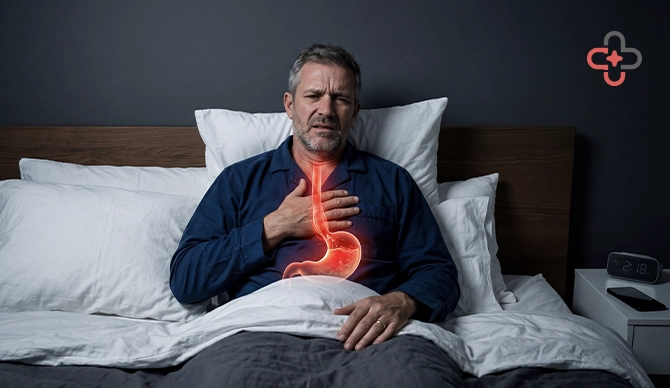
Can you die from acid reflux in your sleep? Death from acid reflux during sleep is rare, but severe nighttime GERD can cause stomach acid to enter the lungs, leading to choking, breathing trouble, aspiration pneumonia, or airway irritation. Risk is higher with obesity, hiatal hernia, alcohol use, smoking, and sleeping flat. Treatment greatly lowers the risk.
What Is Acid Reflux And GERD?
Acid reflux happens when stomach acid flows backward into the esophagus, the tube that carries food from your mouth to your stomach. This can cause a burning feeling in the chest, sour taste, burping, throat irritation, or regurgitation.
Occasional reflux after a large or spicy meal is common. GERD, or gastroesophageal reflux disease, is chronic acid reflux that happens repeatedly or causes ongoing symptoms.
Common symptoms include:
- Heartburn or burning chest discomfort
- Sour or bitter taste in the mouth
- Regurgitation of food or liquid
- Throat irritation or hoarseness
- Coughing, especially at night
- Indigestion while sleeping
So, is acid reflux dangerous? Mild, occasional reflux is usually not dangerous. But frequent acid reflux at night or untreated GERD can irritate the esophagus, throat, and airway.
Why Acid Reflux At Night Is Riskier?
Acid reflux while sleeping can be more concerning than daytime reflux because your body’s natural defenses slow down during sleep.
During the day, gravity helps keep stomach contents down. You also swallow more often, and saliva helps clear acid from the esophagus. At night, when you lie flat, stomach acid can travel upward more easily.
This can lead to:
- Stomach acid coming up while sleeping
- Regurgitation while sleeping
- Acid reaching the throat
- Coughing or gagging
- Aspiration in sleep, meaning acid or stomach contents enter the airway
That is why acid reflux when sleeping should not be ignored, especially if it causes choking, coughing, or breathing symptoms. If nighttime reflux is disrupting your rest, Manhattan Primary Care also offers sleep disorder treatment for patients dealing with sleep disturbances, nighttime coughing, and related breathing issues.
Can Acid Reflux Cause Aspiration, Choking or Breathing Problems?
Yes. Severe GERD can sometimes cause aspiration, which means stomach acid or food particles move into the windpipe or lungs instead of staying in the digestive tract.
This may cause:
- Choking from acid reflux
- Waking up choking on acid reflux
- Sudden coughing or gagging
- Wheezing or shortness of breath
- Burning in the throat or chest
- Aspiration pneumonia
- Irritation of asthma or chronic cough
When people search for choking on acid reflux while sleeping, what to do, the answer depends on severity. Sit upright, try to clear your airway, and sip water once breathing is normal. Seek urgent care if you have trouble breathing, chest pain, blue lips, confusion, or repeated choking episodes.
While death by aspiration in sleep is uncommon from GERD alone, aspiration can become serious, especially in people with severe reflux, swallowing problems, neurological conditions, heavy alcohol use, or impaired consciousness.
Signs Of Severe Nocturnal Acid Reflux
Nighttime reflux may feel different from regular heartburn. Some people do not wake up with classic burning pain. Instead, they notice breathing, throat, or sleep symptoms.
Watch for:
- Waking up coughing or choking
- Acid reflux choking in sleep
- Choked on acid reflux sensation
- Sour or bitter fluid in the mouth
- Regurgitation while sleeping
- Chronic sore throat
- Hoarseness in the morning
- Bad breath
- Trouble swallowing
- Shortness of breath at night
- Wheezing or asthma-like symptoms
- Recurrent pneumonia or bronchitis
- Chest burning that worsens when lying down
If you often wake up choking on acid reflux, do not ignore it. Repeated nighttime reflux can mean GERD is not controlled.
Risk Factors That Increase Danger
Some factors make acid reflux when sleeping more likely or more severe.
Common risk factors include:
- Obesity: Extra abdominal pressure can push stomach acid upward.
- Hiatal hernia: Part of the stomach pushes upward through the diaphragm, making reflux easier.
- Alcohol use: Alcohol can relax the lower esophageal sphincter and reduce protective reflexes during sleep.
- Smoking: Smoking can worsen reflux and airway irritation.
- Large late meals: A full stomach before bed increases reflux risk.
- Sleeping flat: Lying flat removes gravity’s protection.
- Sleeping on the back or right side: These positions may worsen reflux for some people.
- Certain medications: Some medications can relax the esophageal sphincter or irritate the stomach.
- Pregnancy: Hormonal changes and abdominal pressure can increase reflux.
These risks matter because GERD and aspiration can overlap. If acid repeatedly reaches the airway, it may irritate the lungs or increase the chance of aspiration pneumonia.
How To Prevent Nighttime Acid Reflux And Aspiration?
The goal is to reduce acid, keep stomach contents down, and protect your airway while sleeping.
Try these evidence-based strategies:
Elevate Your Upper Body
Raise the head of your bed about 6–8 inches or use a wedge pillow. Extra pillows may not work as well because they can bend your body at the waist instead of elevating your upper torso.
Avoid Eating Close to Bedtime
Stop eating at least 2–3 hours before lying down. This gives your stomach time to empty and lowers the chance of stomach acid coming up while sleeping.
Sleep on Your Left Side
For many people, left-side sleeping helps reduce reflux because of stomach anatomy. Avoid sleeping flat on your back after a heavy meal.
Limit Trigger Foods and Drinks
Common reflux triggers include:
- Spicy foods
- Fried or fatty meals
- Chocolate
- Peppermint
- Tomato-based foods
- Citrus
- Coffee or caffeine
- Carbonated drinks
- Alcohol
Not everyone has the same triggers, so track what worsens your symptoms.
Maintain a Healthy Weight
Weight loss can significantly improve GERD symptoms in people who are overweight or obese.
Avoid Smoking
Smoking can worsen GERD and increase airway irritation.
Use Medication Correctly
Antacids may help occasional symptoms. H2 blockers and proton pump inhibitors may be recommended for frequent GERD. Do not rely on over-the-counter medication long term without medical guidance.
Treat Chronic GERD Promptly
If acid reflux at night happens often, it should be evaluated. Untreated GERD can lead to esophagitis, narrowing of the esophagus, ulcers, Barrett’s esophagus, and respiratory complications.
How Long Can Acid Reflux Last?
A single acid reflux episode may last from a few minutes to a couple of hours. Reflux often worsens after eating, bending over, or lying down.
If reflux symptoms happen more than twice a week, wake you from sleep, or cause choking, coughing, or breathing symptoms, it may be GERD and should be checked by a doctor.
When To Seek Medical Help
Schedule a medical visit if you have:
- Frequent acid reflux at night
- Waking up choking on acid reflux
- Regurgitation while sleeping
- Chronic cough or hoarseness
- Trouble swallowing
- Reflux symptoms more than twice weekly
- Symptoms that do not improve with lifestyle changes
- Recurrent pneumonia or respiratory infections
At Manhattan Primary Care, our providers can evaluate nighttime reflux, identify risk factors, recommend treatment, and refer you to a gastroenterologist when needed through our comprehensive primary care services.
When To Seek Emergency Care
Get emergency medical care right away if you experience:
- Severe chest pain
- Chest pain with sweating, nausea, jaw pain, or arm pain
- Trouble breathing
- Persistent choking or inability to clear your airway
- Vomiting blood
- Black or tar-like stools
- Blue lips or confusion
- Severe weakness or fainting
- Repeated aspiration or suspected pneumonia
Do not assume chest pain is just reflux. Heart attack symptoms can overlap with GERD.
Conclusion
So, can you die from acid reflux in your sleep? It is rare, but severe untreated nighttime GERD can cause choking, aspiration, and lung complications. The good news is that reflux is treatable. With the right sleep habits, lifestyle changes, and medical care, most people can reduce nighttime symptoms and sleep safely.
If you often wake up choking, coughing, or tasting acid, book an appointment with Manhattan Primary Care for personalized evaluation and treatment.
Frequently Asked Questions
Can acid reflux kill you in your sleep?
Death from acid reflux in sleep is rare, but severe GERD can cause choking, aspiration, or breathing problems during sleep. Risk increases with obesity, alcohol use, hiatal hernia, and sleeping flat.
How do I prevent acid reflux at night?
Avoid eating before bed, elevate your head 6–8 inches, sleep on your left side, avoid trigger foods and alcohol, and maintain a healthy weight.
Why does acid reflux worsen when I lie down?
Lying flat makes it easier for stomach acid to move upward into the esophagus and throat because gravity no longer helps keep it down.
Can acid reflux cause choking?
Yes. Acid reflux can cause choking if stomach acid reaches the throat or airway during sleep, especially in people with severe GERD.
How long can acid reflux episodes last during sleep?
Acid reflux episodes can last from a few minutes to several hours, depending on the severity of GERD, meals, and sleep position.
Sources
- Ubie Health – Can you die from acid reflux in your sleep?
- Digestive Institute of Arizona – Can You Die from Acid Reflux in Your Sleep?
- SMS Clinical Research – Can You Die from Acid Reflux in Your Sleep?
- Medical News Today – Can acid reflux kill you?
- Manhattan Medical Arts – Can You Die from Acid Reflux in Your Sleep?
Disclaimer
This blog is for informational & educational purposes only and does not intend to substitute any professional medical advice or consultation. For any health-related concerns, please consult with your physician, or call 911.
 492 6th Avenue New York, NY 10011
 +1-646-454-9000
 Hours of Operation


