
 Last updated: January 16, 2026
 7 min read
Waking up coughing or wheezing at night can be alarming. Many people with asthma wonder: can asthma kill you in your sleep?
The honest answer is yes, but it is rare and typically linked to poorly controlled asthma. With proper diagnosis, medication, and preventive care, nocturnal asthma is usually manageable.
This guide explains what nocturnal asthma is, why symptoms worsen at night, and how to reduce nighttime risks. At Manhattan Primary Care, nighttime asthma is treated as a chronic condition with personalized, preventive-focused care.
What Is Nocturnal Asthma?
Nocturnal asthma refers to asthma symptoms that worsen at night or during sleep. Many people with asthma experience daytime symptoms, but those with nocturnal asthma notice:
- Asthma cough at night
- Wheezing when lying down
- Chest tightness during sleep
- Shortness of breath that wakes them up
Frequent nighttime asthma symptoms are a clear sign that asthma may not be well controlled.
Nocturnal asthma is not a separate condition, but a pattern that requires closer monitoring and treatment adjustment. This is commonly managed through chronic disease management, where asthma control and medications are regularly reviewed to prevent flare-ups.
Why Does Asthma Get Worse At Night?
If you’ve ever asked, why is asthma worse at night?, several biological and environmental factors work together to make breathing more difficult during sleep.
Circadian rhythm changes
Your body follows a natural 24‑hour clock. At night:
- Cortisol levels drop, reducing natural anti‑inflammatory protection
- Airways become more sensitive
- Lung function naturally decreases
Airway narrowing and inflammation
Asthma involves chronic airway inflammation. During sleep, the airways can narrow further, increasing resistance to airflow.
Increased mucus production
Lying flat allows mucus to pool in the airways, triggering nocturnal cough and wheezing.
Body position
Many people ask why do I cough when I lay down? When you lie flat, gravity can worsen airway narrowing and reflux, increasing irritation.
Nighttime allergen exposure
Dust mites, pet dander, and mold spores are often more concentrated in bedrooms and bedding.
These factors explain why asthma at night is common and why symptoms can feel more intense. Because sleep quality plays a major role in respiratory health, patients with frequent nighttime symptoms may also benefit from evaluation through sleep disorder treatment to rule out overlapping sleep-related breathing issues.
Common Nighttime Asthma Symptoms
Nocturnal asthma symptoms often disrupt sleep and may include:
- Persistent coughing or asthmatic cough
- Wheezing or whistling sounds when breathing
- Chest tightness or pressure
- Shortness of breath
- Feeling unable to take a deep breath
If you regularly experience asthma cough at night, it may signal that your asthma treatment plan needs adjustment.
Can You Have An Asthma Attack In Your Sleep?
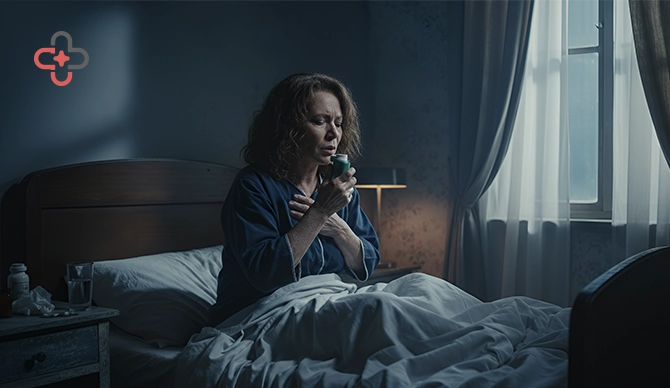
Yes, you can have an asthma attack in your sleep. Nighttime asthma attacks often begin gradually and may wake you up with:
- Sudden coughing or choking
- Wheezing when lying down
- A tight or heavy feeling in the chest
- Rapid breathing or gasping for air
Most people wake up before symptoms become severe, but repeated nighttime attacks increase health risks and reduce sleep quality.
Can Asthma Kill You In Your Sleep?
This question deserves a clear, honest answer.
Asthma death in sleep is rare, but it can occur, especially in people with:
- Poorly controlled asthma
- Severe or brittle asthma
- Inconsistent medication use
- Unrecognized nighttime symptoms
Research shows that a significant number of asthma‑related deaths happen at night or early morning hours. However, medical research consistently shows that most asthma deaths are preventable with proper care.
Well‑managed asthma dramatically reduces the risk of life‑threatening nighttime attacks.
What Triggers Asthma Attacks At Night?
Common triggers for nighttime asthma include:
- Dust mites in mattresses and pillows
- Pet dander in bedrooms
- Mold and indoor humidity
- Cold or dry air
- Acid reflux (GERD)
- Postnasal drip from allergies or sinus issues
- Skipping or incorrectly using controller medications
Identifying what triggers asthma attacks at night is a critical step in preventing them. Since allergens are among the most common nighttime triggers, allergy testing can help uncover sensitivities to dust mites, pet dander, or mold that may be worsening asthma symptoms during sleep.
Why Do I Cough Or Wheeze When I Lie Down?
People frequently ask why do I cough at night or what causes wheezing at night?
When lying down:
- Airways narrow more easily
- Acid reflux can irritate the lungs
- Mucus shifts toward the throat
- Airway sensitivity increases
These changes explain wheezing when lying down and persistent nighttime coughing.
How To Stop Asthma Cough And Wheezing At Night
If you’re searching for how to stop an asthma cough at night, these strategies can help:
- Take controller medications exactly as prescribed
- Use proper inhaler technique
- Keep your rescue inhaler nearby
- Elevate your head while sleeping
- Wash bedding weekly in hot water
- Use allergen‑proof mattress and pillow covers
- Avoid pets in the bedroom
- Treat acid reflux if present
Learning how to calm asthma cough at night often requires both medication optimization and environmental control.
Nocturnal Asthma Treatment Options
Effective nocturnal asthma treatment may include:
- Inhaled corticosteroids to reduce inflammation
- Long‑acting bronchodilators for overnight airway support
- Leukotriene modifiers
- Allergy management or immunotherapy
- Treatment of GERD or sleep apnea when present
Treatment plans should always be individualized and regularly reviewed.
How To Sleep Safely With Asthma
To improve sleep safety:
- Create an asthma‑friendly bedroom environment
- Follow a written asthma action plan
- Monitor nighttime symptoms
- Keep medications within reach
- Avoid smoking or secondhand smoke exposure
Knowing how to sleep with asthma can significantly improve quality of life and reduce nighttime risks. Ongoing preventive care helps ensure asthma remains well controlled over time, reducing the likelihood of nighttime flare-ups and emergency situations.
Warning Signs That Require Immediate Care
Seek urgent medical attention if you experience:
- Severe nighttime breathing difficulty
- Blue lips or fingernails
- Trouble speaking in full sentences
- No relief from rescue inhaler
- Frequent asthma attack while sleeping
These symptoms may indicate a medical emergency.
When To See A Doctor
You should schedule an asthma evaluation with Manhattan Primary Care if you:
- Wake up coughing or wheezing more than twice a month
- Use your rescue inhaler frequently at night
- Feel exhausted due to poor sleep
- Are unsure whether your asthma is well controlled
Early intervention and ongoing care with a trusted provider such as Manhattan Primary Care can help prevent serious complications.
Conclusion
So, can asthma kill you in your sleep? While possible, it is uncommon and largely preventable with proper treatment and regular follow-up.
If nighttime asthma symptoms are affecting your sleep, care at Manhattan Primary Care can help identify triggers, improve control, and reduce risk. Convenient follow-up and asthma check-ins are also available through telehealth services.
Frequently Asked Questions
Can stress or anxiety worsen asthma symptoms during sleep?
Yes. Stress can increase airway sensitivity and make nighttime breathing feel more difficult.
Does sleeping position matter for people with asthma?
Yes. Sleeping slightly elevated or on your side may reduce coughing and wheezing.
Can seasonal changes affect nighttime asthma more than daytime symptoms?
Yes. Seasonal shifts can increase allergens and irritants that worsen symptoms at night.
Is it normal to feel tired during the day if asthma symptoms only happen at night?
Yes. Poor sleep from nighttime symptoms can cause daytime fatigue.
Can children and adults experience nocturnal asthma differently?
Yes. Children often cough more at night, while adults notice chest tightness or breathlessness.
Sources
- Baptist Health – How to Sleep Better with Asthma at Night
- Manhattan Medical Arts – Can Asthma Kill You in Your Sleep? Understanding Nocturnal Asthma and Nighttime Risks
- Allergy & Asthma Network – What is Nocturnal Asthma?
- Cleveland Clinic – Why Is My Asthma Worse at Night?
- Liv Hospital – Can Asthma Kill You in Sleep? Danger
Disclaimer
This blog is for informational & educational purposes only and does not intend to substitute any professional medical advice or consultation. For any health-related concerns, please consult with your physician, or call 911.
 492 6th Avenue New York, NY 10011
 +1-646-454-9000
 Hours of Operation


