
 Last updated: December 17, 2025
 8 min read
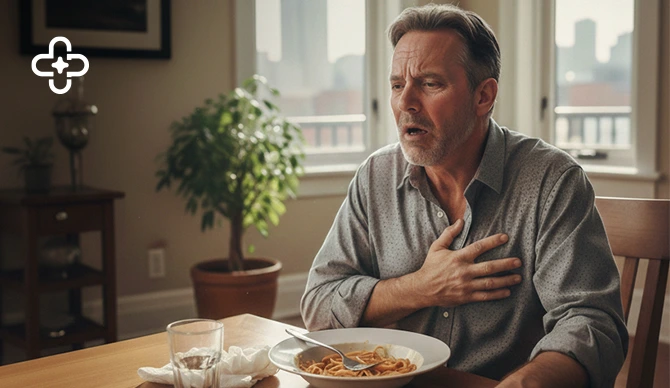
Feeling shortness of breath after eating can be alarming. Many people describe it as chest tightness, heavy breathing, or feeling like they can’t get a full breath after meals. If this has happened to you, you’re not alone. This symptom is surprisingly common and, in many cases, manageable once the underlying cause is identified.
While feeling short of breath after eating is often related to digestion or reflux, it can sometimes signal problems involving the heart or lungs. Understanding why it happens and knowing when to seek medical care can provide reassurance and help you protect your health.
What Does Shortness of Breath Feel Like After Eating?
Shortness of breath symptoms can vary from person to person. After meals, people commonly report:
- Chest tightness after eating or pressure in the chest
- Heavy breathing after eating or feeling winded
- Trouble taking a deep or full breath
- Wheezing after eating or coughing
- Feeling out of breath when eating or shortly afterward
- A sensation of fullness in the upper abdomen that makes breathing uncomfortable
These symptoms may last a few minutes or persist for hours, depending on the cause.
What Causes Shortness of Breath After Eating?
Shortness of breath can have many causes, but when it happens during or after meals, certain conditions are more likely. These causes generally fall into four categories: digestive, respiratory, cardiac, and nervous system–related.
Digestive Causes
Digestive issues are among the most common explanations for shortness of breath after eating.
GERD and Acid Reflux
GERD (gastroesophageal reflux disease) is a frequent cause of breathing discomfort after meals. Acid reflux can irritate the esophagus and airways, triggering coughing, wheezing, and a sensation of chest tightness. This connection between GERD and shortness of breath is well recognized by gastroenterology and pulmonary specialists.
Symptoms often worsen after large or fatty meals and when lying down too soon after eating.
Hiatal Hernia
A hiatal hernia occurs when part of the stomach pushes up through the diaphragm. This can worsen reflux and, in some cases, contribute to breathing discomfort by increasing pressure in the chest.
Overeating
Eating very large meals can cause the stomach to expand and press upward against the diaphragm. Since the diaphragm plays a key role in breathing, this pressure can make it feel hard to breathe after eating, even in otherwise healthy people.
Gas and Bloating
Excess gas or bloating can also push against the diaphragm, leading to a feeling of tightness or trouble breathing after eating.
Respiratory Causes
Conditions affecting the lungs and airways can also cause breathing difficulty related to eating.
Asthma
Asthma symptoms may flare after meals, particularly if reflux triggers airway irritation. People with asthma may experience wheezing, chest tightness, or feeling short of breath after eating.
Food Allergies
Food allergies can cause sudden breathing difficulty, throat tightness, wheezing, and swelling. This can progress rapidly and may be life-threatening. If breathing symptoms occur shortly after eating a new food, immediate medical care is essential. Identifying triggers through allergy testing can help prevent future reactions and guide safe dietary choices.
Aspiration
Accidentally inhaling food or liquid into the airway can cause coughing, wheezing, and a hard time breathing after eating, especially in older adults or people with swallowing difficulties.
Cardiac Causes
Although less common, heart-related conditions are among the most serious causes of shortness of breath.
Angina
Angina occurs when the heart doesn’t receive enough oxygen-rich blood. Some people experience chest pressure or shortness of breath while eating, especially after large meals that increase the heart’s workload.
Heart Failure
Heart failure can lead to fluid buildup and reduced pumping ability, causing fatigue and breathlessness. In some cases, symptoms become noticeable after meals when blood flow shifts to the digestive system.
If shortness of breath is accompanied by chest pressure, dizziness, or swelling in the legs, cardiac causes must be considered.
Anxiety and Nervous System Causes
The nervous system closely links digestion and breathing. For some people, post-meal sensations like fullness or reflux can trigger anxiety or panic symptoms. This may cause rapid, shallow breathing and chest tightness, even when the heart and lungs are healthy.
Why Is It Hard to Breathe After I Eat?
Several normal body processes can contribute to breathing discomfort after meals:
- Blood flow shifts toward the digestive organs
- A full stomach limits how far the diaphragm can move
- Pressure in the abdomen reduces lung expansion
- Acid reflux can irritate the airways
Together, these factors explain why it is hard to breathe after you eat, especially after large or heavy meals.
GERD and Shortness of Breath
GERD can cause breathing symptoms by irritating the throat and airways or triggering reflex tightening of the air passages. This is why people with reflux may feel short of breath after eating, even without classic heartburn.
Symptoms often worsen when lying down, bending forward, or eating late at night.
Chest Tightness After Eating
Chest tightness after meals can be confusing because it may come from either digestive or cardiac causes.
Digestive-related chest tightness often:
- Burns or feels sharp
- Improves with antacids
- Worsens when lying down
Cardiac-related chest tightness may:
- Feel like pressure or squeezing
- Spread to the arm, jaw, or back
- Occur with shortness of breath, sweating, or nausea
If you’re wondering how do I stop chest tightness after eating, the most important first step is determining its cause.
When Shortness of Breath After Eating Is Serious
Seek urgent medical care if you experience shortness of breath after eating along with:
- Chest pain or pressure
- Fainting or severe dizziness
- Blue or gray lips or fingertips
- Rapid heartbeat or sweating
- Swelling of the face, lips, or throat
These symptoms may indicate a heart condition, severe allergic reaction, or other emergency.
How to Relieve Shortness of Breath After Eating
If symptoms are mild and not associated with warning signs, these strategies often help:
- Eat smaller, more frequent meals
- Slow down while eating
- Remain upright for at least 2–3 hours after meals
- Avoid tight clothing around the abdomen
- Identify and limit trigger foods
- Practice slow, controlled breathing
These steps can help reduce pressure on the diaphragm and minimize reflux-related symptoms.
How to Prevent Shortness of Breath While Eating
Long-term prevention focuses on managing underlying conditions:
- Maintain a healthy weight, as excess weight can increase reflux and place pressure on the diaphragm. Structured weight management support can significantly reduce symptoms.
- Control acid reflux with dietary changes and medical guidance
- Manage asthma or allergies with appropriate treatment plans
- Monitor heart health with regular checkups and ongoing chronic disease management
If you frequently feel out of breath when eating, prevention begins with proper diagnosis.
When to See a Doctor
You should see a healthcare provider if:
- Shortness of breath occurs regularly or worsens
- Breathing difficulty happens during meals
- You have known heart, lung, or digestive conditions
- Symptoms interfere with daily activities or sleep
A comprehensive evaluation, often starting with an annual physical exam helps identify treatable causes and prevents complications.
Diagnosis and Testing
Depending on your symptoms, your provider may recommend:
- Pulmonary function tests to evaluate lung health
- An EKG or echocardiogram to assess heart function
- Gastrointestinal evaluation for reflux or swallowing issues
- Allergy testing if food reactions are suspected
Conclusion
Experiencing shortness of breath after eating can be frightening, but many causes are treatable once identified. Digestive issues like GERD are common, while respiratory or cardiac causes require careful evaluation. Paying attention to your symptoms and seeking medical care when they persist can help you breathe easier and protect your overall health.
At Manhattan Primary Care, we take a whole-person approach to symptoms like breathing difficulty after meals. Through preventive care, diagnostic lab testing, and personalized treatment plans, our providers help uncover the root cause and guide you toward lasting relief. If symptoms are new, worsening, or causing concern, you can also start with a convenient telehealth visit to determine the next best steps.
Frequently Asked Questions
Can dehydration cause shortness of breath after meals?
Yes. Dehydration can strain circulation and make you feel more winded after meals, especially heavy or salty ones.
Is shortness of breath after eating more common as you age?
Yes. Aging can affect digestion, lung expansion, and heart function, making post-meal breathing symptoms more noticeable.
Should I avoid exercise after eating if I feel short of breath?
Light activity is usually fine, but intense exercise right after meals can worsen breathlessness.
Can acid reflux cause shortness of breath?
Yes. Acid reflux can irritate nearby airways or trigger reflex tightening, causing breathlessness even without heartburn.
Can allergies cause shortness of breath?
Yes. Food allergies or sensitivities can cause airway tightening or swelling, sometimes without visible skin symptoms.
Can being overweight cause shortness of breath?
Yes. Extra weight increases pressure on the diaphragm and heart, which can worsen breathing after meals.
Sources
- Medical News Today – What causes shortness of breath after eating?
- Healthcare Associates – 5 Causes For Shortness of Breath After Eating
- Heritage Hospitals – Causes of Shortness of Breath After Eating
- Verywell Health – Why Do I Feel Short of Breath After Eating? 7 Causes
- Manhattan Medical Arts – Shortness of Breath After Eating: 9 Common Causes
Disclaimer
This blog is for informational & educational purposes only and does not intend to substitute any professional medical advice or consultation. For any health-related concerns, please consult with your physician, or call 911.
 492 6th Avenue New York, NY 10011
 +1-646-454-9000
 Hours of Operation


