

 Last updated: February 25, 2026
 10 min read
A belly button infection is more common than you might think, and while most cases are not life-threatening, they can lead to serious complications if left untreated. In this article, we will explore the question: Can a belly button infection kill you? We will cover what causes these infections, the symptoms to watch out for, and when an infection becomes dangerous.
Let’s address your concerns and provide clarity on the topic to ensure you can care for your belly button properly, avoid infections, and seek timely medical care when necessary.
What Is A Belly Button Infection?
A belly button infection is an infection that affects the skin around your navel (or umbilicus), and it can be caused by bacteria, fungi, or yeast. These infections are usually mild and treatable, but if they’re not taken care of, they can result in serious complications.
Infections in the belly button can occur from a variety of causes, such as poor hygiene, tight clothing, or even from piercings. These infections may cause irritation, redness, discharge, and in rare cases, they could progress to more severe conditions like sepsis.
Types of Belly Button Infections:
- Bacterial Infections: These are the most common type of infection and are often caused by bacteria entering through small cuts, piercings, or friction from clothing.
- Fungal Infections: Fungal infections thrive in moist environments, which makes the belly button a perfect spot for fungi to grow.
- Yeast Infections: Often linked to conditions like diabetes or the use of antibiotics, yeast infections can cause redness and irritation in the belly button area.
What Causes A Belly Button Infection?
Several factors can contribute to a belly button infection. Below are some of the most common causes:
- Poor Hygiene: Failing to clean the belly button regularly can lead to the buildup of sweat, oil, and dirt. This provides an ideal environment for bacteria and fungi to thrive.
- Tight Clothing: Clothes that are too tight or made from non-breathable materials can trap sweat and moisture around the belly button area, increasing the risk of infection.
- Moisture Accumulation: The natural folds of the belly button can trap moisture, creating a perfect breeding ground for fungi and bacteria.
- Yeast Infection: Individuals with diabetes or weakened immune systems are more prone to developing yeast infections, including in the belly button area.
- Bacterial Infections from Cuts or Piercings: If you have a belly button piercing, there’s an increased risk of infection, especially if the piercing is not cleaned properly or is exposed to bacteria.
Symptoms of Belly Button Infections
Recognizing the symptoms of a belly button infection early on can help you seek treatment before the infection becomes serious.
The common symptoms include:
- Redness and Swelling: The skin around the belly button becomes inflamed and may feel tender to the touch.
- Pain or Tenderness: You may feel soreness when pressing on or around the belly button.
- Discharge: The belly button may leak clear, yellow, or greenish fluid. This is a sign that the infection is active.
- Itching or Irritation: An infected belly button often feels itchy or irritated.
- Foul Smell: A strong, unpleasant odor may develop around the navel, indicating infection.
- Pain in the Belly Button: In some cases, you may experience more intense pain, especially if the infection is spreading.
Is It Possible For A Belly Button Infection To Kill You?
While it’s very rare, the answer is yes, a belly button infection could kill you if it leads to severe complications, especially if left untreated. Most infections are mild and respond well to treatment, but there is a potential for an infection to spread to other parts of the body, causing more severe health issues.
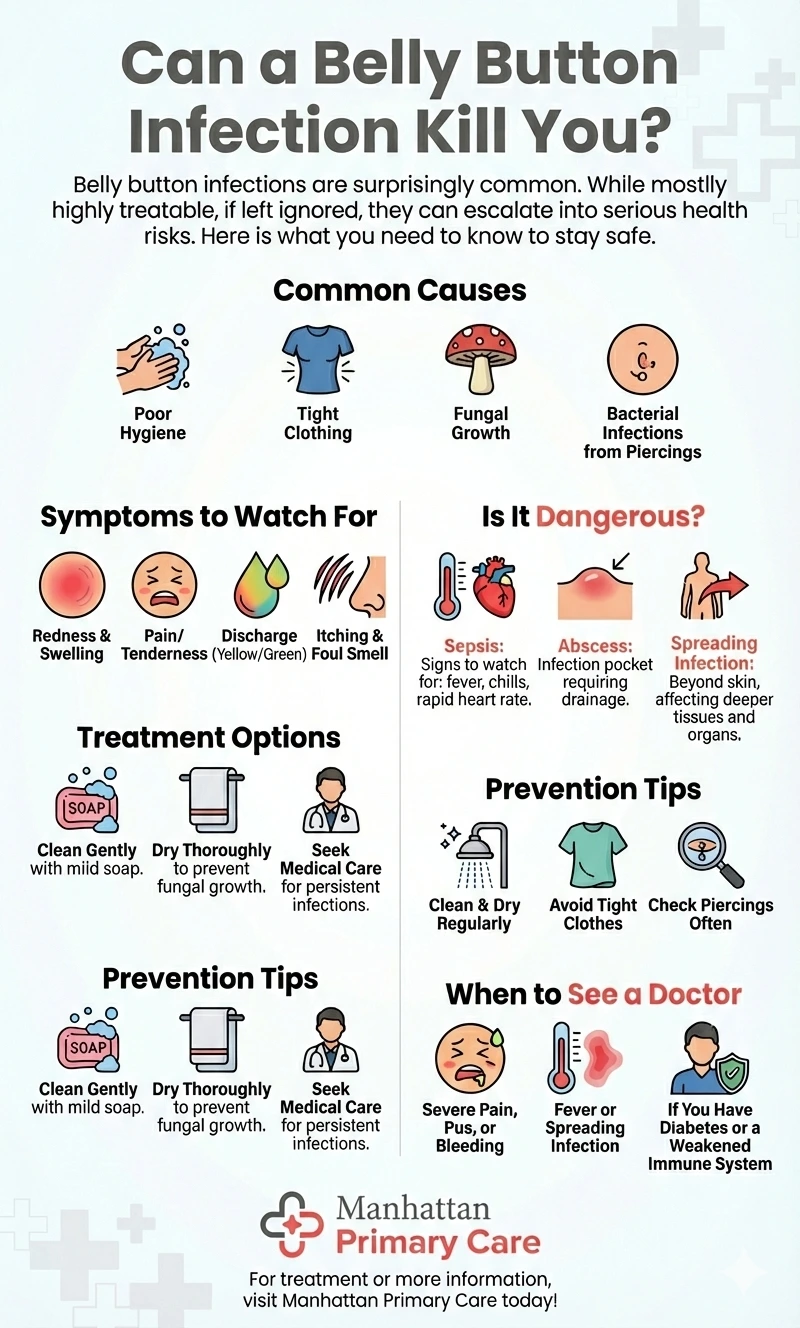
How Can It Become Life-Threatening?
- Sepsis: One of the most dangerous complications of any infection, including a belly button infection, is sepsis. Sepsis is a systemic response to infection, where bacteria from the infected area enter the bloodstream and trigger a widespread inflammatory response. This can cause organ failure, shock, and in extreme cases, death.
- Abscess Formation: If a belly button infection isn’t treated, it can lead to the formation of an abscess, a pocket of pus that can become infected and may require surgical drainage.
- Spreading to Deeper Tissues: A belly button infection can, in some rare cases, spread beyond the skin to the deeper layers of tissue. If untreated, the infection can affect organs, which can have life-threatening consequences.
When Is A Belly Button Infection Dangerous?
While most belly button infections are not life-threatening, there are warning signs that you should look for to determine when an infection has become dangerous:
Signs of Sepsis
If the infection leads to sepsis, the symptoms may include:
- Fever
- Chills
- Rapid heartbeat or breathing
- Dizziness or confusion
- Cold, clammy skin
Spreading Infection
If the infection is spreading from the belly button to other parts of the body, such as through the bloodstream or to deeper tissue layers, the infection becomes much more serious.
Persistent or Chronic Infections
If an infection doesn’t improve with basic care or if it keeps recurring, this could lead to scarring or abscess formation, increasing the risk of complications.
How To Clean And Care For An Infected Belly Button?
Proper cleaning and care of your belly button can help prevent infections or reduce the severity of a current infection.
Here’s what to do:
- Clean Gently: Use a mild soap and warm water to clean the belly button area. Avoid harsh chemicals that could irritate the skin further.
- Dry Thoroughly: After cleaning, ensure the area is completely dry to avoid fungal growth.
- Wear Loose Clothing: Tight clothing can aggravate an infection. Wear loose, breathable fabrics to help the belly button heal.
- Avoid Scratching or Picking: As tempting as it may be, avoid scratching or picking at the infected area, as this can spread the infection or cause further irritation.
If you’re experiencing symptoms of a belly button infection and need quick relief, consider visiting Manhattan Primary Care. Our acute illness treatment ensures you receive prompt and professional care to prevent complications.
Treatment For Belly Button Infections
Treatment for belly button infections typically involves topical treatments, but more severe infections may require oral medications.
- Antibiotic or Antifungal Creams: Over-the-counter creams can treat bacterial or fungal infections.
- Oral Medications: For deeper or persistent infections, a healthcare provider may prescribe oral antibiotics or antifungals to treat the infection from the inside out.
Can A Belly Button Yeast Infection Be Treated At Home?
Mild yeast infections in the belly button can often be treated at home with antifungal creams or ointments. However, if symptoms persist or worsen despite home treatment, it’s essential to consult a doctor to avoid complications.
At Manhattan Primary Care, our primary care services can help diagnose and treat various infections, including yeast infections, ensuring you receive the right treatment.
How To Prevent Belly Button Infections
Preventing a belly button infection is possible with regular care and attention to hygiene.
Here’s how to keep your belly button healthy:
- Clean and Dry Regularly: Keep the belly button clean and dry. Use mild soap and water and avoid harsh chemicals or scrubbing too vigorously.
- Avoid Tight Clothing: Tight, non-breathable clothing can trap sweat and increase the risk of infection.
- Monitor Piercings: If you have a belly button piercing, clean it regularly and watch for any signs of infection. Always use sterile jewelry to reduce the risk of irritation.
- Manage Underlying Health Conditions: Conditions like diabetes or a weakened immune system can make you more susceptible to infections. Keeping these conditions under control can help prevent belly button infections.
When Should You See A Doctor For A Belly Button Infection?
You should seek medical attention for a belly button infection if you experience any of the following:
- Persistent or worsening symptoms
- Severe pain, discharge, or bleeding
- Fever or other signs that the infection is spreading
- If you have a compromised immune system (e.g., due to diabetes or medication)
If you’re unsure whether your infection requires professional care, Manhattan Primary Care is here to provide the guidance you need. Whether you need a telehealth appointment or an in-person consultation, our primary care team is ready to help.
Conclusion
While most belly button infections are not life-threatening, they can lead to serious complications if left untreated. It’s essential to practice good hygiene, monitor your symptoms, and seek medical care when necessary to avoid potential risks. Early intervention is key in preventing complications like sepsis or abscess formation.
At Manhattan Primary Care, we are committed to helping you stay healthy and treat infections promptly. If you notice any signs of infection, don’t hesitate to reach out to us for guidance and care. Whether you need acute illness treatment, preventive care, or a primary care consultation, our team is here to support you.
Frequently Asked Questions
How can I tell if my belly button infection is bacterial or fungal?
Bacterial infections typically cause yellow/green pus, fever, and swelling, while fungal infections usually lead to itching, redness, and flaky skin. A healthcare provider can help diagnose the type of infection.
Can wearing tight clothing lead to a belly button infection?
Yes, tight clothing traps moisture and friction, increasing the risk of bacterial or fungal infections. Opt for loose, breathable fabrics to reduce this risk.
What’s the best way to clean my belly button to prevent infection?
Clean gently with mild soap and water, avoid scrubbing too hard, and dry thoroughly to prevent moisture buildup that encourages fungal growth.
Can a belly button infection go away on its own without treatment?
Mild infections might improve with proper care, but untreated infections can worsen and lead to complications like abscesses or sepsis. It’s best to seek medical advice early.
Are people with diabetes more at risk for belly button infections?
Yes, diabetes weakens the immune system and impairs circulation, making individuals more susceptible to infections, including in the belly button.
Can a Belly Button Infection Cause Sepsis?
If untreated, a belly button infection can spread and cause sepsis, a life-threatening condition. Look out for symptoms like fever, confusion, and rapid heart rate, and seek medical help immediately.
How Long Does a Belly Button Infection Last?
Infections may clear in a few days with proper care, but more severe ones might take longer to heal. If symptoms persist beyond a week, seek medical treatment.
Sources
- Health – Can a Belly Button Infection Be Life-Threatening?
- Elpis Healthcare – Can a Belly Button Infection Kill You? Here’s the Truth You Need to Know
- Manhattan Medical Arts – Can a Belly Button Infection Kill You?
- Banner Health – What to Do About a Belly Button Infection
- Your Doctors – How Can I Treat an infected belly button at home?
- Docus – Can You Die from Belly Button Infection?
Disclaimer
This blog is for informational & educational purposes only and does not intend to substitute any professional medical advice or consultation. For any health-related concerns, please consult with your physician, or call 911.
 492 6th Avenue New York, NY 10011
 +1-646-454-9000
 Hours of Operation


