

 Last updated: April 7, 2026
 7 min read
Yes, anxiety can cause dizziness and lightheadedness. When your body is under stress, changes in breathing, blood flow, and nervous system activity can make you feel unsteady, faint, or off balance. While this is common and usually not dangerous, persistent or severe dizziness should always be evaluated by a healthcare provider.
Why Does Anxiety Cause Dizziness?
If you’ve ever suddenly felt dizzy during stress or panic, you’re not imagining it. The connection between anxiety and dizziness is rooted in how your body responds to perceived danger.
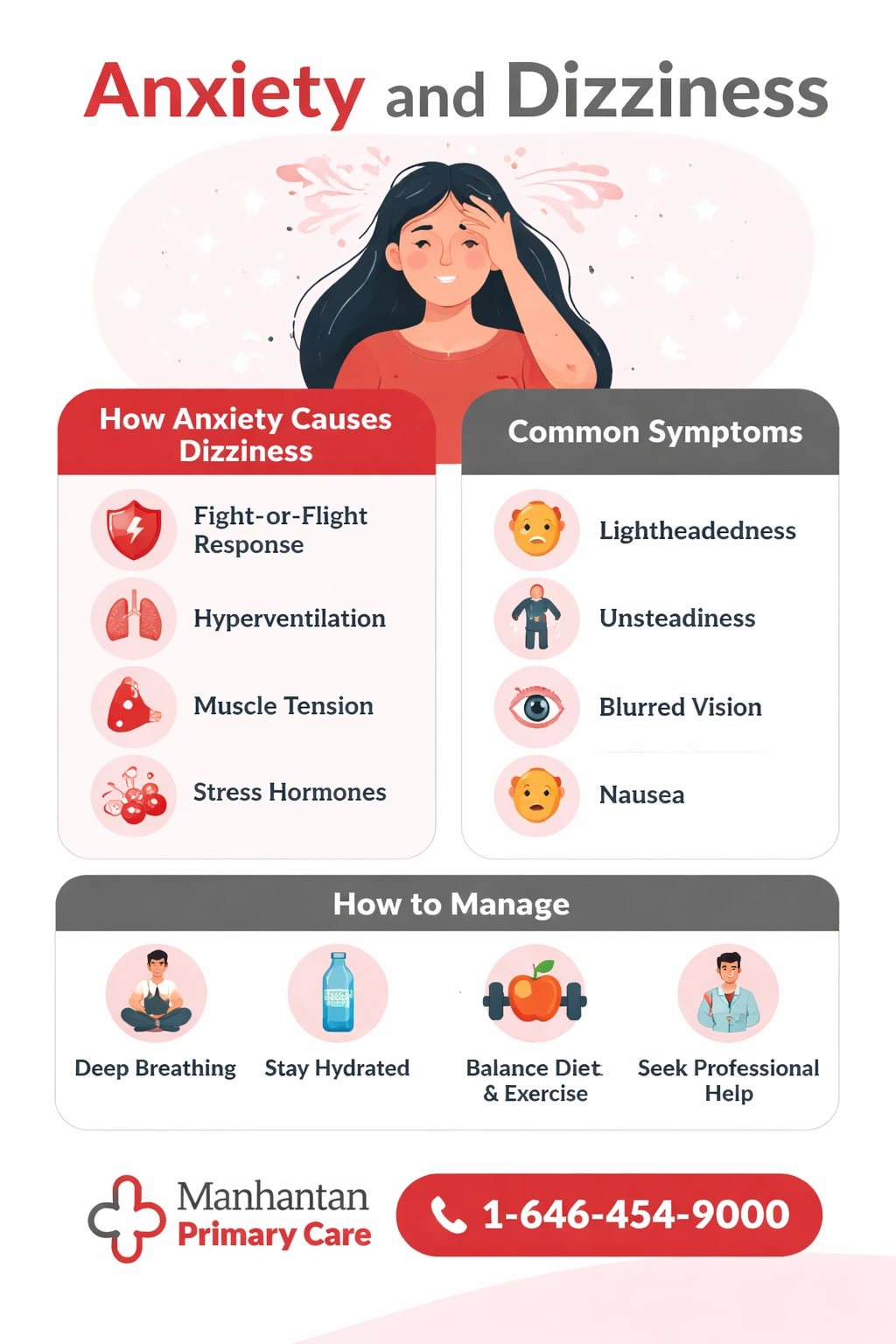
The Fight-or-Flight Response
When you experience anxiety, your body activates the autonomic nervous system, triggering the fight-or-flight response. This natural survival mechanism increases your heart rate, breathing, and alertness.
However, when triggered frequently or without real danger, it can lead to uncomfortable physical symptoms including dizziness.
Hyperventilation and Low CO₂ Levels
During anxiety, many people breathe rapidly or shallowly. This can lower carbon dioxide levels in the blood, which affects oxygen delivery to the brain.
This can result in:
- Lightheadedness
- Dizziness
- A floating or disconnected feeling
Changes in Blood Flow
Anxiety can shift blood flow toward major muscle groups and away from the brain. This can create a temporary sensation of dizziness or imbalance.
Common Symptoms of Anxiety-Related Dizziness
Anxiety-related dizziness can feel different for everyone, but common symptoms include:
- Lightheadedness or feeling faint
- Unsteadiness or imbalance
- A sensation of spinning or floating
- Blurred vision
- Nausea
- Rapid heartbeat
- Sweating
These symptoms often occur alongside anxiety or panic and may improve as you calm down.
Can Anxiety Make You Feel Like You’re Going to Pass Out?
Yes, anxiety can make you feel like you’re about to faint, but actual fainting is rare.
This feeling is usually caused by hyperventilation and heightened body awareness during panic.
While some people worry about passing out during an anxiety attack, most remain conscious. True fainting is more commonly linked to blood pressure changes or other medical conditions.
Anxiety vs Medical Causes of Dizziness
It’s important to distinguish between anxiety-related dizziness and dizziness caused by other medical conditions.
| Anxiety Dizziness | Medical Dizziness |
| Triggered by stress or panic | May occur without a clear trigger |
| Improves with relaxation | Often persistent or worsening |
| No neurological deficits | May include weakness, numbness, or speech issues |
If your symptoms are new, severe, or unexplained, it’s important to seek medical evaluation.
Can Stress Also Cause Dizziness?
Yes, stress and dizziness often go hand in hand.
Chronic stress can affect your body in several ways:
- Elevated cortisol levels
- Muscle tension in the neck and shoulders
- Fatigue and poor sleep
These factors can contribute to ongoing dizziness or lightheadedness.
How Long Does Anxiety Dizziness Last?
The duration can vary depending on the individual and the severity of anxiety.
- Mild episodes: a few minutes
- Panic-related dizziness: up to an hour
- Chronic anxiety: ongoing or recurring symptoms
If you experience constant lightheadedness, it’s important to rule out other causes.
How To Stop Dizziness from Anxiety
There are several effective ways to manage dizziness caused by anxiety.
Immediate Relief Strategies
- Slow, deep breathing exercises
- Sit or lie down until symptoms pass
- Focus on grounding techniques (e.g., naming objects around you)
- Drink water to stay hydrated
Calming the Nervous System
- Practice mindfulness or meditation
- Use progressive muscle relaxation
- Avoid overstimulation (noise, screens, caffeine)
Long-Term Management
For individuals experiencing ongoing anxiety symptoms, seeking mental health support can help address the root cause and reduce recurring dizziness.
Incorporating routine preventive care can also help detect early signs of underlying issues and support long-term well-being.
Managing anxiety long-term can significantly reduce dizziness symptoms.
- Cognitive Behavioral Therapy (CBT)
- Regular physical activity
- Stress management techniques
- Adequate sleep and nutrition
- Medication if recommended by a healthcare provider
When Should You See A Doctor for Dizziness?
While anxiety-related dizziness is common, medical evaluation is important if you experience:
- Persistent or worsening dizziness
- Fainting episodes
- Chest pain
- Severe headaches
- Vision or speech changes
A healthcare provider can help rule out underlying conditions and provide appropriate treatment. In many cases, health screenings can help identify potential causes.
If symptoms continue or interfere with daily life, visiting a provider for primary care services ensures a thorough evaluation and personalized treatment plan.
How To Prevent Anxiety-Related Dizziness
To reduce episodes of dizziness related to anxiety, focus on consistent, body-based habits that stabilize your nervous system:
- Regulate stress daily: brief breathing breaks (4–6 breaths/min), short walks, or 5–10 minutes of mindfulness
- Prioritize sleep: 7–9 hours nightly, consistent sleep/wake times, limit screens 1 hour before bed
- Eat regularly: balanced meals with protein + complex carbs to prevent blood sugar dips that worsen lightheadedness
- Stay well hydrated: aim for steady fluid intake throughout the day, especially if you feel faint
- Limit triggers: reduce excess caffeine, nicotine, and alcohol, which can increase anxiety and dizziness
- Move your body: light to moderate exercise improves circulation and reduces stress sensitivity
- Posture awareness: avoid long periods of sitting; stand up slowly to prevent sudden lightheadedness
Conclusion
Anxiety and dizziness are closely connected, and while the sensation can feel alarming, it’s often a normal response to stress. With simple techniques and proper long-term management, these symptoms can usually be controlled.
However, if dizziness is persistent, severe, or unclear, it’s important to seek medical evaluation for reassurance and proper care.
At Manhattan Primary Care, many patients come in worried about sudden dizziness and what it might mean. Understanding the link between anxiety and physical symptoms can help reduce fear and give you a sense of control.
Frequently Asked Questions
Why do I feel dizzy even when I’m not actively anxious?
Even if you’re not feeling anxious at the moment, your body may still be in a heightened stress state. Chronic anxiety can keep your nervous system overactive, leading to lingering symptoms like dizziness or lightheadedness even during calm periods.
Can anxiety-related dizziness happen every day?
Yes, in some cases, ongoing anxiety can cause daily or frequent dizziness. This often happens when stress is persistent and the nervous system doesn’t fully return to a relaxed state, making symptoms feel constant rather than occasional.
Does anxiety and dizziness get worse in certain environments?
It can. Busy, crowded, or overstimulating environments (like malls or public transport) may intensify dizziness. This is often linked to sensory overload and heightened awareness, which can make balance feel more difficult.
Is it normal for anxiety and dizziness to come and go suddenly?
Yes, anxiety-related dizziness can appear suddenly and disappear just as quickly. These episodes are often triggered by subtle stress signals, changes in breathing, or shifts in focus rather than a clear physical cause.
Can dehydration make anxiety and dizziness worse?
Absolutely. Even mild dehydration can lower blood pressure and reduce blood flow to the brain, which can intensify dizziness. When combined with anxiety, this can make symptoms feel more severe or harder to control.
Sources
- Priory Group – Anxiety and dizziness – why does it happen?
- Medical News Today – Is dizziness a symptom of anxiety?
- Birch Grove Mental Health – Would Anxiety Cause Dizziness?
- Vigeo Wellness – Anxiety and Dizziness – Why Does it Happen?
- National Dizzy and Balance Center (NDBC) – Can Anxiety Make You Dizzy?
Disclaimer
This blog is for informational & educational purposes only and does not intend to substitute any professional medical advice or consultation. For any health-related concerns, please consult with your physician, or call 911.
 492 6th Avenue New York, NY 10011
 +1-646-454-9000
 Hours of Operation


