
 Last updated: December 10, 2025
 9 min read
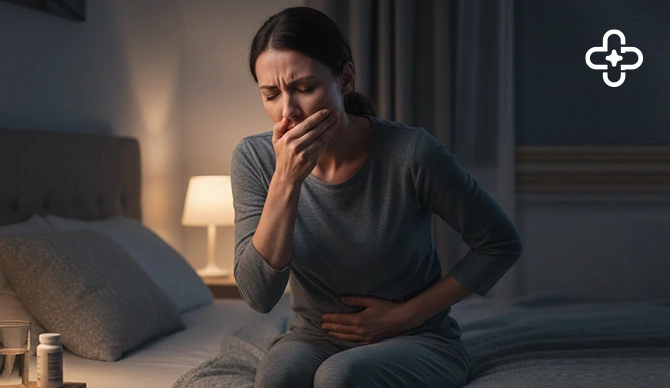
Nighttime nausea has a way of showing up at the worst possible moment, right when you’re ready to relax, unwind, and finally get some sleep. If you’ve ever found yourself lying awake, wondering how to stop nausea fast at night, you’re definitely not alone. Many people deal with sudden waves of queasiness that make it hard to sleep, think, or even breathe normally.
At Manhattan Primary Care, we know how disruptive nighttime nausea can be. Our team provides full primary care services to help diagnose and manage recurring symptoms. The good news? There are practical ways to stop nausea quickly, calm your stomach, and prevent it from coming back. This guide walks you through fast relief strategies, nighttime nausea causes, the best foods for an upset stomach, and when it’s time to talk with a medical professional.
Why Do I Feel Nauseous at Night?
Understanding why nausea worsens at night makes it easier to treat. Several factors make nighttime queasiness more likely, even if you feel fine during the day.
Acid Reflux or GERD
When you lie down, stomach acid naturally travels upward more easily. This can trigger nausea, burning, or sour taste.
Heavy or Late Meals
Eating big meals, especially fatty, spicy, or greasy foods, can overwhelm digestion and lead to nausea after eating.
Anxiety or Stress
Nighttime quiet often intensifies anxious thoughts, and the gut responds quickly. Stress hormones can slow digestion and trigger nausea without vomiting. If anxiety is contributing to nighttime nausea, our mental health support services can provide guidance and treatment.
Low Blood Sugar
Going too long without eating can cause dizziness, shakiness, and nausea at night.
Pregnancy
Morning sickness isn’t just for mornings, many pregnant individuals feel worse in the evening due to hormonal shifts. Our women’s health services can help evaluate persistent pregnancy-related nausea.
GI Conditions
Irritable bowel syndrome (IBS), gastritis, ulcers, or delayed stomach emptying can all cause nausea at night. These conditions often require professional evaluation and long‑term management, which we offer through our chronic disease management services.
Sleep Deprivation
Poor sleep impacts gut hormones and increases sensitivity to nausea, called sleep deprivation nausea.
Medications
Certain prescriptions, especially taken at night, can cause nausea as a side effect.
If you find yourself feeling nauseous all the time but not throwing up, it may be a sign of chronic digestive imbalance or a medical problem that needs evaluation.
How To Stop Nausea Fast at Night (Immediate Relief Strategies)
If nausea suddenly hits when you’re trying to sleep, try these fast-acting techniques:
Sip Cold Water Slowly
Small, frequent sips help settle the stomach and prevent dehydration.
Try Deep, Slow Breathing
Nausea often worsens when your breathing becomes shallow.
Try this:
- Inhale through your nose for 4 seconds
- Hold for 2 seconds
- Exhale through your mouth for 6 seconds
This activates your calming nervous system.
Use the P6 Pressure Point
The pressure point for nausea (also known as Neiguan) sits about three finger-widths below the wrist crease.
Press gently for 2–3 minutes to help relieve nausea fast.
Sip Ginger or Peppermint Tea
Ginger is one of the most studied natural nausea remedies, while peppermint relaxes stomach muscles.
Sit Upright Don’t Lie Flat
Gravity helps keep stomach acid where it belongs.
Try a Cool Compress
Place it on your forehead or the back of your neck. Cooling signals help reduce the intensity of nausea.
These quick steps are perfect when you’re trying to figure out what relieves nausea fast or how to stop nausea fast at night.
Home Remedies That Help Stop Nausea Quickly
If your stomach still feels uneasy, these simple home strategies can help:
- Ginger chews or capsules
- Peppermint oil aromatherapy
- Crackers, toast, or dry cereal to stabilize the stomach
- Clear fluids like water or herbal tea
- Electrolyte drinks if you’re dehydrated
- Warm broth for gentle nourishment
These are everyday things to help with nausea that many people find effective when they’re unsure how to cure nausea naturally.
Best Foods for Nighttime Nausea Relief
When your stomach feels sensitive, choose foods that are bland, gentle, and easy to digest.
Foods for nausea that work well at night:
- Bananas
- Applesauce
- Plain toast
- White rice
- Ginger tea
- Chamomile tea
- Low-sodium broth
- Crackers
These options are part of the classic BRAT-style diet (bananas, rice, applesauce, toast), long known to help soothe the stomach.
What To Do When You Feel Nauseous at Night
If nausea hits just as you’re climbing into bed, try the following:
- Elevate your head and upper body
- Avoid scrolling on your phone screens can worsen dizziness and stomach sensitivity
- Breathe slowly through your nose
- Get fresh air or crack open a window
- Avoid spicy, acidic, or greasy foods close to bedtime
- Move gently sudden motion can worsen nausea
These steps help whether you’re navigating how to relieve nausea or simply wondering what to do when you feel nauseous before bed.
Why You Get Nauseous After Eating at Night
Late-evening meals can cause digestive overload, making nausea more likely. If this happens frequently, our team can help identify triggers through preventive care services.
Common triggers include:
- Eating too close to bedtime
- High-fat or fried foods
- Spicy meals
- Dairy before bed (if you’re sensitive)
- Carbonated drinks
- Food intolerances (gluten, lactose, etc.)
If you frequently notice nausea after eating, especially at night, digestive conditions like reflux or delayed stomach emptying may be involved.
Can Sleep Deprivation Cause Nausea?
Absolutely. Poor sleep disrupts the delicate communication between your brain, hormones, and digestive system.
Sleep deprivation may cause nausea by:
- Increasing cortisol (a stress hormone)
- Reducing stomach-emptying speed
- Causing irregular meal patterns
- Lowering blood sugar levels
- Heightening sensitivity to normal gut sensations
This is why sleep deprivation nausea, and nighttime queasiness often go hand in hand. If ongoing sleep issues are affecting your health, our sleep disorder specialists can help.
How to Sleep When Nauseous
If nausea is keeping you awake, these techniques may help:
- Sleep with your upper body elevated using two pillows
- Try lying on your left side, this reduces acid reflux
- Keep the room cool
- Avoid lying flat for at least 30 minutes after symptoms
- Practice slow breathing to calm the gut-brain axis
- Use a light blanket heavy coverings can worsen overheating and trigger nauseous
These practices help improve comfort whether or not you’re dealing with vomiting.
Long-Term Nausea Treatments
If nighttime nausea is a frequent visitor, long-term strategies can make a real difference. Our providers can help determine the best plan during an in‑office visit or via our telehealth services.
Depending on the cause, treatment may include:
Reflux Management
- Antacids
- H2 blockers
- Proton pump inhibitors
- Diet adjustments
Prescription Antiemetics
Doctors may prescribe medication to stop nausea if it becomes persistent.
Hydration and Electrolytes
Chronic mild dehydration can trigger recurring nausea. Diagnostic testing through our lab services can help identify electrolyte imbalances or underlying causes.
Diet Adjustments
Avoiding late-night eating, high-fat meals, or acidic foods often helps.
Gut-Friendly Supplements
Ginger supplements or certain probiotics may support smoother digestion.
If you’re exploring how to treat nausea or looking for lasting nausea treatments, addressing underlying triggers is key.
When to See a Doctor
Most nighttime nausea is not serious, but some symptoms should never be ignored.
Seek medical care if you experience:
- Persistent nausea lasting more than a few days
- Nausea interfering with sleep consistently
- Unexplained weight loss
- Severe abdominal pain
- Vomiting blood or black material
- Signs of dehydration
- Nausea during pregnancy that becomes severe
- Feeling nauseous all the time but not throwing up
Professional evaluation at Manhattan Primary Care helps identify underlying causes and ensures proper treatment, especially when symptoms become chronic. You can schedule a prompt assessment through our acute illness care or primary care team.
Conclusion
Nighttime nausea is uncomfortable, frustrating, and sleep-disrupting, but you’re not stuck with it. With the right combination of quick relief strategies, calming foods, lifestyle adjustments, and expert medical evaluation at Manhattan Primary Care when needed, it’s absolutely possible to ease symptoms and sleep comfortably again.
Simple steps like sipping water, using acupressure, avoiding heavy meals at night, or managing reflux can offer fast relief. And if nausea becomes persistent or intense, a healthcare provider can help identify and treat the underlying cause.
Frequently Asked Questions
Can dehydration throughout the day cause nausea specifically at night?
Yes. Even mild dehydration can build up gradually during the day and peak at night when your body is finally at rest. Low fluid levels make it harder for your stomach muscles and digestive system to work properly, which may trigger nausea once you lie down.
Why does nausea sometimes feel worse in a quiet or dark room?
When external distractions fade, your brain becomes more aware of internal sensations. This heightened awareness can make stomach discomfort feel more intense, even if the underlying cause hasn’t changed.
Is it normal to wake up from sleep already feeling nauseous?
It can happen, and common causes include reflux moving upward during sleep, low blood sugar from long fasting, certain medications wearing off overnight, or hormonal shifts. If it happens routinely, medical evaluation is recommended.
Can strong smells in the bedroom trigger nighttime nausea?
Absolutely. Odors from scented candles, room sprays, perfumes on bedding, pet smells, or even leftover cooking fumes can irritate your senses and trigger nausea, especially if you’re sensitive to smells.
Does body position during the day affect nausea at night?
Yes. Poor posture especially slouching for long periods can compress your abdomen and slow digestion. When you go to bed, that buildup may lead to nausea due to delayed stomach emptying or increased pressure on the digestive tract.
Does soda help with nausea?
Not usually. Regular soda is high in sugar, which can sometimes worsen nausea. However, a few sips of flat, room-temperature ginger ale may help some people due to the ginger content not the soda itself.
Does carbonation help with nausea?
Carbonation can go either way. For some, the bubbles relieve nausea by reducing gas buildup. For others, carbonation increases bloating and stomach pressure, making nausea worse. If you’re sensitive to fizzy drinks, it’s best to avoid them.
Sources
- Medical News Today – How to relieve nausea naturally
- Health Line – Top 18 Ways to Get Rid of Nausea
- Manhattan Medical Arts – How To Stop Nausea Fast at Night?
- VINMEC – Feeling nauseous at night: Causes and remedies
- WEDMD – Remedies for Nausea and Vomiting
Disclaimer
This blog is for informational & educational purposes only and does not intend to substitute any professional medical advice or consultation. For any health-related concerns, please consult with your physician, or call 911.
 492 6th Avenue New York, NY 10011
 +1-646-454-9000
 Hours of Operation


