

 Last updated: February 4, 2026
 8 min read
If you’ve had your tonsils removed, you might be wondering, Can you still get strep throat without tonsils? The answer is yes, strep throat can still occur after tonsillectomy, though the symptoms and course of the infection may differ. Tonsils are an important part of your body’s defense system, but they aren’t the only line of defense against infections.
In this article, we’ll explain how strep throat can still occur, why it might look different without tonsils, and how you can treat and prevent it.
If you suspect you have strep throat, timely care is essential. At Manhattan Primary Care, we offer same-day consultations and rapid testing for accurate diagnosis and treatment.
What Is Strep Throat?
Strep throat is a bacterial infection caused by Group A Streptococcus bacteria. It’s a common condition, especially in children, but it can affect people of all ages. The infection causes pain and swelling in the throat, and sometimes, white spots may form on the tonsils (though they might be absent without tonsils). Other symptoms include fever, headache, and swollen lymph nodes.
If you’re unsure whether your sore throat is caused by strep, rapid testing can help with a quick and accurate diagnosis.
Common Symptoms of Strep Throat:
- Sore throat (often sudden and severe)
- Fever (101°F or higher)
- Red, swollen tonsils (with or without white spots)
- Swollen lymph nodes in the neck
- Headache and body aches
- Nausea or stomach pain (particularly in children)
Even after tonsillectomy, strep throat can still present many of these symptoms, but they may occur in other parts of the throat instead of the tonsils.
Can You Get Strep Without Tonsils?
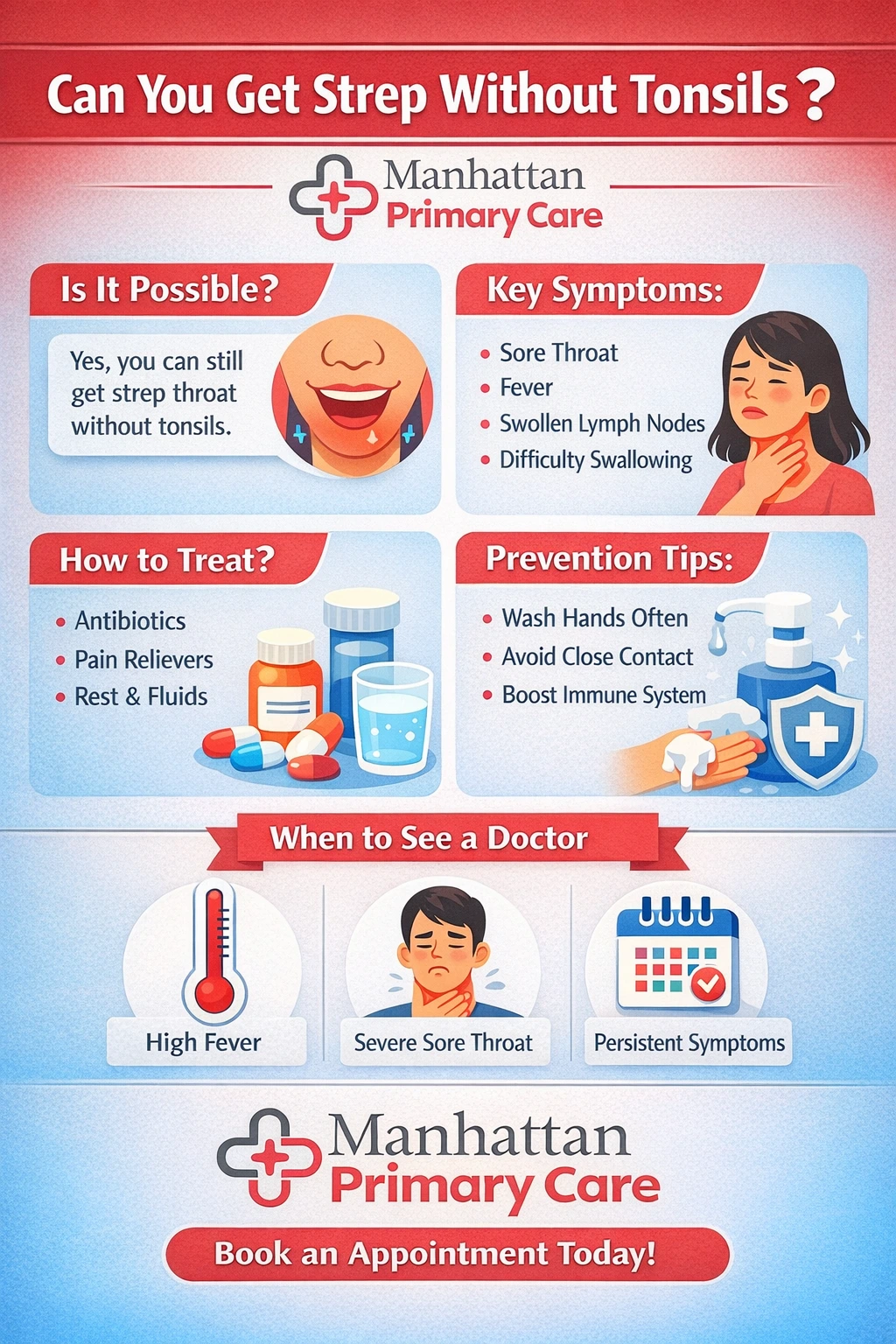
Yes, you can get strep throat even without tonsils. Tonsils play a role in filtering out infections, but they are not the only defense your body has against bacteria. When your tonsils are removed, the body can still be vulnerable to infections in the pharynx (the back of the throat) and other tissues in the upper respiratory system. Group A Streptococcus bacteria can still infect the throat, causing strep throat even if your tonsils are gone.
Why Does Strep Occur Without Tonsils?
- Tonsils help filter infections, but other parts of the throat can still become infected with bacteria.
- Strep bacteria can enter through respiratory droplets, meaning that even after tonsillectomy, you can still be exposed to the bacteria and develop strep throat.
If you’re worried about a throat infection without tonsils, same-day consultations are available to help evaluate whether strep throat is the cause.
Why Is Strep Throat Different Without Tonsils?
While strep throat can still occur after tonsil removal, the symptoms may look slightly different. The absence of tonsils can sometimes mean that the classic white spots seen in strep throat are absent. However, the infection can still cause pain, swelling, and redness in the throat.
Possible Symptom Changes After Tonsillectomy:
- Absence of white spots: Without tonsils, you may not see the typical white patches that are often associated with strep.
- Swollen throat: Your throat may still appear red and inflamed, but the lack of tonsils can make it harder to visually identify strep.
- Less frequent ear pain: Patients who have had their tonsils removed may experience fewer earaches, as tonsils play a role in drainage.
If you notice these symptoms, Manhattan Primary Care can provide an acute illness treatment to assess whether it’s strep throat or something else.
Symptoms of Strep Throat After Tonsillectomy
Even without tonsils, strep throat can still present the same classic symptoms, although they might appear differently. It’s important to recognize these signs early to avoid complications.
Common Symptoms Include:
- Sore throat (feels like a raw, scratchy irritation)
- Fever (often above 101°F)
- Headache (sometimes severe)
- Redness in the throat (swollen, inflamed throat)
- Difficulty swallowing
- Swollen lymph nodes in the neck
Without tonsils, your throat may still be inflamed, and you may experience a sore throat and difficulty swallowing, just as you would with strep throat.
Can Strep Throat Be Mistaken for Something Else?
It’s possible for strep throat to be confused with viral infections like the common cold or flu, or even with symptoms from healing after a tonsillectomy. However, there are key differences between strep and viral throat infections.
Key Differences Between Strep and Viral Infections:
- Strep throat: Sudden sore throat, fever, swollen lymph nodes, but no cough.
- Viral throat infections (like the common cold): Gradual onset of symptoms, often with cough, runny nose, and mild fever.
If you’re unsure whether your sore throat is viral or strep, it’s best to seek medical advice for a proper diagnosis and test.
How Long Does It Take for Strep to Go Away?
With the right treatment, strep throat typically begins to improve within 24 to 48 hours after starting antibiotics. It’s crucial to complete the full course of antibiotics as prescribed to avoid complications and ensure the bacteria is completely eradicated.
Typical Recovery Timeline:
- 24-48 hours: Improvement of symptoms with antibiotics
- 7-10 days: Full recovery, assuming antibiotics are completed properly
Completing your antibiotic regimen is essential to prevent further complications and reduce the risk of spreading the infection. Timely visits for diagnosis and treatment can ensure recovery happens as quickly as possible.
Can You Get Strep More Than Once in a Month?
Yes, it is possible to get strep throat more than once in a short period of time, even within a month. Factors like incomplete treatment, frequent exposure to infected individuals, or underlying immune system issues may increase the likelihood of recurrent infections.
If you experience frequent strep infections, it’s important to discuss preventive options with your healthcare provider.
Treatment For Strep Throat Without Tonsils
The treatment for strep throat remains the same, regardless of whether you have tonsils. Antibiotics are necessary to treat the infection and relieve symptoms.
Primary Treatment:
- Antibiotics: Penicillin or amoxicillin are commonly used to treat strep throat.
- Symptomatic Care:
- Pain relievers (e.g., acetaminophen or ibuprofen)
- Throat lozenges or gargling with warm salt water
- Drink plenty of fluids to stay hydrated and soothe the throat
Proper treatment is important to ensure quick recovery and prevent complications. If you’re unsure about your symptoms, testing can help determine whether strep throat is present, and antibiotics can be prescribed right away.
How To Prevent Strep Throat After Tonsillectomy
Though tonsils play a role in protecting the body from infections, the risk of strep throat is still present after tonsil removal.
Here are some tips to help reduce the risk of getting strep throat:
- Practice good hygiene: Wash your hands frequently, especially after coughing or sneezing.
- Avoid close contact with individuals who have symptoms of a respiratory infection.
- Avoid irritants such as smoke or dry air that may irritate your throat.
When To Seek Medical Help for Strep Throat
If you experience any of the following symptoms, it’s important to seek medical attention:
- Severe sore throat and difficulty swallowing
- Fever over 101°F
- Symptoms that last longer than a few days
- Persistent pain or swelling in the neck
If you have had a tonsillectomy, it’s essential to contact a healthcare provider for evaluation if your symptoms don’t improve or worsen over time. Telehealth consultations are available for remote assessments, and in-person visits for more serious cases.
Conclusion
Even after tonsil removal, you can still get strep throat, but with prompt treatment, it’s highly manageable. If you notice any signs of strep throat, it’s essential to seek care early to avoid complications. With the right treatment, you can recover quickly and return to feeling your best.
For further assistance or to schedule an appointment, reach out today! Same-day care and rapid testing for strep throat are available.
Frequently Asked Questions
Can strep throat occur in adults who have had their tonsils removed?
Yes, adults without tonsils can still get strep throat because the bacteria can infect other areas of the throat, like the pharynx.
Is strep throat more severe in individuals without tonsils?
Not necessarily. The severity of strep throat is not determined by the presence of tonsils, though the symptoms may present differently.
Can strep throat occur if you don’t have the classic white spots in your throat?
Yes, white spots may be absent without tonsils, but you can still have strep throat based on other symptoms like fever and a sore throat.
How does strep throat compare to other throat infections like a viral sore throat?
Strep throat is bacterial and causes severe pain, fever, and difficulty swallowing, unlike viral sore throats, which are typically milder with symptoms like a cough or runny nose.
Can strep throat cause complications in people who have had their tonsils removed?
Yes, strep throat can still lead to complications, such as ear infections or kidney problems, even without tonsils.
Sources
- Verywell Health – Can You Still Get Strep Throat Without Tonsils?
- Medical News Today – Strep throat without tonsils: Is it possible?
- AFC Urgent Care – Getting Strep Without Tonsils? We Have Answers for You
- Health Line – Is It Possible to Get Strep Throat Without Tonsils?
- LIV Hospital – Strep Throat Without Tonsils: Is It Possible?
Disclaimer
This blog is for informational & educational purposes only and does not intend to substitute any professional medical advice or consultation. For any health-related concerns, please consult with your physician, or call 911.
 492 6th Avenue New York, NY 10011
 +1-646-454-9000
 Hours of Operation


